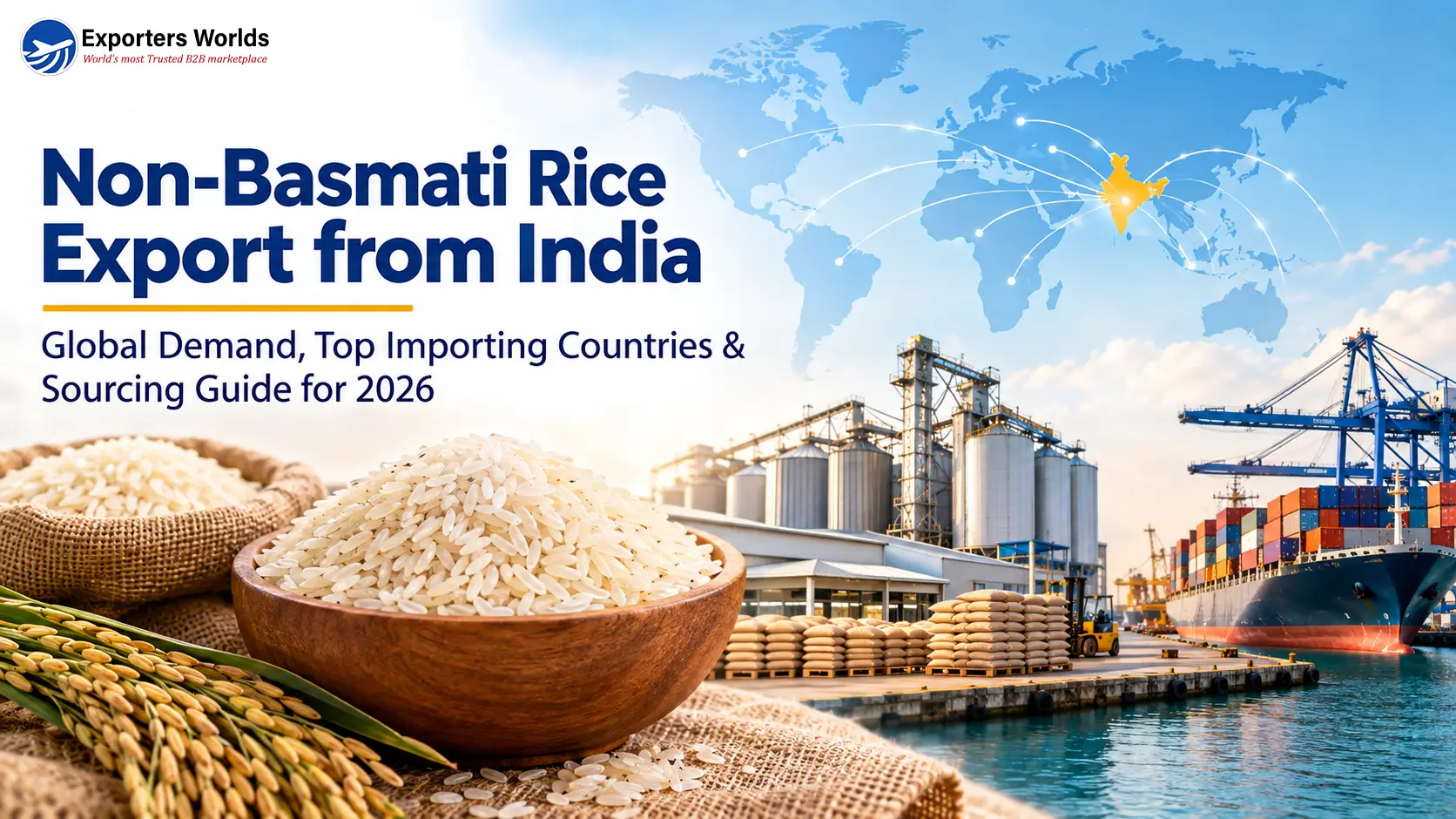
Non-Basmati Rice Export from India: Global Demand, Top Importing Countries & Sourcing Guide for 2026
For a U.S. importer, wholesaler, distributor, foodservice company, or private-label brand, sourcing non basmati rice from India is not simply about finding the lowest quotation. The purchase needs to match the variety, grain specification, broken percentage, processing, quality, packaging, documentation, shipping terms, and supplier capability.
India is a major rice-exporting origin with a broad portfolio beyond basmati. This guide covers the product, markets, U.S. sourcing checks, and supplier selection.
What Is Non-Basmati Rice?
Non-basmati rice is a broad category of rice varieties that do not fall under the basmati category. It is not one single product. Indian suppliers can offer different grain lengths, processing styles, and broken-grain specifications.
Common products include long-grain, medium-grain, raw, steamed, parboiled, broken, sortex-cleaned, and polished rice. Commercial grades may also specify 5% broken, 25% broken, or other agreed levels.
Basmati vs. Non-Basmati Rice
Basmati is commonly associated with distinctive aroma, elongated grains, and specific cooking characteristics. Non-basmati rice covers a much wider range of varieties and applications.
A grocery brand may prioritize appearance and packaging, while a restaurant or food manufacturer may prioritize cooking performance, consistency, and cost. The intended end use should drive the choice.
Why Is Indian Non-Basmati Rice in Global Demand?
India has a large agricultural and milling ecosystem, established export infrastructure, and a wide range of rice products. Key reasons buyers consider Indian rice include:
Product variety: Buyers can source different grain lengths, processing methods, and quality grades.
Commercial-volume sourcing: India's production and milling base supports bulk procurement across multiple product categories.
Competitive sourcing: Prices vary according to variety, grade, crop conditions, processing, quantity, packaging, freight, destination, and trade policy.
Established export channels: Indian rice is supported by exporters, logistics providers, ports, inspection services, and international trade infrastructure.
Multiple applications: Non-basmati rice can be used for retail, foodservice, wholesale distribution, and food processing.
Trade data from APEDA and international trade databases show India's broad rice export footprint. Rankings can change by year and product category, so use current data when making market decisions.
Top Markets for Rice Export from India
Indian rice is shipped to markets across Africa, the Middle East, Asia, North America, and other regions. Important destinations in India's rice trade have included countries such as Saudi Arabia, the United Arab Emirates, Benin, Senegal, Guinea, Côte d'Ivoire, Togo, and the United States. Rankings can change with crop conditions, import demand, regulations, and rice category.
U.S. buyer groups include importers, distributors, retailers, restaurants, food manufacturers, institutional buyers, and private-label brands.
The right target market depends on the product specification and customer demand, not just on a country appearing on a general "top importer" list.
Why U.S. Buyers Source Rice from India
A U.S. buyer may need very different rice from another buyer. Before requesting a quotation, define:
- Variety and grain type
- Average grain length, where relevant
- Broken percentage
- Moisture
- Foreign matter
- Damaged or discolored grains
- Chalkiness, where relevant
- Milling and polishing level
- Sortex or cleaning requirements
- Crop year
- Packaging format
- Quantity and MOQ
- Preferred Incoterm
- Destination
This makes supplier quotations easier to compare.
How to Choose Reliable Non-Basmati Rice Suppliers
Start with a written product specification. Then request a representative sample and compare it with the agreed requirements.
Verify the supplier's business identity, export experience, facilities, relevant registrations or certifications, and ability to communicate clearly.
For larger transactions, review quality documents and agree on quality checks, such as a certificate of analysis or pre-shipment inspection.
Finally, confirm payment terms, Incoterms, packaging, delivery schedule, documentation, and responsibility for freight and related charges. Aim for repeatable supply, not simply the lowest quotation.
Rice Quality Specifications U.S. Importers Should Check
Buyers should compare samples and written specifications for grain appearance, broken content, moisture, cleanliness, defects, processing quality, and cooking characteristics relevant to the intended use.
A retail brand may require tighter appearance standards, while a foodservice distributor may emphasize cooking consistency and repeat supply.
A clear specification is therefore more useful than a vague description such as "premium quality."
Importing Rice from India to the USA
Importing food into the United States requires more than arranging transportation. Buyers should verify current requirements with the U.S. Food and Drug Administration (FDA), U.S. Customs and Border Protection (CBP), and, where applicable, USDA Animal and Plant Health Inspection Service (APHIS).
Depending on the shipment, requirements can involve FDA prior notice, food facility registration, Foreign Supplier Verification Program (FSVP) responsibilities, entry documentation, labeling, country-of-origin information, and applicable plant-health requirements.
Documents may include a commercial invoice, packing list, bill of lading, certificate of origin, certificate of analysis, phytosanitary documentation, and other shipment-specific records.
U.S. importers should confirm current requirements before contracting. Indian exporters should also verify applicable Directorate General of Foreign Trade (DGFT) export policy for the product and shipment date.
Pricing, MOQ, Packaging and Shipping
There is no single reliable 2026 price for non basmati rice. A quotation can vary with:
Variety + specification + broken percentage + processing + crop year + quantity + packaging + Incoterm + freight + destination + applicable duties and charges.
FOB India and CIF USA quotations should not be compared as identical prices because the included responsibilities and costs differ.
Packaging may range from bulk commercial bags to retail-ready and private-label formats. Container loading depends on packing configuration, product density, carrier requirements, and destination.
For a useful quotation, give suppliers the required rice specification, quantity, destination, packaging, and preferred shipping term.
A Practical Sourcing Guide for U.S. Buyers in 2026
A simple sourcing process is:
- Define the product: Specify rice type, quality, processing, and broken percentage.
- State the order details: Give quantity, MOQ, packaging, and destination.
- Request comparable quotations: Avoid comparing products with different specifications.
- Approve a sample: Make sure it matches the agreed specification.
- Verify the supplier: Check business details, experience, and quality documentation.
- Confirm compliance: Review current U.S. import requirements.
- Finalize terms: Confirm payment, Incoterm, inspection, and shipping schedule.
- Track the shipment: Maintain communication through dispatch and arrival.
This helps reduce misunderstandings around quality, documentation, price, and delivery.
Where Exporters Worlds Fits In
Finding rice from India is easy. Finding a supplier that fits the exact product, communication, documentation, and commercial requirements is harder.
Exporters Worlds is positioned as a B2B marketplace and trade-support platform connecting buyers with manufacturers, exporters, suppliers, and other businesses. Its offering includes buyer and supplier verification, enquiry handling, direct communication, CRM-supported onboarding, and export-related support, along with broader digital marketing and marketplace services.
For buyers, starting with a specific requirement is more useful than treating a marketplace listing as proof of suitability. Providing the rice type, quantity, destination, packaging, and quality parameters makes the sourcing conversation more productive.
Frequently Asked Questions
What is non-basmati rice?
Non-basmati rice is a broad category covering rice varieties outside the basmati category. India exports several non-basmati products, including long-grain, raw, steamed, parboiled, and broken rice.
Why buy non-basmati rice from India?
India offers a wide selection of rice varieties and processing options, established export infrastructure, and access to commercial-volume sourcing. Suitability and price depend on the exact specification and transaction terms.
Which countries import rice from India?
India serves markets across Africa, the Middle East, Asia, North America, and other regions. Countries including Saudi Arabia, the UAE, Benin, Senegal, Guinea, Côte d'Ivoire, Togo, and the United States have been important destinations, but rankings vary by year and rice category.
Can U.S. businesses import rice from India?
Yes, subject to applicable U.S. food, customs, labeling, and plant-health requirements. Importers should verify current requirements with FDA, CBP, and applicable USDA or APHIS resources before shipment.
How do I verify a non-basmati rice supplier?
Check business identity, export experience, samples, product specifications, quality documents, inspection arrangements, commercial terms, and verifiable shipment history where available. Do not rely on a listing alone.
How is non-basmati rice priced?
Price depends on variety, specification, broken percentage, processing, crop year, quantity, packaging, Incoterm, freight, destination, and applicable charges.
What should I include in a rice quotation request?
State the rice type, specification, quantity, packaging, destination, preferred Incoterm, and any quality or compliance requirements. This helps suppliers provide comparable commercial offers.