Crisis in the Strait of Hormuz: Selective Access and Its Consequences Worldwide
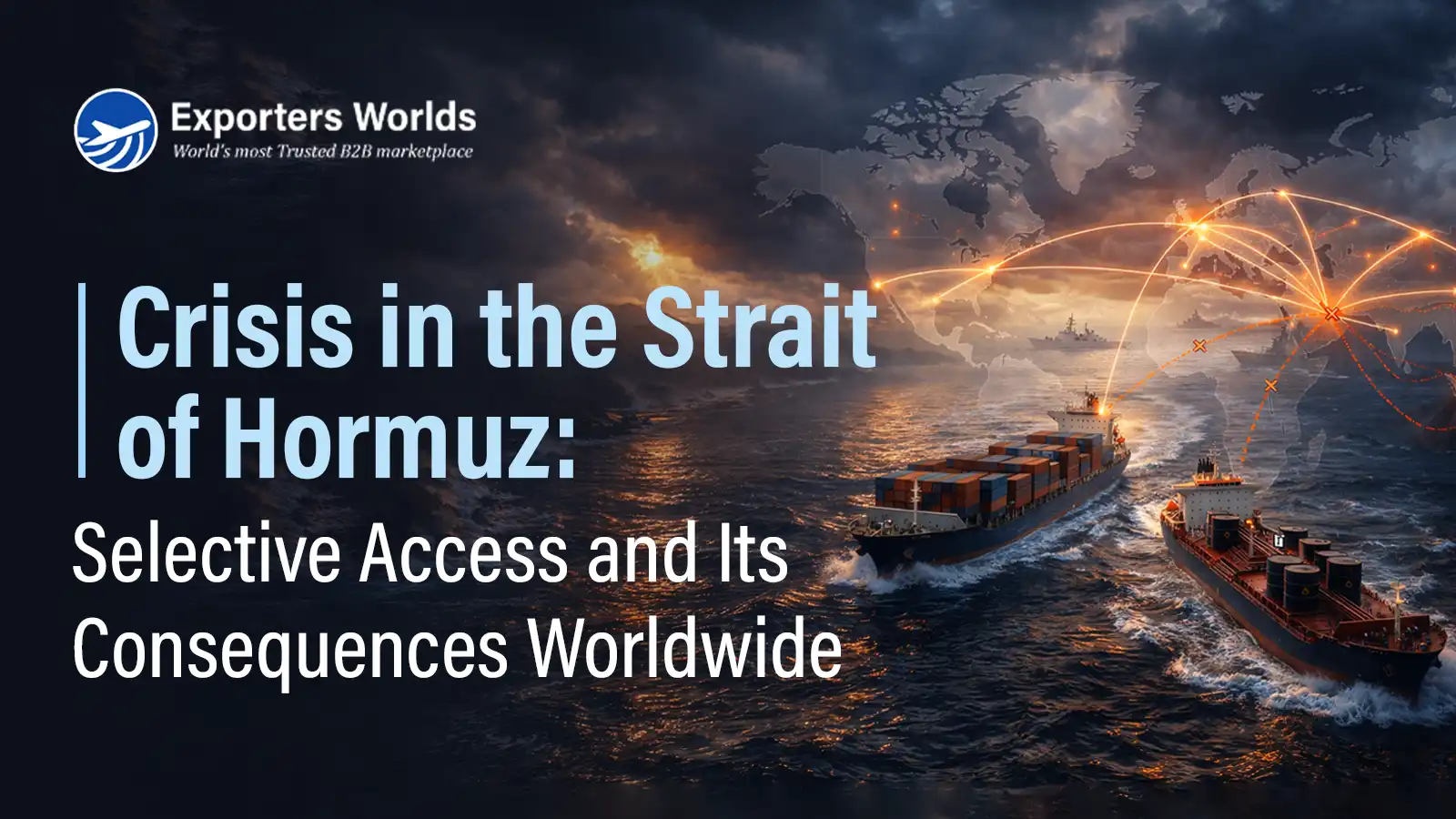
For decades, the Strait of Hormuz has been one of the most vital passageways for global trade. As the only route from the Persian Gulf to the open ocean, it is one of the most heavily trafficked passageways for global trade in energy. Any event that disrupts trade at the Strait of Hormuz impacts the entire world, regardless of the issue's initial geographic location.
For more than a year, the idea of “selective access” has been applied to the Strait of Hormuz. Instead of talking about a total blockade, the thought of access being granted to only “friendly nations” has created more uncertainty than a complete closure. Exporters, importers, and global consumers will have to readapt to a new paradigm of risk, logistical, and strategic sourcing.
Assessing the Significance of the Strait of Hormuz
The Strait of Hormuz is not just another maritime route; it is an essential artery for the global transportation of crude oil. Every day, the world’s crude oil supplies are transported through the Strait of Hormuz. Countries in Asia and Europe rely heavily on this route for their energy supplies and imports.
The Strait of Hormuz sees a high number of oil tankers transporting crude oil, LPG, and refined products, including jet fuel and EN590 diesel. Instability in the region negatively impacts the global availability, price, and time of delivery of fuels.
Along with oil, the Strait of Hormuz is pivotal for many other global trade routes. This makes the Strait of Hormuz a key strategic chokepoint of not only energy but for global trade.
What Is Meant by 'Selective Access'?
In the past, worries about the Strait of Hormuz focused on the possibility of an absolute blockade. The idea of selective access, however, alters the situation radically.
Instead of stopping all movement, some countries are allowed access while others are denied. This creates a tiered system in maritime commerce.
Countries in the trade-friendly tier
- Essentially no disruption to trade
Countries in the trade-hostile tier
- Disruption, increased costs, complete uncertainty
Additionally, this practice makes shipping, insurance, and supply chain management more unpredictable. Businesses that relied on consistent access are forced to alter their sourcing strategies.
Effects on Global Oil Supply and Energy Markets
The most immediate and obvious effect of the crisis is its impact on the global supply of oil. Even small restrictions can result in:
- Decreased availability of crude oil to international markets
- Increased volatility in oil prices
Panic buying and stockpiling by nations
When the transport of crude oil is hindered, the impact is felt beyond crude oil itself. It becomes more difficult to source the refined products, jet-fuel, LPG and EN590 diesel. This creates a cascade effect across the industries:
- Airlines pay more for fuel
- The manufacturing sector incurs higher costs of production
- Transport and logistics costs increase
- In these situations, even a small delay in shipments can disrupt entire supply chains.
- Increased costs in the transportation of oil
The restriction of movement also increases the costs of doing business. This is why shipping companies must factor in:
- The price of insurance is higher due to the geopolitical risk
- The length of the route in order to circumvent the reduced operational area is longer
- More fuel is required and the time to traverse the route is longer.
All of these factors tend to increase the cost of transport of crude oil, and will be passed onto the customers. This is felt the most by the importers, especially in the developing world, as they try to respond to the pressure of providing a sustainable system of supply at an economically achievable price.
Repercussions of Global Trade Route Interruption
The Strait of Hormuz is a critical point for international shipping, and interruptions here necessitate the reconfiguration of global trade routes.
New alternative routes are typically:
- More expensive
- Longer
- More complex
This is also applies to the trade of other commodities derived from or associated with the supply of energy and industrialized production materials. Exporters may be delayed in consummating orders while buyers may not have a firm date for the arrival of the goods.
Effects on Principal Commodities Involved: LPG, Jetfuel, and EN590
The scope of the current crisis is not identical for all of the commodities on the market. Energy related commodities will continue to experience the most immediate impact.
Challenges Around The Supply of LPG
The supply chain disruptions associated with Liquefied Petroleum Gas (LPG) can cause shortages and increase the price of LPG in countries where LPG is imported for domestic or industrial use, and in all other countries where LPG is used for industrial purposes.
Unpredictability in Jetfuel Pricing
Airlines operate at a tight profit margin, and a jet fuel price increase will also cause an increase in airline ticket fare and will have a negative impact on airline profitability. This will pose great financial risk to the aviation sector.
Pressure on the EN590 Diesel Market
The EN590 diesel standard is the most common standard for diesel fuel. It is very important to transport and industry. All of the logistics in agriculture, as well as in manufacturing, are very heavily affected by the supply chain disruptions of EN590 diesel standards.
Wider Effects on the Economy
Crisis in the Strait of Hormuz impacts the economy in more ways than just the energy sector, due to the rise of fuel prices which throws inflationary pressures on multiple economies.
Some of the most important impacts include:
- Rising Prices of Goods and Services
- Decreased Consumer Spending
- Increase in Economic Stagnation
For international traders, the greatest challenge is the uncertainty because the prospects of contract execution, pricing, and delivery commitments become extremely murky.
Impacts on Global Buyers and Importers
During these crises, global buyers and importers have to deal with many challenges, including:
- Finding reliable suppliers become extremely difficult
- Prices are highly volatile, and so are the supplies
- Shipments and deliveries are seriously delayed
- International trade risks become more pronounced
In this context, the significance of having a reliable supplier network is most pronounced.
How Exporters Worlds Assists Buyers in Times of Crisis
During times of global uncertainty, the possibility of quickly reaching verified suppliers can be invaluable, and this is the important function of Exporters Worlds.
Access to Verified Suppliers
Buyers are able to decrease their sourcing risks by accessing a network of verified suppliers that Exporters Worlds connects to, especially in the volatile energy and related sectors.
Expanded Supplier Network
Disruptions to traditional supply chains can be eased with access to a wider network, permitting buyers to find alternative sourcing opportunities more easily with regard to LPG, EN590, and other commodities.
Streamlined Buyer-Seller Communication
Time is of the essence when a supply disruption occurs. Exporters Worlds aids in the rapid communication of seller and buyer, placing the business in a position to secure a contract with little to no wait time.
Assistance in the Continuity of Global Trade
The Bridge to buyers and exporters fosters and supports trade, even when traditional global trading routes are compromised.
Recommended Actions for Businesses in a Crisis
In light of the circumstances, businesses should consider the following:
Geo-Sourcing
Risk is greater when one relies on a single region for supply. Alternative geo-sourcing is important.
Market Monitoring
Knowledge of fluctuating oil prices, shipping trends, and other important geo-political trends is crucial.
Bond with Supplier
An established relationship with a reliable supplier can provide peace of mind.
Utilize Exporters Worlds
The digital B2B platform Exporters Worlds is a good choice, as it is a sign of a business that can adapt to rapid changes in the market and find reliable partners.
Future Perspective on the Strait of Hormuz Situation
There is no doubt that the Strait of Hormuz will continue to be vital for international trade and the supply of energy even though the present situation lacks clarity.
In the uncertainties of future conflicts, selective access could become a more frequent practice, and the need for companies to be adaptive and ready will be crucial. Businesses with a diversified supply chain and robust global networking will be best able to manage that type of disruption.
Closing Remarks
The selective access policy highlights the vulnerability of international trade and the over-reliance on some critical trade routes. This new policy also created a layer of uncertainty towards the trade of crude oil, and other fuels including LPG, jetfuel, EN590.
For businesses and buyers, the challenges posed by selective access policies will require a high degree of adaptability and access to a reliable trading partner. Exporters Worlds and other similar platforms are critical in keeping trade flowing by linking buyers to trustworthy suppliers.
In today's trade ecosystem, disruption is the only guaranteed status. That is why adaptability and the capacity to quickly form new trade connections is critical for all businesses.