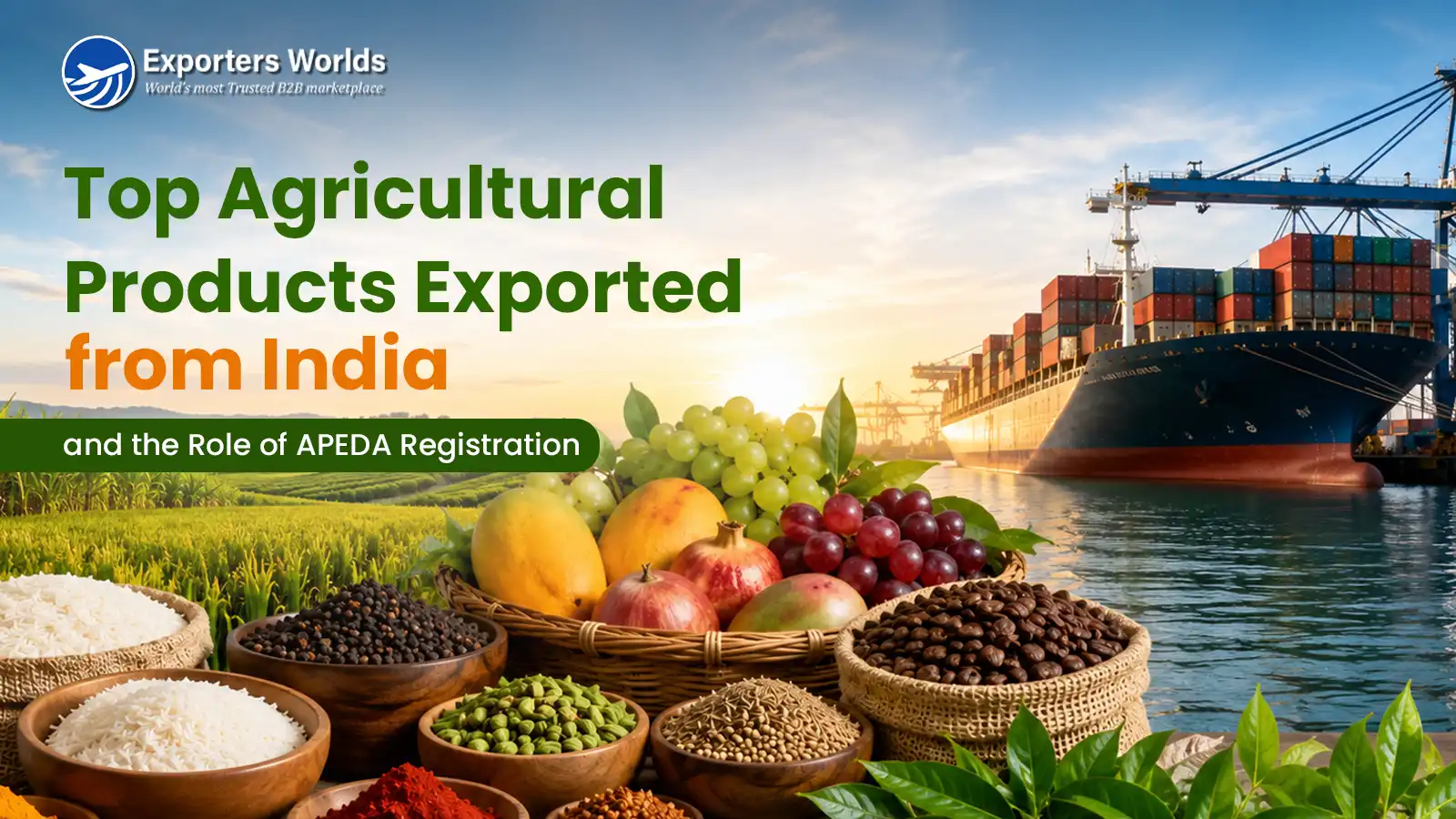
Top Agricultural Products Exported from India and the Role of APEDA Registration
India’s Agricultural Export Story Is Changing Fast
A few years ago, conversations around Indian agricultural exports mostly revolved around rice sacks being loaded at ports, spice auctions in traditional mandis, and bulk commodity shipments headed toward the Middle East or Africa. Today, the narrative looks completely different. Exporters are discussing QR-enabled traceability systems, organic certifications, residue-free farming practices, frozen ready-to-cook foods, nutraceutical ingredients, and premium retail shelf positioning in international supermarkets.
India is no longer seen merely as a low-cost supplier of raw agricultural commodities. It is increasingly becoming a global source of value-added, processed, health-oriented, and premium food products.
The numbers explain this shift clearly. India’s agricultural exports crossed nearly USD 51 billion in FY 2024-25, while APEDA scheduled products alone contributed over USD 28 billion. Indian agricultural products now reach more than 150 countries, serving markets ranging from the UAE and the United States to Europe, Southeast Asia, and Africa.
What makes this transformation especially important is the changing nature of global demand. Consumers across the world are becoming more health-conscious. Retail chains are demanding better traceability and food safety standards. Governments are tightening compliance rules. At the same time, the China+1 sourcing strategy is encouraging buyers to diversify procurement toward countries like India.
This has opened major opportunities in categories such as:
- Processed foods
- Organic products
- Frozen fruits and vegetables
- Millet-based foods
- Nutraceutical ingredients
- Ready-to-eat and ready-to-cook exports
For businesses exploring the list of products exported from India, agriculture remains one of the strongest sectors with long-term global potential. At the center of this ecosystem lies APEDA Registration, a regulatory and strategic requirement that serious exporters can no longer afford to ignore.
This article explores the major crops of India, the country’s fastest-growing agricultural export segments, emerging global trends, exporter challenges, and why APEDA Registration has become essential for sustainable international growth.
India’s Agricultural Export Ecosystem: Why the World Depends on Indian Produce
India’s Position in Global Agricultural Trade
India is one of the world’s largest agricultural economies and among the leading exporters of cereals, spices, tea, coffee, fruits, vegetables, sugar, and processed foods.
One of India’s greatest strengths is its agro-climatic diversity. From Himalayan temperate zones to tropical coastal belts, the country can cultivate multiple crop varieties throughout the year. This allows India to maintain a steady supply of agricultural goods across seasons, something many competing countries struggle to achieve.
Indian agricultural products are exported extensively to:
- UAE
- United States
- Saudi Arabia
- Iran
- Iraq
- Bangladesh
- Vietnam
- United Kingdom
- Netherlands
- Several African nations
This diversified export network gives Indian exporters both resilience and scale.
The Shift From Raw Commodities to Value-Added Exports
In many ways, the economics of agricultural exports are changing rapidly. Bulk commodity trading still matters, but the real profitability is increasingly moving toward processed, packaged, and branded agricultural products.
Exporters are now focusing on:
- Better margins
- Longer shelf life
- Easier transportation
- Lower spoilage risks
- Stronger international branding opportunities
Fast-growing categories include:
- Frozen vegetables
- Organic spices
- Ready-to-eat foods
- Millet-based health products
- Spice extracts
- Dehydrated vegetables
Many exporters who once depended entirely on raw commodity shipments are now investing in food processing units, cold storage infrastructure, and branding capabilities because global buyers are demanding more than just raw produce.
List of Products Exported from India: Key Agricultural Categories Dominating Global Markets
Cereals: India’s Largest Agricultural Export Segment
Basmati Rice Exports
India dominates the global basmati rice trade. Premium Indian basmati varieties are highly valued for their aroma, grain length, and cooking quality.
Major importing countries include:
- Iran
- Saudi Arabia
- UAE
- Iraq
- United States
Popular export varieties include:
- 1121 Basmati
- Pusa Basmati
- Traditional Basmati
The basmati segment is heavily monitored through export policies, contract registration systems, and minimum export price regulations managed through APEDA and DGFT frameworks.
Non-Basmati Rice Exports
India contributes nearly 40% of global rice exports, making it one of the most influential players in world food supply chains.
Key export destinations include:
- African nations
- Southeast Asia
- Bangladesh
However, non-basmati exports are closely affected by domestic food inflation concerns, export restrictions, and changing government policies.
Wheat and Maize Exports
India’s wheat production reached nearly 118 million tonnes in FY 2024-25. Large-scale production, government procurement systems, and competitive pricing support India’s export capability.
Meanwhile, maize exports are benefiting from rising global demand driven by:
- Poultry feed industries
- Industrial starch manufacturing
- Ethanol sector expansion
Major Crops of India Driving Export Revenue
Millets: India’s New Global Opportunity
The International Year of Millets significantly boosted global awareness around Indian millet varieties.
Key millet exports include:
- Bajra
- Ragi
- Sorghum
Global demand is rising due to:
- Gluten-free diets
- Health-conscious consumers
- Organic food trends
- Demand for high-fiber foods
Many exporters who previously ignored millets now position them as premium wellness products rather than low-value grains. That shift in perception has transformed pricing potential.
Pulses and Oilseed Exports
Pulses
India exports several pulse varieties such as:
- Chickpeas
- Moong
- Urad
Major markets include:
- UAE
- Canada
- Sri Lanka
- Middle Eastern countries
Oilseeds and Edible Crop Products
India also exports:
- Sesame seeds
- Groundnuts
- Castor oil
Rising global interest in vegan diets and plant-based proteins has strengthened demand for oilseed-derived products and healthy edible oils.
Why India Is Still Called the “Spice Bowl of the World”
India’s Expanding Spice Export Market
India remains one of the largest spice exporters globally. Its spice industry combines centuries-old cultivation traditions with modern processing and extraction technologies.
Major spice exports include:
- Turmeric
- Chilli
- Cumin
- Coriander
- Cardamom
- Black pepper
High-Growth Spice Trends Exporters Should Watch
The spice trade is evolving beyond raw spice shipments.
Fast-growing categories now include:
- Organic spices
- Oleoresins
- Spice extracts
- Ready spice blends
Turmeric’s Global Demand Explosion
Turmeric exports have surged due to growing interest in Ayurveda, wellness products, immunity boosters, and nutraceutical supplements.
Exporters dealing in turmeric today are no longer competing only in food markets. They are increasingly entering the health and wellness economy, where branding and quality compliance matter significantly more.
Tea, Coffee, Fruits, and Vegetables: India’s Premium Export Categories
Tea and Coffee Exports Moving Toward Premium Branding
Tea
Indian tea varieties continue to command global recognition.
Leading exports include:
- Assam Tea
- Darjeeling Tea
- Nilgiri Tea
Major importing regions include:
- Russia
- Iran
- UAE
- UK
Coffee
India’s coffee exports are witnessing strong growth in:
- Specialty coffee
- Single-origin coffee
- Premium Robusta segments
Key buyers include:
- Italy
- Germany
- Belgium
- Russia
Fruit and Vegetable Exports
Major Fruit Exports
India exports:
- Mangoes
- Bananas
- Grapes
- Pomegranates
Major Vegetable Exports
Key vegetable exports include:
- Onion
- Potato
- Okra
- Garlic
Why India Still Underperforms in Fresh Produce Exports
Despite strong production capacity, India still faces several bottlenecks in fresh produce exports.
Challenges include:
- Weak cold-chain infrastructure
- Logistics inefficiencies
- Compliance management gaps
- High domestic demand pressures
A mango exporter may cultivate exceptional fruit quality, but a breakdown in reefer logistics at the port can damage the entire shipment. That is the difficult reality of perishables trade where timing and infrastructure are critical.
Processed Food Exports: The Segment Growing Faster Than Most People Realize
Why Processed Agricultural Products Are Becoming Export Gold
Processed food exports are becoming one of the most promising segments in Indian agricultural trade. India exported processed fruits, juices, and nuts worth over USD 721 million during FY 2024-25.
Key products include:
- Frozen vegetables
- Fruit pulp
- Mango pulp
- Dehydrated onions
- Ready-to-eat meals
- Pickles
- Juices
Why Exporters Prefer Processed Food Categories
Processed products offer multiple commercial advantages:
- Better shelf life
- Reduced spoilage
- Easier compliance management
- Higher profit margins
- Stronger branding opportunities
High-Margin Agricultural Export Segments
Some of the highest-potential categories currently include:
- Organic spices
- Processed fruits
- Frozen foods
- Dehydrated vegetables
- Millet-based health products
- Specialty rice
What Is APEDA and Why It Matters in Agricultural Exports
Understanding APEDA’s Role in India’s Export Ecosystem
APEDA stands for Agricultural and Processed Food Products Export Development Authority.
It was established under the APEDA Act of 1985 and functions under the Ministry of Commerce and Industry.
APEDA plays a major role in supporting India’s agricultural export ecosystem through:
- Export promotion
- Exporter registration
- Infrastructure development support
- Branding assistance
- Traceability systems
- Market intelligence
- Quality certification support
Products Covered Under APEDA
Products falling under APEDA include:
- Fruits and vegetables
- Cereals
- Processed foods
- Dairy products
- Meat products
- Honey
- Groundnuts
- Organic products
- Herbal products
- Beverages
It is important to note that marine products fall under MPEDA, not APEDA.
APEDA Registration Explained: Why Exporters Cannot Ignore It
What Is APEDA Registration?
APEDA Registration refers to obtaining the Registration-Cum-Membership Certificate (RCMC) required for exporters dealing in scheduled agricultural products.
For many agricultural export categories, this registration is mandatory.
Why APEDA Registration Has Become More Important Than Before
Legal Compliance and Export Legitimacy
APEDA registration establishes export legitimacy and regulatory compliance.
It acts as:
- An official export recognition mechanism
- A compliance requirement
- A trade authorization framework
Access to Export Incentives and Government Schemes
Registered exporters can access:
- Financial assistance schemes
- Branding support
- Trade fair participation opportunities
- Infrastructure development programs
Better Buyer Trust and International Credibility
Global buyers increasingly evaluate exporters based on compliance readiness and traceability capabilities.
Many international buyers now treat APEDA Registration as a preliminary trust filter before discussing pricing or shipment terms.
Support for Food Safety and Global Standards
APEDA also supports exporters with:
- HACCP systems
- Global GAP alignment
- Residue monitoring systems
- Phytosanitary compliance support
Step-by-Step APEDA Registration Process for Exporters
Documents and Eligibility Requirements
Common documents required include:
- IEC certificate
- PAN card
- GST registration
- Cancelled cheque
- Address proof
Step-by-Step Registration Flow
Obtain IEC From DGFT
Exporters must first secure an Import Export Code from DGFT.
Apply Through APEDA Portal
The application process is fully digital through the APEDA portal.
Upload Documents and Pay Fees
The registration fee is approximately ₹5,000 plus GST.
Receive Electronic RCMC
Once verified, exporters receive the electronic Registration-Cum-Membership Certificate.
Common Mistakes First-Time Exporters Make
Frequent mistakes include:
- Incorrect HS code selection
- Incomplete documentation
- Ignoring compliance certifications
- Delayed traceability implementation
New Export Trends Reshaping India’s Agricultural Trade
Digital Traceability Is Becoming Non-Negotiable
Modern buyers increasingly demand:
- Blockchain traceability
- QR-based product tracking
- Digital export documentation
This is especially important in:
- Grapes
- Rice
- Organic products
Sustainability Pressure From Global Buyers
International retailers now expect:
- Water-efficient farming
- Reduced pesticide usage
- Sustainable sourcing practices
Rise of Organic and Residue-Free Exports
Fast-growing categories include:
- Organic rice
- Organic spices
- Chemical-free herbs
- Residue-free fruits
Infrastructure Modernization in Agricultural Exports
India is gradually strengthening:
- Cold chains
- Reefer logistics
- Pack houses
- Irradiation facilities
- Testing laboratories
Challenges Indian Agricultural Exporters Still Face
Logistics and Freight Bottlenecks
Exporters continue to struggle with:
- Port delays
- Reefer shortages
- High freight costs
Quality Compliance Issues
Global compliance requirements are becoming stricter.
Major concerns include:
- EU residue standards
- SPS regulations
- Testing failures
Climate and Policy Risks
Agricultural exports remain vulnerable to:
- Water scarcity
- Heat stress
- Monsoon dependency
- Sudden export bans
- Policy changes
Fragmented Farming Structure
Small landholdings often create:
- Inconsistent quality
- Supply chain fragmentation
- Standardization challenges
One weak link in packaging, storage, pesticide management, or transportation can disrupt an entire export order. Agricultural exports are far more complex than simply growing and shipping products.
Future Outlook: Where India’s Agricultural Export Industry Is Heading
Sectors Likely to Grow the Fastest
The next decade is expected to see rapid growth in:
- Organic foods
- Health foods
- Frozen products
- Processed exports
- Millet products
- Nutraceutical ingredients
Key Growth Drivers Over the Next Decade
Several structural drivers are shaping this growth:
- Agri-tech adoption
- Export-oriented food processing
- Traceability systems
- Sustainable farming
- Farmer Producer Organizations (FPOs)
Why APEDA Will Become Even More Important
As compliance expectations increase globally, APEDA will likely play an even larger role in helping exporters navigate:
- International certifications
- Food safety regulations
- Transparency standards
- Export infrastructure requirements
Conclusion: India’s Agricultural Export Future Is No Longer Just About Volume
India’s agricultural export industry is moving through a major transformation. The country is steadily evolving from a bulk commodity supplier into a diversified, value-added global food powerhouse.
The list of products exported from India is expanding rapidly beyond traditional staples. Similarly, the major crops of India are being repositioned for premium international markets through processing, branding, traceability, and health-focused positioning.
The exporters likely to dominate the next decade may not necessarily be the largest producers. They will more likely be businesses that adapt quickly to compliance requirements, consumer expectations, sustainability standards, and digital transparency systems.
This is exactly where reliable export ecosystem partners become increasingly important.
Platforms like Exporters Worlds are helping businesses simplify the complexities of international trade through export assistance, digital visibility, buyer connections, trade documentation support, and data-driven strategies tailored for global expansion. For businesses entering agricultural exports or scaling internationally, having access to integrated B2B support can make the difference between inconsistent shipments and sustainable long-term growth.
As agricultural trade becomes more competitive, APEDA Registration is no longer just a regulatory checkbox. It is becoming a foundational step toward building credibility, compliance readiness, and international market access.
Businesses that invest early in quality systems, traceability infrastructure, and export compliance will likely be far better positioned for the next phase of global agricultural trade.
FAQs
Is APEDA Registration mandatory for agricultural exports from India?
Yes. For products scheduled under APEDA regulations, obtaining APEDA Registration through the RCMC process is generally mandatory for exporters.
Which products require APEDA Registration?
Products such as cereals, fruits, vegetables, processed foods, meat products, dairy products, honey, and organic products usually require APEDA registration.
What is the difference between APEDA and MPEDA?
APEDA manages agricultural and processed food exports, while MPEDA specifically regulates marine product exports.
How much does APEDA Registration cost?
The registration fee is approximately ₹5,000 plus applicable GST charges.
Can small businesses and farmers apply for APEDA Registration?
Yes. Small exporters, startups, Farmer Producer Organizations (FPOs), and agricultural businesses can apply if they meet eligibility requirements.
Which agricultural products have the highest export potential from India in 2026?
High-potential categories include organic foods, frozen vegetables, millet products, processed foods, specialty rice, nutraceutical ingredients, and spice extracts.