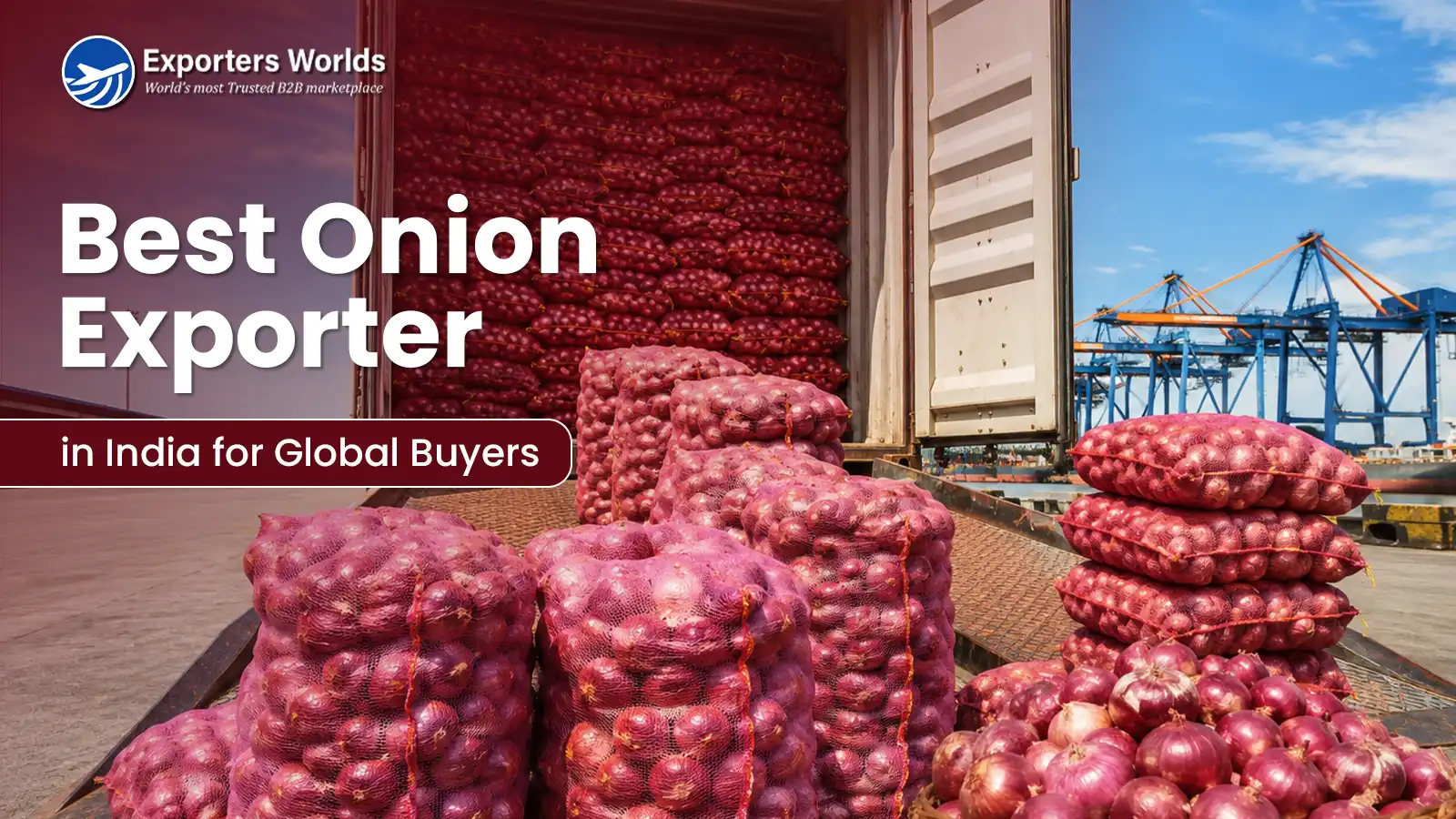
Best Onion Exporters in India for Global Buyers
Why Global Buyers Are Looking at India Again for Onion Imports
In late 2024, the global onion trade faced significant turbulence. Sourcing operations that relied heavily on India were severely disrupted by unpredictable export restrictions. Containers were delayed, prices fluctuated erratically, and long-term procurement planning became nearly impossible. Frustrated by the instability, many importers across the GCC and Southeast Asia pivoted to alternative markets like Pakistan and Egypt.
However, by early 2025, the landscape shifted dramatically.
Effective April 1, 2025, India officially removed the 20% onion export duty. Almost immediately, global buyers returned—and aggressively so. Procurement teams from the UAE, Malaysia, Sri Lanka, Bangladesh, and Saudi Arabia quickly reconnected with Indian suppliers. The reason is simple: India still offers one of the deepest, most scalable, and highly competitive sourcing ecosystems in the world. With pricing transparency restored and shipment predictability improved, the country's export import infrastructure is back at the center of international trade discussions.
Today, buyers aren't just hunting for the lowest price. They are prioritizing reliability, shelf life, shipment consistency, and long-term procurement partnerships.
Why India Continues to Dominate the Global Market
India’s strength in agricultural trade stems from a distinct advantage that competitors struggle to replicate: scale combined with continuity. Unlike nations that rely on a single harvest window, India’s multiple crop cycles throughout the year significantly reduce supply gaps.
Key factors driving India’s attractiveness include:
- Competitive and flexible pricing structures.
- Varieties boasting excellent shelf life and durability.
- Massive production and cold-storage capacities.
- Established international shipping routes.
For seasoned importers, this consistency is paramount. Saving a few dollars per metric ton from a cheaper supplier can quickly be offset by the costs of delayed shipments, inconsistent grading, or excessive wastage. Global procurement firms are increasingly partnering directly with established onion exporters to secure robust supply chains.
The Rise of Nashik: India’s Export Nerve Center
If India is an agricultural powerhouse, Nashik, Maharashtra, is its operational heartbeat. The region is home to the Lasalgaon APMC—Asia’s largest onion market—where daily auction volumes dictate both domestic and international pricing.
Nashik produces premium export-grade onions designed for longer shelf life, backed by advanced cold storage, efficient inland transportation, and APEDA-supported infrastructure. Its geographic proximity to major ports like JNPT and Nhava Sheva allows exporters to consolidate shipments rapidly, mitigating inland freight delays. In the onion wholesale ecosystem, this logistical reliability makes Nashik an invaluable hub.
Major Policy Changes Reshaping 2025–2026
The Removal of the 20% Duty
The Indian government’s removal of the 20% export duty in April 2025 was a watershed moment for agricultural trade. Designed to boost global competitiveness and stabilize domestic farming demand, the policy change offered buyers immediate benefits:
- Lower landed procurement costs.
- Stronger contracting confidence.
- Better shipment and inventory planning.
Lessons from 2023–2024
The volatile period of export bans, Minimum Export Prices (MEP), and steep duties taught international buyers a vital lesson. While diversifying supply chains is necessary, replacing India’s production scale, variety availability, and logistics depth entirely is incredibly difficult. Moving forward, experienced buyers are incorporating policy-risk clauses into their sourcing contracts to safeguard against sudden regulatory shifts.
Leading Indian Exporters for Global Buyers
Evaluating red onion exporters in 2026 requires looking beyond price. Top-tier suppliers must possess APEDA registration, robust packaging standards, logistics capabilities, and strict compliance documentation. Here are some of the standout names in the industry:
- RGH Group: Boasting over five decades of experience, they specialize in premium red onions for supermarkets and foodservice distributors across the GCC and Europe.
- Jain Farm Fresh Foods: A leader in processed and dehydrated onion products, ideal for industrial food manufacturers seeking stable ingredient sourcing.
- Mahindra Agri Solutions: Brings corporate-scale traceability, quality consistency, and structured logistics to institutional procurement.
- Kay Bee Exports: Known for specialized cold-chain capabilities and multi-market shipping flexibility.
- Suyog Agro Foods: Highly recognized for competitive wholesale pricing and bulk shipment suitability, particularly for Middle Eastern and African markets.
- Shah Nanji Nagsi Exports Pvt. Ltd.: Dominates the processed segment, supplying high-demand onion powder and flakes.
- Global United Exports & Agrocorp International: Provide exceptional supply chain coordination, flexible MOQs, and large-scale, multi-country shipment handling.
Expanding Product Categories
While fresh produce remains the backbone of the industry, India’s export portfolio is diversifying:
- Fresh Red & White Onions: The dominant categories, favored for their pungency, bulk shipping durability, and high demand in GCC wholesale markets.
- Dehydrated Onion Products: The fastest-growing segment. Onion flakes, powders, and frozen ingredients offer food manufacturers longer shelf life and immunity against fresh produce price volatility.
- Organic & Specialty Markets: Rising demand for traceable, farm-sourced, and private-label packaging.
- Onion Sets: While traditional bulbs dominate the export volume, there is an emerging, specialized agricultural market for onion sets—small, dormant bulbs exported primarily for replanting and accelerated cultivation in destination countries.
Pricing Dynamics and Buyer Evaluation Strategies
Current FOB pricing indicates healthy competitiveness. Standard red onions generally trade between $230–$280 per metric ton, while premium grades or white onions can push toward $420/MT, heavily influenced by weather, harvest timing, and freight rates.
When evaluating suppliers, buyers must prioritize:
- APEDA & Compliance: Ensure the exporter has a valid IEC code, GST registration, and an APEDA certificate.
- Packaging Standards: Poor packaging (rather than high pricing) is the leading cause of financial loss. Mesh bags, jute bags, and well-ventilated cartons are critical.
- Logistics Reliability: Access to reefer containers and proximity to major ports (JNPT, Mundra, Chennai) directly impact transit times—which range from 5–8 days for the UAE to 22–35 days for Europe.
- Certifications: Serious buyers should demand GLOBALG.A.P, HACCP, FSSAI, ISO 22000, or BRC certifications to ensure traceability.
Understanding and Mitigating Risks
Even with favorable duties, buyers must navigate structural and environmental risks:
- Policy Volatility: India's market remains politically sensitive. Maintaining backup sourcing countries is still a wise strategy.
- Climate Disruptions: Heatwaves and irregular monsoons can impact harvest yields, sprouting resistance, and overall bulb quality.
- Freight Instability: Global shipping bottlenecks and container shortages continue to pose challenges to transit consistency.
Final Thoughts: Prioritizing Reliability in 2026
India has definitively reclaimed its competitive edge in the global onion market following the April 2025 duty removal. Nashik remains an unmatched sourcing hub, and the rapid growth of dehydrated exports points toward a more stable, processed-ingredient future.
In the international produce trade, reliability consistently beats bargain pricing. A single delayed shipment or a container ruined by poor packaging during peak retail season can easily erase months of aggressive procurement savings.
Navigating this complex landscape requires more than just a list of suppliers—it requires robust ecosystems that simplify supplier discovery, compliance verification, and communication. This is exactly why global businesses are increasingly utilizing platforms like Exporters Worlds. As a premier B2B marketplace, Exporters Worlds bridges the gap between international buyers and verified Indian agricultural networks, offering a trusted environment where modern trade happens faster, safer, and smarter. When planning your 2026 procurement, start by prioritizing verified, APEDA-certified partners who value transparent logistics over just the lowest quote.
Frequently Asked Questions (FAQs)
1. Which city is best for sourcing onions in India?
Nashik, located in Maharashtra, is universally recognized as the premier sourcing hub. It features a massive production ecosystem, houses Asia’s largest onion market (Lasalgaon APMC), and boasts unmatched export infrastructure and port proximity.
2. What changed after India removed the onion export duty in 2025?
The removal of the 20% export duty in April 2025 immediately improved India’s pricing competitiveness on the global stage, reduced landed costs for international buyers, and restored predictability to long-term shipment planning.
3. Which certifications should global buyers verify before importing onions?
To ensure safety, quality, and traceability, buyers should verify that exporters hold APEDA registration, alongside international standards like FSSAI, GLOBALG.A.P, HACCP, ISO 22000, BRC, and Halal certifications where applicable.
4. Are dehydrated onion exports growing faster than fresh onion exports?
Yes. Processed segments—including onion powder, flakes, and dehydrated ingredients—are experiencing rapid growth. Food manufacturers prefer them because they offer vastly superior shelf life, easier storage, and protection against the price volatility of fresh produce.
5. What are the biggest risks when sourcing onions from India?
The primary risks include sudden domestic export policy shifts (though stabilized as of 2025), weather and climate disruptions affecting crop yield, unpredictable global freight bottlenecks, and potential shipment losses due to inconsistent or substandard packaging.