Hong Kong Rice Import Guide 2026: Regulations, Buyers & Shipping Explained
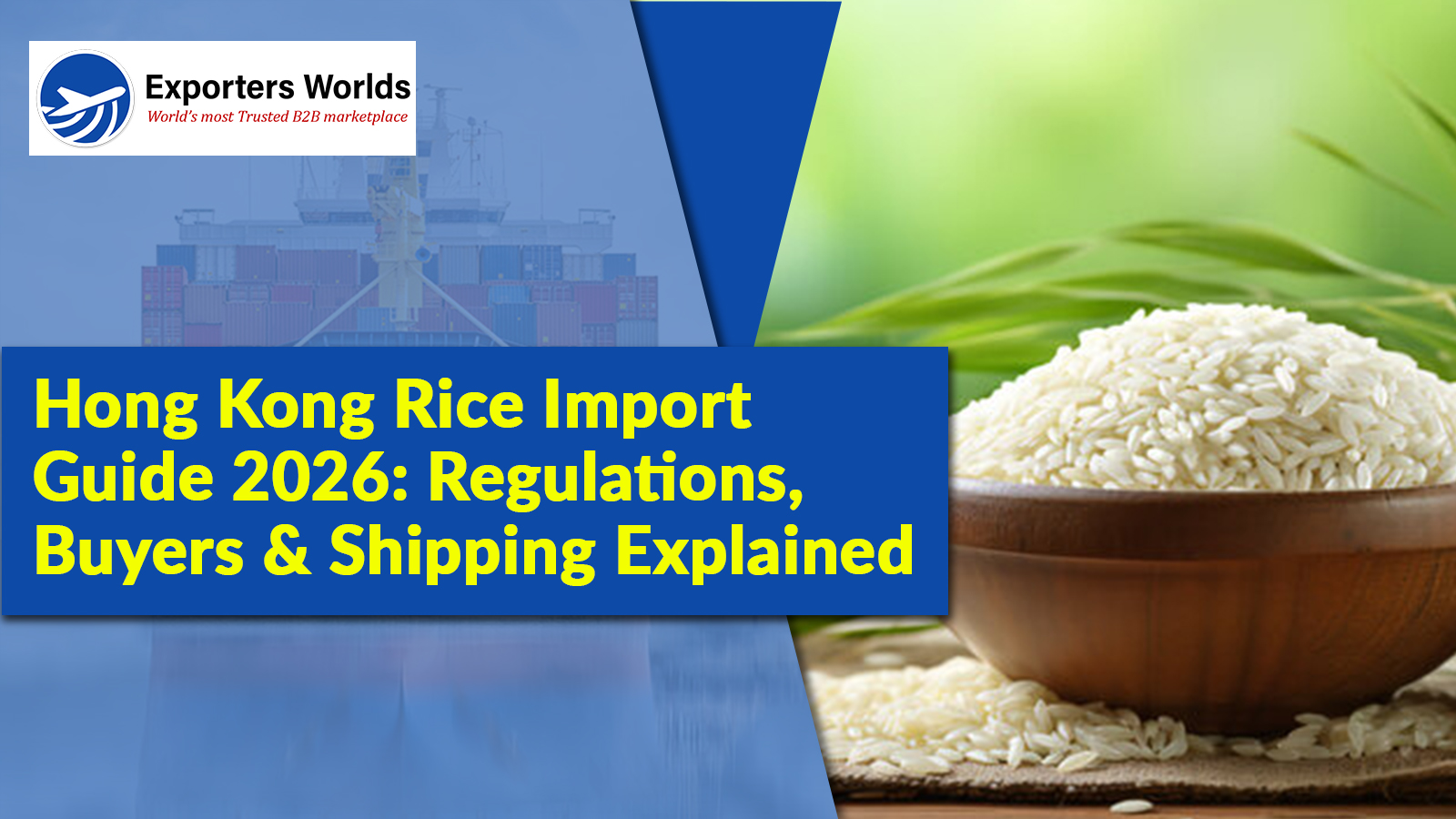
Hong Kong is one of the most vibrant rice markets in Asia, but it is also one of the most strictly regulated. For anyone exploring Hong Kong rice import opportunities, it’s essential to understand that while the city is a “free port” for most goods, rice is classified as a Reserved Commodity.
This means the market is not open to just anyone. It is controlled by a specific framework known as the Rice Control Scheme.
If you are a global supplier (from India, the US, Thailand, or Vietnam) or a local buyer, you cannot simply ship a container and hope for the best. You need to understand the Stockholder System.
This guide breaks down exactly how the regulations work in 2026, the current market preferences for Basmati and Jasmine, and how Exporters Worlds can connect you with the specific licensed partners you need to enter the market safely.
Rice is one of many essential food products entering the city each year, and it sits within a much broader trade ecosystem shaped by Hong Kong imports across multiple categories.
Step 1: The Market Landscape (2026 Outlook)
Before dealing with paperwork, you must understand what Hong Kong actually buys. The market is sophisticated, with a clear split between daily staples and premium varieties.
- The Dominant Player (Thailand): Thai Jasmine (Hom Mali) remains the gold standard in Hong Kong, preferred by households and premium Chinese restaurants for its texture and fragrance.
- The Competitors (Vietnam & Cambodia): In recent years, Vietnamese and Cambodian fragrant rice varieties have gained significant traction as high-quality, cost-effective alternatives to Thai rice.
- The Premium Niche (Basmati): There is a consistent, high-value demand for Basmati Rice (primarily from India and Pakistan) driven by the city’s large expatriate community and luxury dining sector.
- The Specialty Sector: Japonica (Sushi rice) and US long-grain rice maintain steady demand from specific hotel chains and Japanese restaurants.
If you are looking to import rice into Hong Kong, selecting the right grain type for your target buyers is essential. Explore our full range of rice products to match Hong Kong’s market demand.
Pro Tip: If you are a supplier of Indian Basmati or US Premium Rice, you are often targeting a different set of buyers than the mass-market Jasmine importers. Exporters Worlds can help you identify which Hong Kong buyers specialize in your specific grain type.
Step 2: The Regulations (The "Rice Control Scheme")
Crucial Correction: Many online guides incorrectly state that the Agriculture, Fisheries and Conservation Department (AFCD) issues import licenses. This is false.
The rice trade is managed by the Trade and Industry Department (TID). To trade legally, you must navigate two specific hurdles:
(Regulatory source: Trade and Industry Department — Rice Control Scheme. Confirm current licence application process and stockholder obligations on the TID website.)
1. The Stockholder Requirement
Hong Kong does not have "Import Quotas" (limits on how much you can import), but it has a Reserve Stock Obligation.
- Rice can only be imported by companies registered as Stockholders.
- These Stockholders are legally required to maintain a specific percentage of their imports as a "Reserve Stock" in approved warehouses to ensure food security for the city.
- The Reality: Because maintaining a reserve stock requires significant capital and warehousing, the number of registered Stockholders is limited. Most small buyers cannot import directly; they must buy from these licensed giants.
2. The Import Licence (Form 3)
- Every single shipment of rice entering Hong Kong requires a valid Import Licence (Form 3) issued by the TID.
- This license must be secured before the shipment arrives.
Step 3: Sourcing & Connecting with Buyers
This is where most businesses fail. They try to sell to companies that do not hold a Stockholder License, leading to dead ends.
For Buyers in Hong Kong:
You need suppliers who understand "Hong Kong Specifications." The humid climate means buyers demand rigorous Fumigation Certificates and often prefer Vacuum Packaging for retail.
For Suppliers (India, US, Vietnam, Thailand):
You need direct access to the Registered Stockholders. Cold-calling random trading companies is ineffective because if they aren't on the TID's list, they cannot clear your cargo.
This is where Exporters Worlds helps. We bridge the gap between global suppliers and verified Hong Kong importers.
- Exporting Basmati? We connect you with Stockholders who specialize in the South Asian and luxury hotel distribution channels.
- Exporting Jasmine? We connect you with the major distributors supplying local supermarket chains.
Step 4: Shipping & Logistics Compliance
Hong Kong’s Port Health Office is extremely strict regarding pests. To avoid rejection at customs:
- Phytosanitary Certificates: Must be issued by the government of the exporting country (e.g., India or Thailand) certifying the cargo is free from pests/weevils.
- Fumigation: Phytosanitary treatments or approved quarantine measures are commonly required. Ensure any fumigation or treatment is performed to the standards accepted by Hong Kong authorities and that the exporting authority issues a matching phytosanitary/fumigation certificate. Confirm approved treatments with AFCD before shipment.
- Moisture Content: High moisture leads to spoilage in Hong Kong's humidity. Experienced buyers will specify strict moisture limits in their purchase orders.
Most rice shipments enter via Hong Kong’s Kwai Chung Terminals using standard 20ft or 40ft containers. Transit times vary by origin—India (14–18 days), Thailand/Vietnam (3–6 days), and the US West Coast (14–20 days). Hong Kong buyers typically specify packaging (poly bags or vacuum packs), palletization, and container loading standards to ensure smooth handling and storage.
Conclusion: How to Enter the Market Safely
The Hong Kong rice market is profitable but "gated."
- If you try to go it alone: You risk targeting unlicensed buyers or failing regulatory compliance.
- The Smart Route: Connect with partners who already have the license and the logistics in place.
Don't guess with regulations. Whether you are looking to buy wholesale rice or export Basmati and Jasmine rice to Hong Kong, let the experts handle the connections.
Ready to trade? Exporters Worlds connects verified buyers with top-tier suppliers from India, the US, Thailand, and Vietnam.
Click here to connect with our team and get matched with the right partners for the Hong Kong market today.
Frequently Asked Questions - FAQs (2026 Import Guide)
Q1: Is there an import tax or duty on rice in Hong Kong?
A: No, Hong Kong is a free port and does not levy customs tariffs on rice imports. However, importers are still required to lodge an Import Declaration with the Customs and Excise Department within 14 days of the shipment’s arrival. You can review the official process under the Hong Kong Customs import declaration requirements. Although there is no tax, importers should budget for other compliance-related costs such as reserve stock obligations, approved warehousing, and the phytosanitary or fumigation treatments required for Hong Kong rice import shipments.
Q2: Can a restaurant or hotel import rice directly from a supplier in India or Thailand?
A: Generally, no—unless the restaurant is also a registered Stockholder. Under the Rice Control Scheme, only registered Stockholders can import rice for local consumption. Most restaurants and hotels must purchase from these authorized importers or distributors. If you are a hotel chain looking for a specific premium grain (like aged Basmati), Exporters Worlds can connect you with a Stockholder willing to import that specific variety on your behalf.
Q3: Is Basmati rice exempt from the "Reserve Stock" requirement?
A: No. A common misconception is that "specialty" rice is exempt. All rice meant for consumption in Hong Kong is subject to the Rice Control Scheme regulations, including the requirement for Stockholders to maintain a reserve percentage. Whether it is Thai Jasmine, Indian Basmati, or US Japonica, the importer must possess the correct Import Licence (Form 3) from the Trade and Industry Department (TID).
Q4: Why do shipments often get rejected at Hong Kong ports?
A: The most common reason for rejection is pest infestation (weevils) or insufficient fumigation documentation. The Hong Kong Port Health Office maintains a strict zero-tolerance policy for pests. Even if the rice is high quality, if the Phytosanitary Certificate does not match the cargo, or if live insects are found during inspection, the entire container may be detained or ordered to be returned to the country of origin.
Q5: Can I re-export rice from Hong Kong to Mainland China or other countries?
A: Yes, Hong Kong is a major re-export hub, but this process is also regulated. You must obtain a Re-export Licence from the TID. You cannot simply move rice from an import warehouse to a re-export vessel without notifying the department, as this affects the calculation of the city's total reserve stock levels.
Q6: How does Exporters Worlds help if I don't have a license?
A: Exporters Worlds is a B2B connection platform. We are not a government agency, but we bridge the gap between unregistered buyers/suppliers and the licensed players.
- For Suppliers: We introduce your products to the 200+ registered Stockholders who do have the license to import your goods.
- For Buyers: We help you find verified suppliers who are experienced in preparing the specific documents (Form 3 support, Fumigation) that Hong Kong Stockholders require.