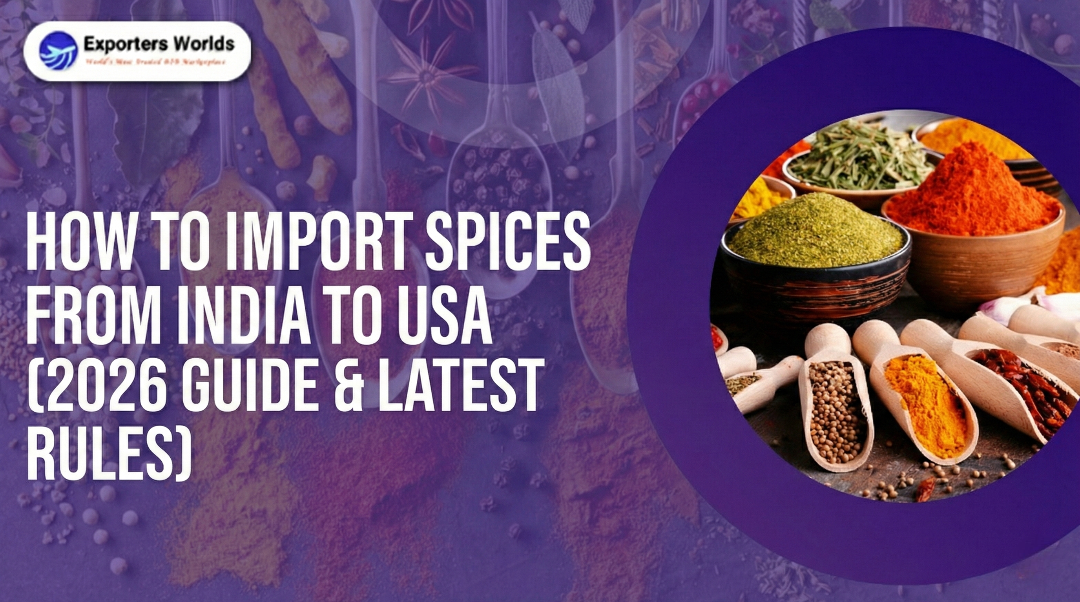
How to Import Spices from India to USA (2026 Guide & Latest Rules)
Last Updated: January 2026
This guide reflects current U.S. tariff exemptions, FDA import rules, and supplier compliance requirements.
If you are planning to learn how to import spices from India to the USA, the opportunity remains strong going into 2026. In November 2025, the White House issued an Executive Order modifying reciprocal tariffs and exempting several agricultural categories, including Indian spices such as pepper, cumin, and turmeric, from the highest ad-valorem duties.
As a result, many U.S. buyers can now import these spices with significantly lower tariff exposure compared to previous months. However, lower landed costs have been accompanied by stricter regulatory scrutiny. FDA refusals for Indian spice shipments increased sharply across late 2024 and 2025, largely due to Salmonella and other microbiological concerns. The opportunity is substantial, but only for importers who prioritize compliance, supplier verification, and documentation. Here’s how to capitalize on the post-tariff environment without getting your shipment detained.
1. Why Indian Spices Are Booming in the U.S. Market
Indian spices continue to register strong growth in the U.S. market. Recent industry reports place the U.S. spices & seasonings market in the mid-single-digit growth range (varying by report), with particularly strong demand for turmeric, cumin, black pepper, cardamom, red chili and multi-spice blends. Consumers increasingly seek authenticity, transparent sourcing, organic certification and clean-ingredient labels — and India remains a primary global supplier for those requirements.
2. Understanding the U.S. Market for Indian Spices
2.1 Demand Trends in 2026
Here’s what’s driving the spike:
- Turmeric and cumin have moved from niche to mainstream in many U.S. households.
- Chili and curry blends remain popular across ethnic and fusion restaurant menus.
- Clean-label and certified organic segments are growing faster than conventional categories, increasing demand for verified organic and traceable Indian spice SKUs.
- Continued interest in at-home cooking and wellness ingredients is sustaining import growth for functional spices (e.g., turmeric, ginger).
More Americans are cooking at home, experimenting with global flavors, and choosing organic—making imported Indian spices a high-potential product line.
2.2 Top Spices Imported into the U.S.
Among the top spices exported from India, these consistently rank highest:
- Turmeric
- Cumin
- Black pepper
- Cardamom
- Red chili
- Curry blends
- Organic turmeric, ginger, and pepper
Organic variants and ready-to-mix blends are the fastest-growing segments.
3. India as a Global Spice Export Hub
3.1 Why India Dominates the Industry
India is the world’s largest producer and exporter of many spices, supplying a substantial share of global spice varieties and volumes.
- Massive diversity of spices
- Strong certification ecosystem
- Advanced processing facilities
- Fast-growing organic farming clusters
3.2 Top Spices Exported from India (2026 Update)
India continues to be the world’s largest spice supplier, with consistently high export volumes across major lines — notably turmeric, cumin, chili, black pepper, and cardamom. Organic spices and ready-to-mix blends remain among the fastest-growing segments. For HS-level export volumes and year-on-year figures, importers should reference APEDA and DGCI&S monthly export bulletins for precise, up-to-date data.
Organic spices manufacturers in India are playing an increasingly important role. U.S. demand for chemical-free, traceable, and NOP-certified spices continues to grow, creating strong opportunities for exporters with verified organic certifications and robust compliance systems.
Post-Tariff Cost Opportunity (2026):
Following the U.S. tariff modifications implemented in late 2025, many spice categories now face lower tariff exposure at the time of import. In several SKUs, landed costs have decreased while U.S. wholesale and retail prices have remained relatively stable. This creates a temporary margin opportunity for importers who secure compliant suppliers, confirm HTS classification with customs brokers, and lock in pricing under current market conditions. Actual savings vary by HS code, packaging format, freight rates, and regulatory treatment.
4. Step-by-Step Process: How to Import Spices from India to USA
Step 1: Choose the Spices You Want to Import
Start by finalizing your categories:
- Whole spices
- Ground spices
- Spice mixes
- Organic vs conventional
This also determines your FDA classification — food vs dietary supplement — which affects labeling and documentation.
Step 2: Find Reliable Suppliers in India
This is the foundation of your business.
Good wholesale spice suppliers in India include:
- Direct farmers
- Processing units
- Exporters with sterilization facilities
- Organic-certified plants (NOP, USDA Organic)
How to vet them:
- Check certifications
- Request lab reports
- Assess export experience
- Conduct facility audits (virtual or in-person)
Step 3: Verify Certifications & Compliance
For Indian exporters, key certifications include:
- APEDA registration
- FSSAI license
- HACCP / ISO 22000
- Organic NOP (for organic imports)
- GMP
- Mandatory lab test reports: pesticide, microbiological, heavy metals
Traceability and batch-level reporting have become essential in 2026.
Step 4: Understand U.S. Import Regulations
The U.S. has strict rules for imported food. Make sure you’re compliant with:
- FDA Food Facility Registration
- FSVP (Foreign Supplier Verification Program)
- Proper labeling (nutrition panel, allergens, country of origin)
- USDA rules for organic products
- CBP (Customs and Border Protection) clearance
FSMA’s Preventive Controls apply if you’re repacking, blending, or storing spices for resale.
Step 5: Shipping & Logistics
Choose between:
- Sea freight (cheaper, slower)
- Air freight (faster, more expensive)
Key packaging norms for Indian spices export to USA:
- Moisture-proof laminated pouches
- Food-grade bulk bags
- Correct HS code labeling
- Palletized shipping for large lots
Understanding INCOTERMS (FOB, CIF, EXW) is non-negotiable.
Step 6: Customs Clearance in the U.S.
Documents required:
- Bill of Lading
- Commercial Invoice
- Packing List
- Certificate of Origin
- FSVP documents
- Organic Certificate (if applicable)
Quick reminder: Before shipping, confirm the 8–10 digit HTS code with your customs broker and ask whether your SKU is covered by the Nov 2025 tariff modifications; this avoids misclassification and surprise duties.
FDA may collect samples on arrival. Be prepared for:
- Release
- Hold
- Examination
- Detention (if non-compliant)
Step 7: Distributor Partnerships & Storage
Spices need:
- Temperature-controlled storage
- Low humidity
- Proper ventilation
After that, build U.S. distribution through:
- Retailers
- Online marketplaces
- Wholesalers
- Restaurant suppliers
5. Choosing the Right Supplier in India
5.1 Evaluating Wholesale Spice Suppliers
Look for:
- Purity levels
- Moisture content
- Volatile oil percentage (for aroma)
- Third-party lab testing
- Transparent pricing
- Strong export record
5.2 Working with Organic Spices Manufacturers
Organic imports require:
- NOP certifications
- USDA Organic compliance
- Clean-farming traceability
Market data shows that USDA Organic-certified turmeric typically commands a meaningful wholesale premium in the U.S.; exact premiums vary by year, grade, and retailer.
6. Cost Breakdown of Importing Spices
6.1 Key Cost Components
- Product cost
- Packing
- Certification expenses
- Shipping charges
- Customs duty
- Warehousing
- Distributor margins
As of early 2026, ocean freight rates are more stable than the pandemic peak but remain sensitive to seasonal demand and lane disruptions — check current freight indices and quotes before budgeting.
6.2 Duties & Taxes
Duties depend on:
- HS codes
- Spice type
- Country of origin
Most spices carry low to moderate duty rates, but packaging type can influence classification.
7. Challenges in Importing Spices
7.1 Quality Rejections
In late 2024 and throughout 2025, FDA scrutiny of imported spices from India increased significantly, with a sharp rise in import refusals linked to microbiological contamination — particularly Salmonella. Several shipments across different spice categories were subject to examination, holds, and detentions, highlighting the importance of preventive quality controls before export.
The Fix: Do not rely solely on traders. Use ExportersWorlds to identify manufacturers that provide validated microbial-reduction treatment documentation (such as steam pasteurization or other FDA-accepted processes), along with recent batch-level laboratory reports. While no single method guarantees clearance, suppliers that follow validated treatment protocols and provide complete documentation have a significantly higher success rate in meeting FDA Salmonella testing requirements.
7.2 Price Fluctuations
Weather, export bans, and seasonal demand can change prices quickly. Long-term supplier partnerships help reduce volatility.
8. Opportunities for New Importers in 2026
8.1 Organic & Clean-Label Growth
The U.S. wellness market is booming. Top organic products to import:
- Organic turmeric
- Organic ginger
- Organic pepper
- Organic chili
8.2 Private Labeling
Brands are increasingly private-labeling:
- Turmeric powders
- Blends
- Masalas
- Seasoning mixes
Private labeling requires FDA-compliant packaging and co-packing partners in the U.S.
9. Case Study: A Small Importer Who Scaled Big
A small California-based startup began importing turmeric and chili directly from two Indian farmers' groups. They started with 200 kg monthly, focused on compliance, got clean lab reports, and sold to local organic stores. Within 18 months, they expanded into multi-spice blends and now supply six states. Their wins came from:
- Choosing certified suppliers
- Transparent communication
- Diversifying product SKUs
- Keeping QA extremely tight
10. Conclusion
The opportunity around Indian spices export to USA is bigger than ever. Follow the steps — choose your spices, verify certifications, meet FDA requirements, pick the right supplier, and stay consistent with quality. 2026 favors importers who prioritize compliance, authenticity, and clean-label trends.
If you're planning to dive in, make sure you surround yourself with reliable sources, the right documentation flow, and platforms that genuinely support your sourcing journey.
This is where Exporters Worlds fits naturally — helping importers connect with verified Indian spice suppliers, simplifying communication, and offering a smoother path to global trade through a trusted B2B ecosystem.