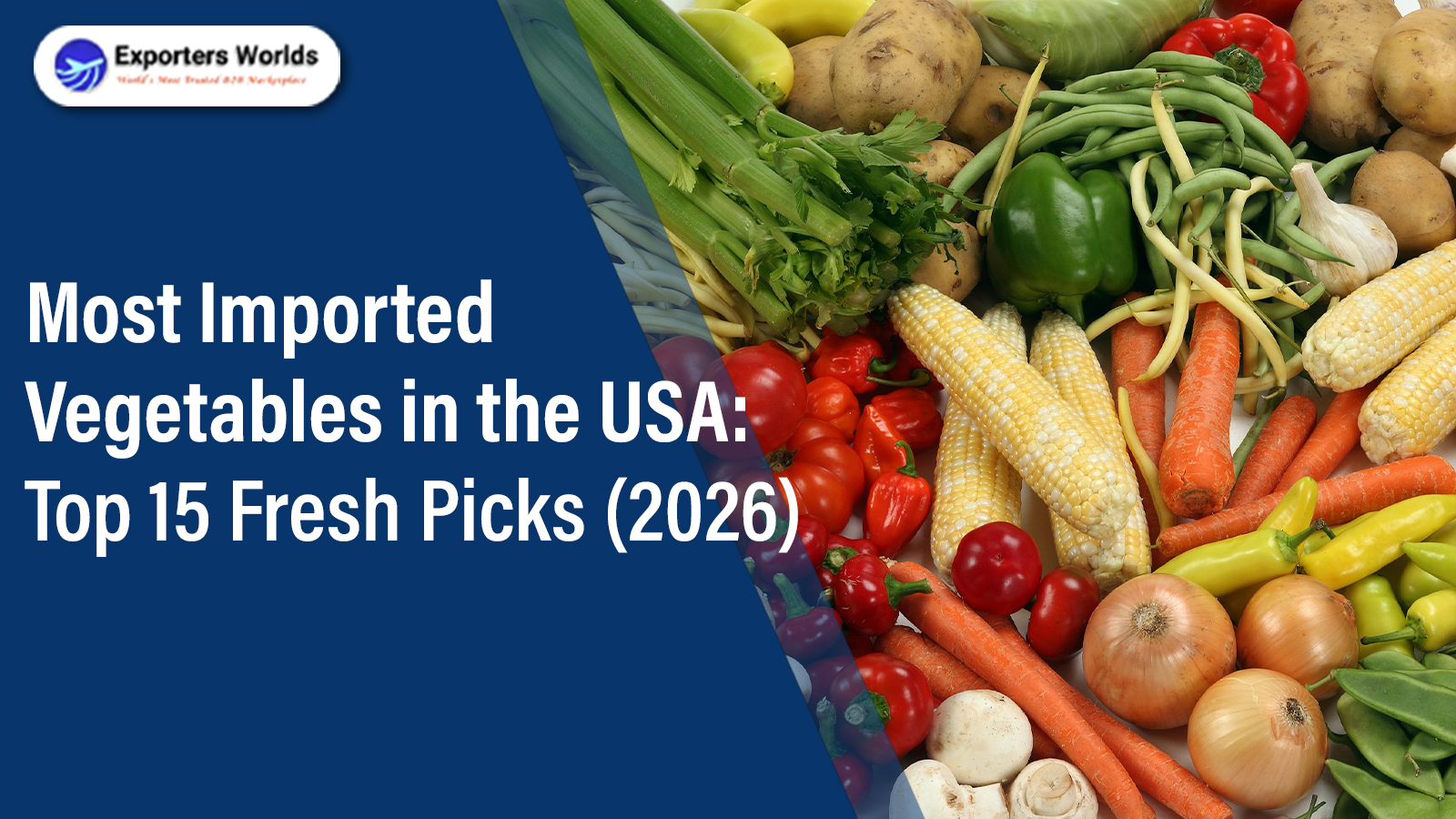
Most Imported Vegetables in the USA: Top 15 Fresh Picks (2026)
Why U.S. Vegetable Imports Matter More Than Ever
Walk into a U.S. grocery store in January and you’ll still find glossy tomatoes, crisp bell peppers, fresh spinach, and vibrant asparagus. That consistency isn’t accidental. It’s the result of a deeply interconnected global supply chain where imports quietly do the heavy lifting. Heading into 2026, most imported vegetables in USA are no longer just filling seasonal gaps - they’re stabilizing prices, cushioning climate risks, and reshaping how America eats year-round.
This article breaks down which vegetables dominate imports, why they matter, who supplies them, and how shifting market forces are redefining us vegetable imports. If you care about where food comes from - or how trade really works behind the scenes - this is where the picture gets clear.
Overview of Fresh Vegetable Imports in the USA
Current State of US Vegetable Imports
Despite strong domestic agriculture, the U.S. relies heavily on imports for fresh vegetables. Climate volatility, water shortages in California, labor constraints, and rising production costs have made full self-sufficiency unrealistic. Imports step in to fill seasonal gaps and ensure steady availability.
Mexico and Canada dominate fresh vegetable imports USA, supplying over two-thirds of total fresh produce imports. Their proximity reduces transit time, preserves freshness, and lowers logistics risk—crucial for highly perishable goods.
Import Volume vs Import Value: Why the Difference Matters
Not all vegetables are equal in trade terms. Some lead in tonnage but lag in dollar value, while others punch far above their weight. Tomatoes and cucumbers move massive volumes, but asparagus and bell peppers often generate higher value due to labor intensity, greenhouse costs, and perishability. Understanding this distinction is key for anyone involved in vegetable export to USA markets.
Top 15 Most Imported Fresh Vegetables in the USA (2025–2026 Forecast)
1. Tomatoes: The Undisputed Import Leader
Tomatoes consistently top the list in both volume and value. Mexico’s greenhouse expansion has created near year-round supply, serving retail, foodservice, and processing demand with remarkable efficiency.
2. Bell Peppers: High-Value, High-Demand
Colored bell peppers - red, yellow, orange - drive strong import growth. Controlled-environment farming across Mexico ensures consistent quality, making peppers a margin-friendly crop for retailers.
3. Cucumbers: Consistency at Scale
Cucumbers rank among the highest in tonnage. Mexico supplies winter demand, while Canada balances summer production. Their shelf stability makes logistics predictable.
4. Onions & Shallots: Storage-Friendly Staples
Thanks to long storage life, onions and shallots are sourced globally. Mexico and Peru dominate imports, supporting both retail and food manufacturing demand.
5. Zucchini (Squash): Fast-Rising Favorite
Health trends and fresh-cut usage have pushed zucchini imports higher. Mexico’s proximity helps stabilize pricing and freshness.
6. Cabbage: Volume-Heavy Essential
Low-cost and transport-efficient, cabbage imports support foodservice and ethnic cuisines nationwide, especially during off-peak domestic seasons.
7. Asparagus: Labor-Intensive Import
Asparagus is highly labor-dependent, making imports essential. Peru and Mexico alternate dominance, with pricing fluctuating sharply by season.
8. Carrots: Domestic Strength, Import Necessity
While the U.S. produces carrots at scale, imports persist to meet processing demand and bridge seasonal gaps.
9. Cauliflower & Broccoli: Health-Driven Demand
Rising interest in nutrient-dense foods has boosted imports. Mexico’s export growth has been critical in meeting year-round demand.
10. Lettuce (Leaf & Romaine): Seasonal Balancer
Winter lettuce imports are indispensable. Food safety, traceability, and rapid transport define this category.
11. Mushrooms: Controlled Environment Edge
Canada leads fresh mushroom exports thanks to advanced controlled-environment production and short transit times.
12. Potatoes (Fresh/Table): Cross-Border Stability
Canada dominates fresh potato exports, complementing U.S. production that focuses heavily on processed potatoes.
13. Spinach: Fast-Moving Green
Short shelf life drives proximity sourcing. Imports grow steadily, especially in organic and packaged segments.
14. Garlic: Global Specialty Import
China remains a major supplier, alongside Mexico. Pricing is sensitive to trade policy and duties.
15. Celery: Year-Round Reliability
Mexico’s dominance ensures steady supply, supporting both retail bundles and foodservice operations.
Key Market Drivers Shaping U.S. Vegetable Imports in 2026
Several forces are converging. Climate unpredictability is disrupting domestic yields. Labor shortages continue to raise costs. Meanwhile, consumers demand fresh, healthy, and convenient produce regardless of season. Add rapid expansion of greenhouse agriculture, and the import landscape becomes not just necessary—but strategic.
Supplier Landscape: Who Dominates Vegetable Export to USA
Mexico’s Continued Market Leadership
Mexico’s scale, geographic proximity, and trade advantages make it indispensable. Heavy investment in greenhouses, cold chains, and logistics cements its leadership in vegetable export to USA channels.
Canada’s Strategic Role
Canada excels in controlled-environment agriculture, supplying mushrooms, peppers, cucumbers, and potatoes with high consistency.
Emerging and Rebounding Suppliers
The Netherlands is regaining traction in specialty vegetables, while Peru remains vital for labor-intensive crops like asparagus.
Pricing and Volume Outlook for Fresh Vegetable Imports
Heading into 2026, prices are expected to remain relatively stable, with narrow fluctuations. Transportation and fuel costs remain the biggest variables. Retail pricing will likely reflect modest increases rather than sharp spikes.
Fresh vs Frozen: Understanding the Import Value Shift
Frozen vegetables now account for more than half of total vegetable import value. While fresh produce dominates visibility, frozen imports offer longer shelf life and pricing stability - reshaping sourcing strategies for buyers.
What This Means for Importers, Wholesalers, and Buyers
Smart sourcing now means diversification. Relying on a single region is risky. Buyers are increasingly exploring value-added vegetables, specialty crops, and data-backed supplier selection to stay competitive within us vegetable imports markets.
Conclusion: Strategic Takeaways for 2026 and Beyond
The most imported vegetables in USA reveal more than consumption habits - they expose how trade, climate, labor, and technology intersect. Tomatoes, peppers, cucumbers, and leafy greens will continue to anchor imports, while Mexico and Canada remain dominant partners.
For businesses navigating this complex terrain, informed decisions are everything. This is where Exporters Worlds stands out as a strategic ally. As a trusted B2B marketplace, Exporters Worlds connects verified exporters with serious buyers, offering market visibility, supplier validation, and trade intelligence tailored for global commerce. Whether you’re analyzing trends, expanding reach, or strengthening your position in fresh vegetable imports USA, aligning with the right platform can turn data into decisive advantage.
Because in modern food trade, insight isn’t optional - it’s the edge that keeps supply chains profitable and resilient. Contact our team to learn more!
Frequently Asked Questions (FAQs)
1. Why are vegetable imports critical to the U.S. food supply?
Vegetable imports are critical because they ensure year-round availability, stabilize prices, and reduce supply risks caused by climate volatility, water shortages, and labor constraints in domestic farming. Imports help the U.S. maintain consistent access to fresh vegetables even when local production declines seasonally.
2. What are the most imported vegetables in the USA?
The most imported vegetables in the USA include tomatoes, bell peppers, cucumbers, onions, asparagus, lettuce, spinach, broccoli, garlic, and mushrooms. Tomatoes consistently rank first in both import volume and value, largely supplied by Mexico through greenhouse production.
3. Which countries lead vegetable exports to the United States?
Mexico and Canada lead vegetable exports to the United States, supplying more than two-thirds of fresh vegetable imports. Mexico dominates due to proximity and greenhouse farming, while Canada excels in controlled-environment agriculture for crops like peppers, cucumbers, mushrooms, and potatoes.
4. Why do import volume and import value differ in U.S. vegetable trade?
Import volume and value differ because some vegetables move in large quantities but generate lower revenue, while others are labor-intensive or highly perishable and command higher prices. For example, tomatoes lead in volume, while asparagus and colored bell peppers often deliver higher value per unit.
5. How will U.S. vegetable imports change heading into 2026?
Heading into 2026, U.S. vegetable imports are expected to grow steadily, driven by climate uncertainty, rising production costs, and consumer demand for fresh produce year-round. Mexico and Canada will remain dominant suppliers, while buyers increasingly focus on diversification and reliable sourcing.