Top 10 Food & Agricultural Products for Export from India to Canada
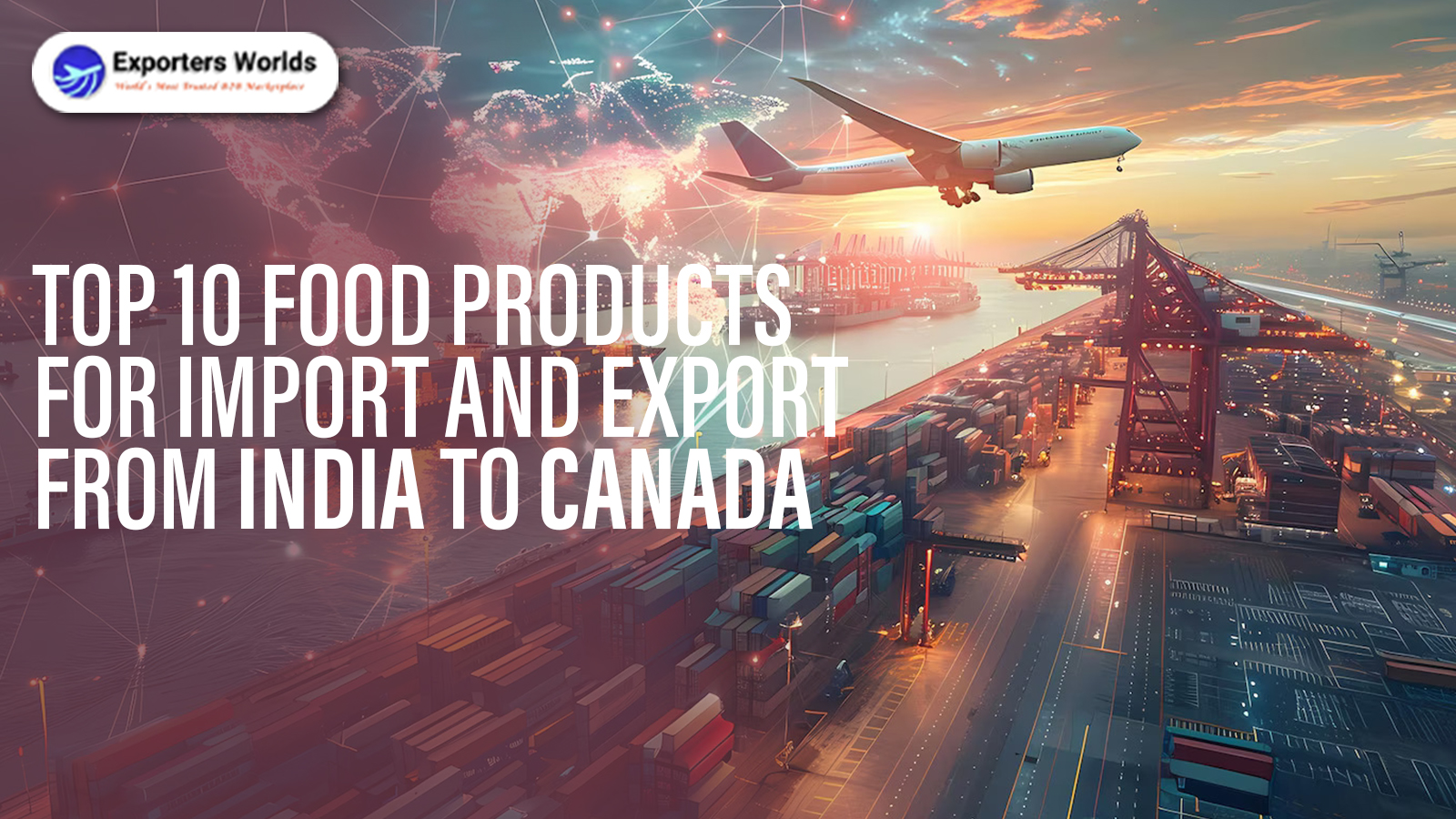
Introduction: The Booming B2B Food Trade Between India and Canada
Walk into any Canadian supermarket, commercial kitchen, or food manufacturing plant, and the influence of Indian agriculture is undeniable. The India-Canada bilateral trade relationship reached a staggering US$ 23.66 billion in total trade in 2024. Within the ~US$ 8.6 billion merchandise trade corridor, agricultural and food exports have emerged as a rapidly growing and vital segment.
We are no longer just looking at a localized retail trend fueled by the South Asian diaspora. Today, the demand is driven by massive B2B supply chains, health-conscious demographics embracing plant-based diets, and Canadian manufacturers sourcing raw ingredients directly from Indian exporters. From boutique chocolatiers in Toronto to massive vegan food processors in Vancouver, the appetite for high-quality Indian commodities is at an all-time high.
If you are an exporter or a B2B distributor looking to capitalize on this multi-billion-dollar corridor in 2026, you need more than just a good product. Understanding the most profitable commodities, mastering search-driven B2B marketing, and navigating the latest strict compliance standards are your tickets to entry. This guide breaks down the top opportunities and the exact regulatory landscape you need to master.
The Top 10 Indian Food Products & Commodities Dominating Canada’s Imports
Indian food exports have evolved from niche consumer goods shipped in small containers to essential wholesale commodities moved in bulk. Here are the top 10 products and ingredients currently dominating the Canadian market, complete with their primary HS Codes for customs classification and specific B2B applications:
Spices, Oleoresins & Extracts (HS Code 0910):
Turmeric, cumin, cardamom, and spice extracts are not just for restaurant kitchens anymore. Canadian food processors, nutraceutical brands, and pharmaceutical companies are importing these in bulk. The B2B market is heavily focused on curcumin extracts for supplements and industrial-grade oleoresins used for flavoring packaged meats and snacks. To win B2B contracts, exporters must guarantee ASTA (American Spice Trade Association) cleanliness specifications and provide detailed certificates of analysis (COA) proving low pesticide residues.
Basmati & Non-Basmati Rice (HS Code 1006):
A perpetual high-demand staple, rice is imported in massive volumes. The market for premium, aged, long-grain basmati remains incredibly strong across both retail chains and the massive Canadian foodservice industry. There is a growing B2B opportunity in supplying white-label or private-label packaging directly to Canadian regional grocery chains, allowing them to bypass domestic middlemen.
Cashews & Edible Nuts (HS Code 0801):
With the monumental surge in plant-based milks, vegan cheeses, and health-focused snack bars, bulk cashews have become a highly lucrative B2B export. Canadian dairy-alternative manufacturers are sourcing raw Indian cashews at record volumes. Exporters who can reliably supply standard grades like W240 and W320, while guaranteeing strict aflatoxin testing and vacuum-sealed bulk packaging, are securing lucrative, multi-year procurement contracts.
Cocoa & Confectionery Ingredients (HS Codes 1801, 1804, 1806):
While the global cocoa trade has traditionally been dominated by West Africa and South America, Indian cocoa products and specialized confectionery ingredients are carving out a rapidly growing market share. Canadian boutique chocolatiers and commercial bakeries are increasingly drawn to South Indian cocoa beans for their unique, fruity flavor profiles and reliable ethical sourcing standards. Offering organic or fair-trade certified cocoa butter and powder is a massive differentiator here.
Guar Gum & Food Thickeners (HS Code 1302):
While Canada is actually a major global exporter of pulses to India, Indian exporters dominate the supply of essential hydrocolloids like guar gum to Canada. This ingredient is the absolute backbone of Canada's booming gluten-free, dairy-alternative, and processed food sectors. High-grade guar gum powder, shipped in bulk bags, is in constant demand from Canadian manufacturers needing natural stabilizers for ice creams, sauces, and plant-based milks.
Tea & Coffee (HS Codes 0902, 0901):
Beyond standard retail packs, bulk Darjeeling, Assam tea, and South Indian filter coffee beans are highly sought after. The B2B opportunity lies in supplying Canadian specialty cafes, kombucha brewers, and ready-to-drink (RTD) beverage bottlers. Certifications matter deeply in this category: Rainforest Alliance, Fairtrade, and Canadian Organic Regime (COR) certifications will instantly elevate an exporter's profile.
Edible Oils (HS Code 15):
Cold-pressed coconut oil, sesame oil, and mustard oil are seeing massive wholesale demand. The applications are split: while culinary demand for ethnic cooking remains steady, there is a massive surge in Canadian cosmetic and personal care brands importing premium Indian edible oils as base ingredients for natural skincare and hair care lines.
Processed & Ready-to-Eat (RTE) Foods (HS Code 2106):
Instant meals, packaged curries, and frozen appetizers are seeing explosive growth. As Canadian grocery chains expand their private-label international aisles, they are actively looking for Indian co-packers. Exporters utilizing advanced retort pouch technology, which extends shelf life without the need for heavy preservatives, are highly favored by Canadian supermarket buyers.
Frozen Fruits & Vegetables (HS Codes 0811, 0710):
Fresh produce faces immense phytosanitary hurdles at the Canadian border. The solution? Individually Quick Frozen (IQF) technology. Frozen Alphonso mango puree, chopped drumsticks, and okra allow Canadian businesses to bypass the strict pest-control hurdles of fresh produce while maintaining authentic flavor and nutritional value year-round. Mango puree, in particular, is heavily imported by Canadian yogurt and beverage manufacturers.
Dairy & Alternatives (HS Codes 0405, 0406):
Desi ghee is now firmly established as a functional superfood in Canada, heavily promoted by the keto and paleo diet communities. Meanwhile, paneer remains a top-selling vegetarian protein in the foodservice sector. Exporting dairy to Canada requires navigating strict quota systems, but specialized, high-quality cultured ghee and A2 milk products often find lucrative loopholes in premium health-food markets.
Case Study: Scaling a B2B Agricultural Export Empire
Consider the trajectory of Rohan Sharma, an Indian entrepreneur who started by exporting mixed spices in basic retail packaging. Realizing the immense scale of Canada's food manufacturing sector, he pivoted his entire digital strategy to target B2B buyers.
Instead of marketing to consumers, he optimized his company's website with technical, long-form content detailing HS codes, bulk shipping logistics, and quality assurance testing for industrial-grade spice extracts and bulk cashews. By securing a reliable, digitally traceable supply chain and implementing rigorous SEO to capture Canadian procurement managers searching for "wholesale organic cocoa suppliers India," he transitioned from a small-time merchant to a primary supplier for several major Canadian snack brands. His success proved that in the B2B export game, your online visibility and technical authority are just as important as the product itself.
Navigating Canada’s Strict 2026 Import Regulations (CFIA Updates)
Exporting to Canada requires absolutely flawless execution when it comes to compliance. The Canadian Food Inspection Agency (CFIA) and the Safe Food for Canadians Regulations (SFCR) enforce strict guidelines that Indian exporters cannot afford to ignore in 2026. A single paperwork error can lead to a rejected shipment at the port of Vancouver or Montreal.
- The January 1, 2026 FOP Deadline: The transition period for Health Canada’s Front-of-Package (FOP) nutrition labeling has officially ended. As of January 1, 2026, all packaged food labels must fully comply with the new symbol requirements indicating if a food is high in sodium, sugar, or saturated fat. There is no longer any enforcement discretion—non-compliance will result in immediate shipment rejection.
- Preventive Control Plans (PCP): Your Canadian importer must have a valid Safe Food for Canadians (SFC) license. More importantly, they must hold a PCP that proves your specific facility in India meets Canadian sanitary, hazard analysis, and traceability standards. Exporters who provide pre-audited, meticulously documented safety plans to their buyers have a massive competitive advantage.
- Phytosanitary Certificates: For raw agricultural commodities (like rice, raw nuts, and whole spices), a phytosanitary certificate issued by the National Plant Protection Organization (NPPO) of India is mandatory to prove the shipment is free from quarantine pests.
- Direct Organic Certification (COR): If you are marketing your products as organic, beware of a common misconception: Canada does not have a direct organic equivalency arrangement with India. To carry the Canadian organic logo, your products must be directly certified to the Canada Organic Regime (COR) by a CFIA-accredited certification body operating in India.
How to Find B2B Food Buyers in Canada
Having a great product and compliance in place is only half the battle. To succeed in 2026, exporters need proactive lead-generation strategies:
- Digital Inbound Marketing: Canadian procurement managers research heavily online before reaching out. Publishing detailed product specifications, lab test results, and compliance documentation on a highly optimized, fast-loading website is non-negotiable.
- Trade Shows & Delegations: Participating in major North American food expos, such as SIAL Canada (Toronto/Montreal), remains one of the best ways to secure face-to-face B2B meetings with major distributors.
- Leveraging Trade Directories: Registering with platforms like the Canadian Importers Database and utilizing LinkedIn to directly target "Procurement Managers" or "Category Buyers" within Canadian food manufacturing companies yields high-quality leads.
Conclusion: The Future of India-Canada Agri-Trade
The surge in agricultural and food exports from India to Canada is a structural, long-term shift in global supply chains. With ongoing negotiations and a continuous push for diverse, plant-based, and functional foods, the market is incredibly receptive to Indian commodities.
By focusing on high-demand bulk ingredients, mastering the complexities of the 2026 CFIA regulatory landscape, and implementing a strong B2B digital visibility strategy, exporters can secure a profitable, long-term foothold in the Canadian market. The opportunity is vast, but it belongs to those who treat exporting as a precise, data-driven B2B enterprise.
Frequently Asked Questions (FAQs)
1. What are the key Canadian food import regulations for 2026?
To export food to Canada in 2026, suppliers must comply with the Canadian Food Inspection Agency (CFIA) and the Safe Food for Canadians Regulations (SFCR). Importers must hold a valid SFC license and a Preventive Control Plan (PCP) that covers your Indian facility. Additionally, as of January 1, 2026, all packaged foods must comply with Health Canada’s strict Front-of-Package (FOP) nutrition labeling rules.
2. What are the most profitable agricultural products to export from India to Canada?
The highest margins are currently found in bulk B2B commodities rather than retail consumer goods. Top exports include raw cashews for the plant-based dairy sector, cocoa beans and butter for commercial bakeries, guar gum for food processing, and industrial-grade spice extracts (like turmeric and cumin oleoresins) used by nutraceutical brands.
3. Are Indian organic certifications automatically accepted in Canada?
No. A common misconception among exporters is that global organic certifications overlap. Canada does not have a direct organic equivalency arrangement with India. To market your food products as organic in Canada, they must be directly certified under the Canada Organic Regime (COR) by a CFIA-accredited certification body operating in India.
4. How can Indian food exporters find reliable B2B buyers in Canada?
Canadian procurement managers heavily research suppliers online. To capture this demand, exporters should optimize their websites with technical content, long-tail keywords (e.g., "wholesale organic cocoa suppliers India"), and downloadable lab tests (COAs). Additionally, attending expos like SIAL Canada and leveraging LinkedIn to target specific "Category Buyers" at Canadian food manufacturing companies are proven lead-generation strategies.
5. What mandatory documentation is required for raw food exports to Canada?
For raw agricultural commodities such as whole spices, rice, and raw nuts, exporters must provide a phytosanitary certificate issued by the National Plant Protection Organization (NPPO) of India. This guarantees the shipment is free from quarantine pests. You will also need detailed Certificates of Analysis (COA) for pesticide residues and aflatoxin testing, depending on the commodity.