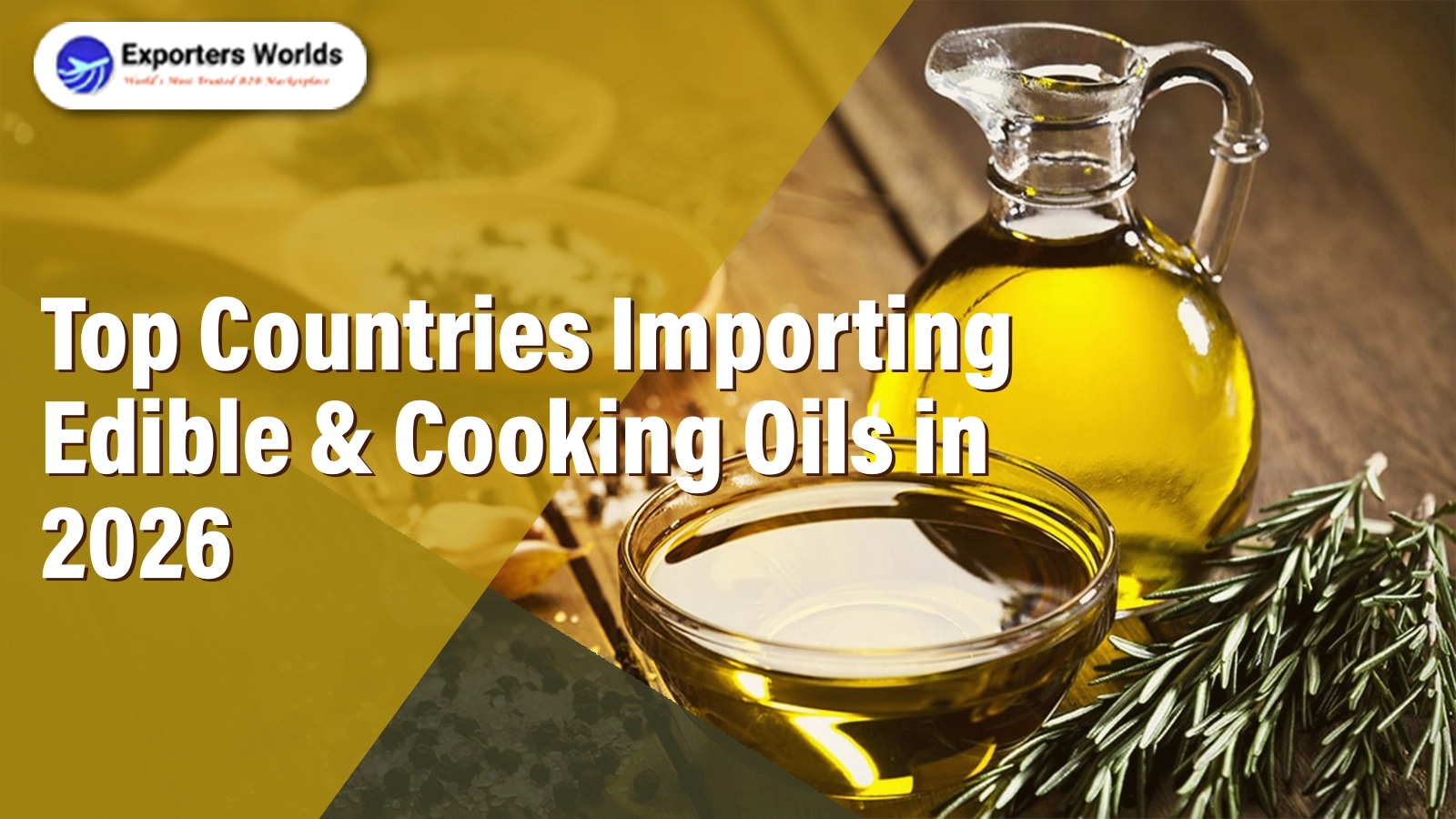
Top Countries Importing Edible & Cooking Oils in 2026
Introduction: Understanding the Global Cooking Oil Trade in 2026
When analyzing global agri-commodity flows, few products are as strategically important as edible oils. From household kitchens to large-scale food processing plants, cooking oils are essential to daily consumption. In 2026, the global cooking oil import landscape is shaped by population growth, biofuel policies, climate risks, and shifting trade regulations.
Edible oils, including palm, soybean, sunflower, and canola, are deeply interconnected with oilseed production and refining capacity. Countries with limited oilseed acreage rely heavily on imports to meet domestic demand. Meanwhile, producing nations navigate weather disruptions, sustainability regulations, and export policies that directly impact global prices.
Recent cooking oil import data trends show steady demand growth across South Asia, East Asia, and parts of Africa. While global supply has stabilized compared to earlier volatility, importers remain cautious due to freight fluctuations, geopolitical risks, and currency pressures.
This article explores the top countries importing edible & cooking oils in 2026, examines import duty developments, and provides strategic insights for buyers seeking reliable sourcing solutions.
Global Cooking Oil Market Overview 2025–2026
The global edible oil market in 2026 remains highly concentrated on a few major oil categories:
- Palm oil – the most traded vegetable oil globally
- Soybean oil – widely used for food and biofuel
- Sunflower oil – preferred in Europe and parts of Asia
- Canola (rapeseed) oil – strong in North America and Europe
Major exporters include:
- Indonesia
- Malaysia
- Argentina
- Brazil
- Ukraine
2026 Cooking Oil Import Data Trends
- Global vegetable oil trade volumes are projected to grow 3–5% year-on-year.
- Palm oil continues to dominate due to price competitiveness.
- Sunflower oil flows remain sensitive to Black Sea geopolitical developments.
- Biofuel mandates in the U.S. and Brazil are tightening edible oil availability for food markets.
Price stability has improved compared to earlier supply shocks, but buyers remain cautious as weather events (El Niño patterns) could disrupt oilseed output.
Top Countries Importing Edible & Cooking Oils in 2026
1. India – The World’s Largest Edible Oil Importer
India remains the largest global importer of edible oils in 2026. The country imports over 55–60% of its domestic edible oil consumption due to limited oilseed productivity relative to population demand.
Primary imported oils:
- Palm oil
- Soybean oil
- Sunflower oil
Key suppliers:
- Indonesia
- Malaysia
- Argentina
- Russia
- Ukraine
India’s import volumes are highly sensitive to tariff adjustments and global price movements. When duties are reduced, imports typically surge as refiners rebuild inventories.
2. China
While China produces over 30 MMT of oil locally (mostly from imported beans), it remains a top importer of refined palm and rapeseed oil.
2026 Trend: China is prioritizing "Food Security Reserves." In early 2026, China moved away from US soybean oil in favor of Brazilian and Argentinian supplies to hedge against shifting US trade policies.
3. United States: The Biofuel Vacuum
The US is an anomaly, a major producer that is also a top-tier importer (approx. 7.2 MMT).
The Trump 2.0 Impact: As of February 24, 2026, new 10% baseline tariffs have come into effect. Furthermore, a 25% tariff on Indian goods (including specialty oils) is set for August 1, 2026. This is forcing US buyers to pivot back to Canadian canola and domestic soy.
4. European Union: The Compliance Filter
The EU imports approximately 8.7 MMT annually.
The "EUDR Delay" Relief: The 2026 market was significantly impacted by the EU's decision to postpone the Deforestation Regulation (EUDR) until December 30, 2026. This has allowed a temporary "last call" for non-certified palm oil into the region before the strict GPS-tracking mandates take effect in 2027.
5. Pakistan
Pakistan relies heavily on palm oil imports for domestic consumption. Currency depreciation and trade deficits make import planning highly price-sensitive.
6. Bangladesh
With a growing population, Bangladesh continues to increase edible oil imports. The country imports both crude palm oil and refined products, depending on refining capacity utilization.
7. Egypt
Egypt sources sunflower and soybean oils primarily through government tenders to stabilize domestic food inflation.
8. Turkey
Turkey acts both as an importer and a regional processor/re-exporter, leveraging its strategic location between Europe and Asia.
Tracking 2026 Import Duties and Pricing
Managing landed cost in 2026 requires constant tariff monitoring.
In India, the government has maintained a low effective duty near 5.5% on Crude Palm Oil (CPO) to manage food inflation while keeping refined oil duties elevated at 35.75% to protect domestic refiners.
Meanwhile, Indonesia has increased its CPO export levy to 12.5% to fund biodiesel subsidies, effectively raising the global price floor.
As of late February 2026:
- CPO trades around $1,247/MT (C&F Mumbai)
- Crude Soy Oil trades near $1,410/MT
Palm oil remains the most competitive option for value-driven importers in Pakistan and Bangladesh.
Import Duty on Edible Oil: Latest News
Import duties remain one of the most powerful levers influencing cooking oil import flows in 2026.
Several governments have revised tariffs to manage food inflation and protect domestic oilseed farmers. Under global trade frameworks monitored by the World Trade Organization, countries must balance food security with fair trade principles.
Key 2026 Developments:
- India periodically adjusts import duties on crude and refined oils.
- The EU tightens sustainability-linked import requirements.
- Some South Asian economies temporarily reduce duties to combat inflation.
For importers, monitoring budget announcements and policy changes is essential. A 5–10% duty shift can significantly alter landed cost and sourcing strategy.
Edible Oil Import in India from Which Countries
India’s edible oil import structure in 2026 is diversified but still concentrated among key suppliers.
Palm Oil
- Indonesia (largest supplier)
- Malaysia
Soybean Oil
- Argentina
- Brazil
Sunflower Oil
- Russia
- Ukraine
Buying patterns are influenced by:
- Global price arbitrage
- Shipping availability
- Seasonal production cycles
- Domestic policy decisions
Importers often switch between palm and soybean oil depending on price spreads.
Global Cooking Oil Import Data Trends: Strategic Insights
Several macro trends are shaping cooking oil import decisions in 2026:
Supply Concentration Risk
Palm oil remains concentrated in Southeast Asia, while sunflower oil supply is heavily tied to the Black Sea region. This concentration increases geopolitical exposure.
Biofuel Competition
Renewable diesel expansion in:
- United States
- Brazil
is tightening edible oil availability for food use.
Logistics & Freight
Bulk tanker freight rates have stabilized, but port congestion and container shortages still create periodic delays.
Currency Volatility
Emerging market currency fluctuations directly impact cooking oil import costs.
How to Choose Reliable Cooking Oil Exporters
For commercial buyers, selecting the right supplier goes beyond price comparison.
1. Verify Production Capacity
Ensure the exporter has sufficient refining and crushing infrastructure.
2. Evaluate Certifications
- RSPO certification for palm oil
- ISO and HACCP compliance
3. Compare FOB vs CIF Pricing
Understand freight and insurance impact on landed cost.
4. Assess Political Stability
Source from politically stable exporting countries to reduce disruption risk.
5. Diversify Suppliers
Avoid overreliance on a single region.
Using verified B2B trade platforms helps importers connect with audited suppliers, compare offers, and manage documentation efficiently.
Strategic Sourcing in 2026: Why Verified Networks Matter
The “Food vs. Fuel” debate is not just theoretical; it is reshaping margins in real time.
Importers must now consider:
- Regional supply concentration risk
- Biofuel diversion policies
- Export levies and duty changes
- Sustainability compliance (EUDR, RSPO)
- Currency volatility
In such an environment, sourcing from unverified suppliers increases operational and financial risk.
This is where Exporters Worlds becomes a strategic advantage.
Exporters Worlds connects importers directly with verified edible oil exporters who meet international compliance standards and provide transparent FOB and CIF pricing. Buyers can compare offers across origins, Southeast Asia, South America, and the Black Sea, while ensuring documentation readiness for markets like the EU.
In a year where even a 10% tariff shift can erase profit margins, proactive sourcing is essential.
Conclusion: Turn Market Trends into Trade Growth
The global cooking oil import market in 2026 is growing steadily, led by high-demand countries like India, China, and the European Union. At the same time, shifting import duties, biofuel policies, and supply concentration in Southeast Asia and the Black Sea region continue to reshape trade flows.
For importers and exporters, success depends on more than tracking cooking oil import data trends; it requires verified partners, transparent pricing, and reliable logistics.
ExportersWorlds helps you connect directly with trusted global suppliers and serious buyers in the edible oil market. From sourcing palm, soybean, and sunflower oil to expanding into high-demand regions, the platform simplifies international trade and reduces risk.
Join Exporters Worlds today to secure reliable partners, strengthen your supply chain, and turn global demand into real business growth.
FAQs
1. Which country imports the most edible oil in 2026?
India remains the largest edible oil importer in 2026 due to strong domestic consumption and limited oilseed production. The country imports palm, soybean, and sunflower oil primarily from Southeast Asia and the Black Sea region to meet growing demand.
2. What are the latest cooking oil import data trends?
Cooking oil import data trends show steady 3–5% annual growth, with palm oil leading global trade. Import-dependent countries are diversifying suppliers to reduce geopolitical risk, while biofuel policies are tightening supply and influencing international price movements.
3. How does import duty affect edible oil prices?
Import duties directly impact landed costs and retail prices. When governments reduce tariffs, imports typically increase as refiners build stocks. Higher duties protect domestic farmers but raise consumer prices and reduce short-term import volumes.
4. Which countries export the most palm oil globally?
Indonesia and Malaysia dominate global palm oil exports, supplying the majority of international demand. Their production levels, export policies, and sustainability regulations significantly influence global cooking oil pricing and availability.
5. Why is sunflower oil supply considered risky?
Sunflower oil exports are heavily concentrated in the Black Sea region, particularly Ukraine and Russia. Geopolitical tensions, port disruptions, and weather conditions can quickly impact global supply and cause price volatility.
6. How can importers reduce risk in cooking oil trade?
Importers can reduce risk by diversifying sourcing origins, monitoring policy changes, securing long-term contracts, and working with verified suppliers. Tracking freight trends and currency movements also helps protect margins in volatile markets.
7. How can Exporters Worlds help edible oil buyers and exporters?
Exporters Worlds connects buyers with verified global suppliers, simplifies trade communication, and enhances market visibility. The platform supports efficient sourcing, competitive pricing discovery, and secure B2B partnerships, helping businesses expand confidently in the growing edible oil market.