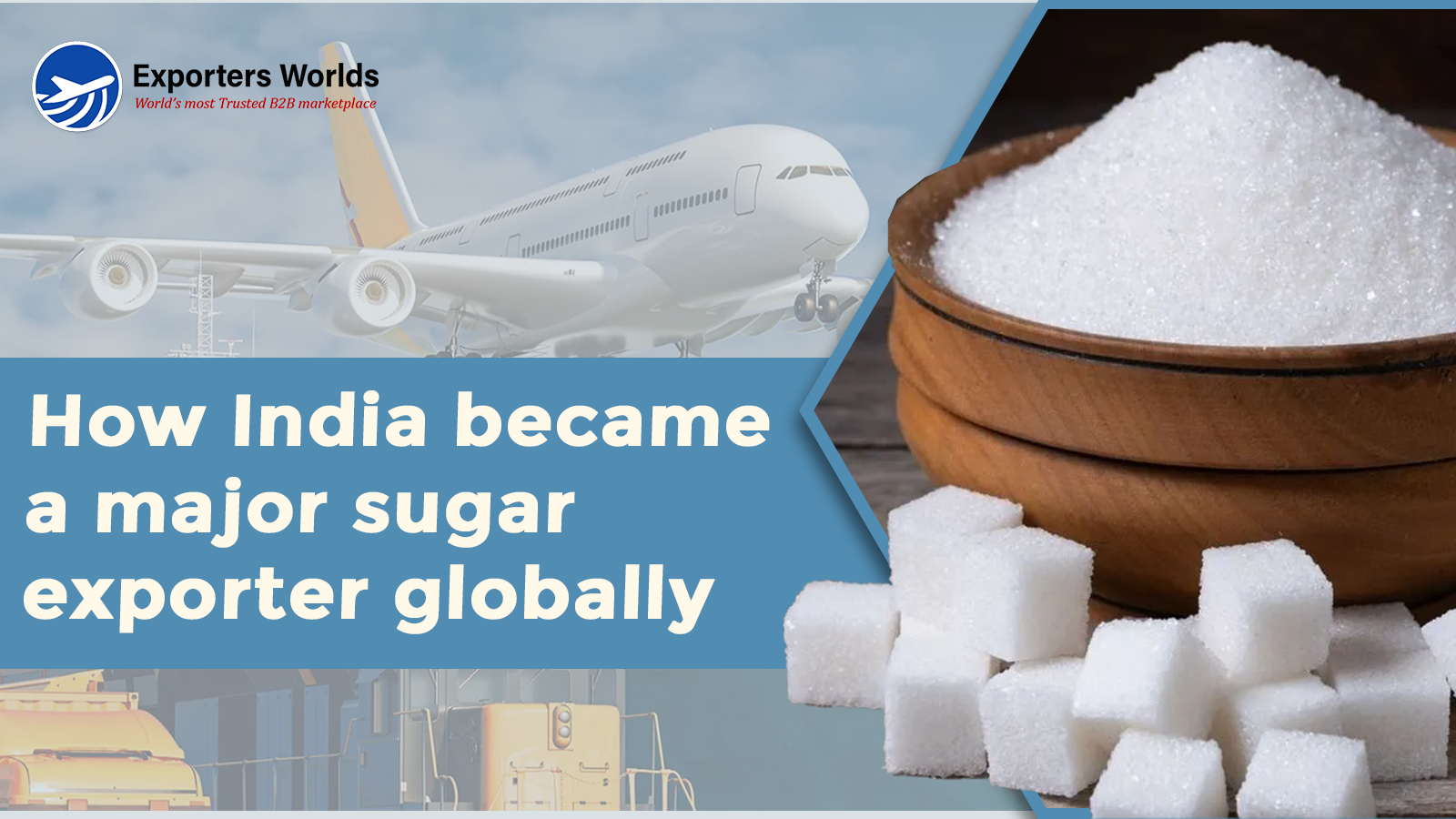
How India Became a Major Sugar Exporter Globally
Introduction: India’s Rise in the Global Sugar Trade
Not too long ago, India’s sugar industry was largely inward-looking. Production was geared toward feeding domestic demand, price controls were tight, and exports were occasional—often reactive rather than strategic. Fast forward to today, and the picture looks dramatically different. India has emerged as the world’s second-largest sugar exporter, trailing only Brazil, and has become a critical force shaping the global sugar trade.
This transformation matters—not just for policymakers and farmers, but for global buyers, traders, and agri-businesses seeking reliable supply partners. Understanding how this shift happened offers insights into policy design, market timing, and why sugar export from India is now a strategic lever in international commodity markets. What follows is a data-backed, grounded look at the journey, the drivers, and what lies ahead.
India’s Evolution From Domestic Producer to Export Powerhouse
Historical Constraints That Once Limited Sugar Export From India
For decades, India’s sugar sector struggled to look outward. High domestic consumption absorbed most production, while government-controlled pricing squeezed mill profitability. Production cycles were volatile—bumper crops followed by shortages—making long-term export commitments risky. Compared to global peers, Indian sugar lacked cost competitiveness and consistent quality perception, further limiting its role in global markets.
The Turning Point: Structural Changes in the Indian Sugar Industry
The shift began when India moved from reactive exports to planned participation in global trade. Policy frameworks started aligning agriculture, energy, and trade objectives. India evolved into what traders now call a “swing supplier”—able to step in when global supply tightens and pull back when domestic balance demands it. This flexibility reshaped how the world viewed Indian sugar.
Key Drivers Behind India’s Sugar Export Growth
Production Surplus Driven by Favorable Agro-Climatic Conditions
Consistent monsoons and improved reservoir management have played a massive role. States like Maharashtra and Karnataka emerged as production anchors, backed by better irrigation and agronomic practices. For 2025–26, India’s sugar production is projected at 34–35 million metric tonnes, with Maharashtra alone contributing nearly 13 MMT. This surplus directly fuels sugar export from India, creating dependable availability for global buyers.
Geographic and Logistical Advantage Over Competing Exporters
India’s location is a quiet but decisive advantage. Proximity to Asia, Africa, and the Middle East translates into lower freight costs and faster shipping cycles compared to Brazil. Shorter transit times improve buyer reliability, a critical factor in commodity contracts where timing can impact pricing and inventory costs.
Superior Quality Characteristics of Indian Sugar
Indian mills typically crush cane within 12–24 hours of harvest, significantly reducing dextran formation. The result is cleaner raw sugar with better consistency—an increasingly important differentiator in international tenders. For buyers prioritizing contract reliability, quality stability has become a key reason to engage Indian sugar exporters.
Strategic Government Intervention and Export Policy Management
Policy predictability has been another game changer. The export quota mechanism helps stabilize domestic prices while enabling controlled global participation. For 2025–26, the government approved a 1.5 million tonne export quota, ensuring liquidity for mills and timely farmer payments. This clarity boosts buyer confidence and reinforces India’s credibility in the global sugar trade.
Market Diversification Strengthening India’s Export Position
Expansion Into High-Growth Import Markets
India has consciously reduced reliance on any single geography. Key destinations now include Indonesia, Bangladesh, Somalia, Sudan, and the UAE. This diversification cushions exporters from regional demand shocks and aligns well with growing consumption trends across Asia and Africa.
Entry Into Premium and Specialized Sugar Segments
Beyond volume, India is moving up the value chain. Exports of organic, brown, and pharma-grade sugar are rising, delivering higher margins and aligning with clean-label and food processing trends. This evolution strengthens the long-term positioning of the India sugar industry.
The Food vs Fuel Balance: Ethanol’s Role in Sugar Export Stability
India’s Ethanol Blending Program Explained
India’s ethanol blending program targets 20% blending, fundamentally reshaping sugar economics. For 2025–26, an estimated 3.4–4 MMT of sugar will be diverted toward ethanol production.
How Ethanol Supports Sustainable Sugar Exports
Rather than hurting exports, ethanol adds flexibility. It prevents excess inventory build-up, improves mill cash flows, and ensures farmers are paid on time. This buffer allows India to adjust export volumes without destabilizing either domestic or global markets—an underrated strength of the ethanol blending program.
Guide for Businesses Entering Sugar Export From India (2026)
Regulatory and Registration Requirements
Exporters need a valid Import-Export Code (IEC) issued by DGFT. Eligibility norms apply to both mills and merchant exporters, ensuring only compliant players enter global trade.
Export Quota Allocation Mechanism
Quotas are allocated on a pro-rata basis, typically linked to three-year average production. Operational compliance and accurate reporting are essential to secure allocations under India’s sugar export policy India framework.
Quality and Compliance Standards for Global Trade
Key benchmarks include polarization, moisture, and ash content. Meeting buyer-specific and destination-specific norms is often the difference between acceptance and price discounts.
Logistics, Data Access, and Trade Facilitation
Access to APEDA data, smart port selection, and tight shipping timelines are critical. Efficient logistics increasingly separate successful exporters from the rest.
India’s Competitive Edge Compared to Other Global Sugar Exporters
India vs Brazil: Cost, Quality, and Distance Factors
While Brazil leads in volume, India wins on freight efficiency and delivery speed to nearby markets. Indian exporters also enjoy greater flexibility in export decision-making.
India’s Role as a Global Market Stabilizer
India’s ability to scale exports up or down during global deficits has made it a stabilizing force, influencing international price movements rather than merely reacting to them.
Future Outlook: The Next Phase of India’s Sugar Export Growth
Rise of Integrated Sugar Complexes
The future lies in integration—sugar, ethanol, and green power operating as a single ecosystem. This model improves resilience and profitability across cycles.
Export Growth Projections and Market Role
India’s sugar exports are expected to grow at a CAGR of 5.4% through 2031, maintaining relevance even as ethanol remains a priority. Long term, India is positioned as a reliable global supplier rather than a sporadic exporter.
Challenges That Could Impact Sugar Export From India
Climate variability, water dependency, policy recalibration, and global price volatility remain real risks. Navigating them will require data-driven decisions and strong trade partnerships.
Frequently Asked Questions
Why has sugar export from India increased so rapidly in recent years?
Surplus production, logistics advantages, and predictable policy support have aligned at the right time.
Is India’s sugar export policy stable for international buyers?
Yes. The quota system, while regulated, provides clarity and minimizes sudden market shocks.
How does ethanol production affect sugar exports?
Ethanol acts as a buffer, not a barrier—supporting stability rather than reducing credibility.
Which countries import the most sugar from India?
Indonesia, Bangladesh, UAE, and several African nations lead current demand.
What quality standards should exporters focus on first?
Polarization, moisture, and ash content are non-negotiable starting points.
Can new exporters realistically enter the Indian sugar export market?
Yes—provided regulatory compliance, logistics readiness, and buyer access are in place.
Conclusion: Why India Is Now a Global Sugar Export Leader
India’s rise as a sugar export leader is no accident. It’s the outcome of surplus-driven production, geographic advantage, quality consistency, ethanol-backed stability, and smart policy management. Together, these factors have repositioned India as a credible, adaptable, long-term player in global sugar supply chains.
For businesses looking to tap into this momentum—whether sourcing verified exporters, understanding quota dynamics, or navigating compliance—having the right trade ecosystem matters. Platforms like Exporters Worlds bring together certified suppliers, market intelligence, and end-to-end trade facilitation, making it easier to participate confidently in India’s expanding role in the global sugar economy.
The opportunity is real. The window is open. The next move is yours.