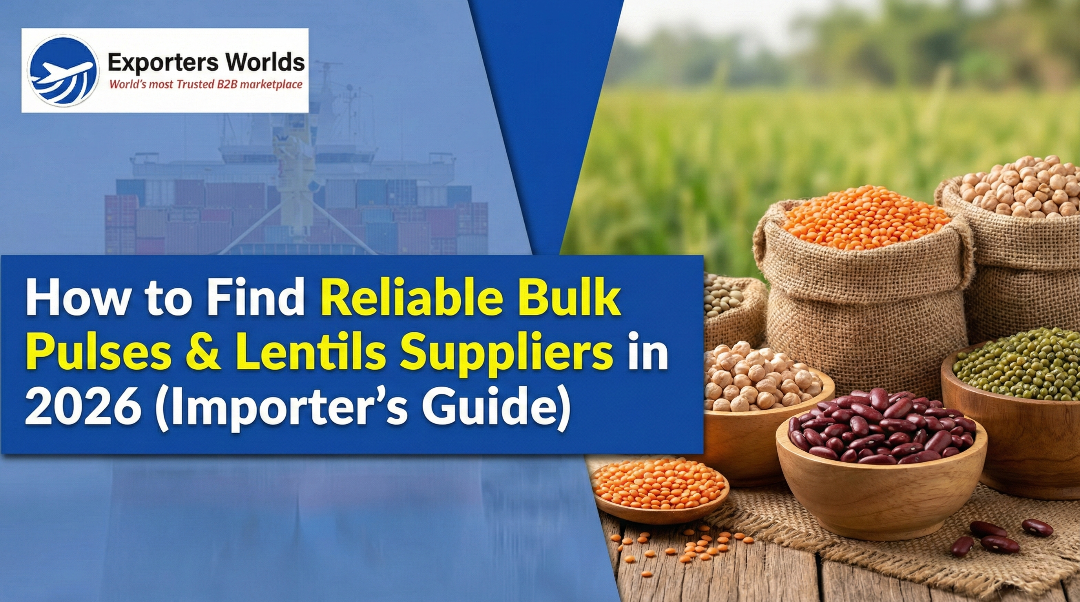
How to Find Reliable Bulk Pulses & Lentils Suppliers in 2026 (Importer’s Guide)
The New Reality of Global Pulses Trade in 2026
The global pulses and lentils market has entered a new phase. Demand for plant-based protein continues to expand across retail, food service, and industrial processing sectors. Governments are prioritizing food security. Consumers are demanding traceability. Regulators are tightening pesticide and contamination thresholds.
In this environment, sourcing is no longer transactional.
Importers looking for dependable wholesale pulse exporters or industrial lentil trade partners must now evaluate digital transparency, compliance infrastructure, freight resilience, and long-term supply stability, not just price per metric ton.
The 2026 buyer operates in a market defined by:
- Climate-driven production variability
- Rapid export policy shifts
- Real-time freight volatility
- Stricter residue compliance standards
- Increased fraud sophistication
- Demand for digital traceability
This guide provides a complete strategic framework to help you source safely, profitably, and sustainably. If you need to master the foundational shipping mechanics, customs frameworks, and freight negotiations required for this level of trade, be sure to review our complete guide to importing agricultural products in bulk first.
1. Global Pulses Landscape: Production, Trade & Risk
Understanding where pulses originate is critical to risk management.
Major producing regions include:
- Canada (lentils, peas)
- India (multiple pulse varieties)
- Australia (lentils, chickpeas)
- Myanmar (pigeon peas)
- Turkey (processing & re-export hub)
However, production concentration creates exposure.
A drought in Canada can disrupt red lentil supply globally. Export restrictions in India can affect pigeon pea pricing overnight. Currency fluctuations can shift competitiveness between Australia and Black Sea origins.
2025 Freight Shock: A Lesson for 2026 Buyers
As seen during the 2025 freight rate spikes across key global routes, even strong harvest seasons did not guarantee stable landed costs. Container shortages and sudden fuel surcharges erased pricing advantages from certain origins, forcing importers to renegotiate contracts or absorb margin losses.
The lesson for 2026 is clear: risk is no longer limited to crop output. It can emerge from logistics disruptions, policy shifts, currency volatility, or freight instability.
Strategic question:
Are you sourcing for price today or stability for the next 12 months?
2. Understanding Product Segmentation at Industrial Level
Not all lentils are equal, and not all exporters specialize equally.
For industrial buyers, specification clarity is non-negotiable.
Key differentiation factors include:
- Variety (red, green, yellow)
- Protein percentage
- Moisture threshold
- Split vs whole ratio
- Uniformity grading
- Foreign material tolerance
- Processing method (sortex vs machine cleaned)
Retail distributors may prioritize appearance and size consistency. Industrial processors may prioritize protein absorption characteristics. Institutional buyers may prioritize price stability.
Your sourcing criteria must align with your end-use economics.
3. Define Your Procurement Framework Before Market Engagement
Professional procurement teams define sourcing parameters before requesting quotations.
Clarify internally:
- Annual forecast volume
- Container planning cycle
- Safety stock requirements
- Maximum acceptable moisture
- Regulatory compliance destination
- Inspection protocols
- Payment structure tolerance
- Secondary origin backup plan
In 2026, advanced importers also assess supplier digital readiness.
Ask potential exporters:
- Do you provide blockchain-backed origin traceability?
- Can shipping documents be shared via secure digital platforms?
- Do you use AI-driven freight monitoring systems?
- Can you integrate with ERP procurement software?
Suppliers investing in digital supply chain infrastructure signal long-term capability.
4. Verification Framework: Multi-Layer Due Diligence
Verification in 2026 must be layered.
Layer 1: Legal & Certification Review
Exporters should hold:
- HACCP
- ISO 22000
- Phytosanitary certification
- Fumigation documentation
- Third-party inspection reports from SGS or Bureau Veritas
Layer 2: Operational Capacity Validation
Confirm:
- Annual export volume
- Processing facility ownership
- Cleaning & sorting technology used
- Warehouse conditions
- Container loading procedures
Layer 3: Financial & Fraud Screening
Evaluate:
- Years in operation
- Verified company registration
- Banking authenticity
- Contract clarity
- Willingness to allow inspection
Layer 4: Platform Verification
Digital sourcing platforms reduce risk by structuring exporter profiles and improving transparency.
Platforms such as ExportersWorlds emphasize documented credentials and direct communication between buyers and exporters, reducing intermediary distortion and improving due diligence efficiency.
5. The Rise of Blockchain Traceability in Pulses Trade
In 2026, traceability is no longer optional in regulated markets.
Blockchain-backed systems are increasingly used to:
- Record farm origin
- Track processing timestamps
- Document cleaning cycles
- Verify container sealing
- Timestamp quality inspections
This reduces document manipulation risk and strengthens compliance credibility.
EU buyers in particular now prioritize traceable supply chains.
Exporters that adopt traceability technology differentiate themselves in competitive tenders.
6. AI-Driven Freight & Predictive Logistics
Freight unpredictability has reshaped sourcing strategy.
Leading exporters now use AI tools to:
- Predict port congestion
- Forecast container availability
- Monitor real-time shipment delays
- Optimize routing
- Alert buyers to disruption risks
For importers, this means:
- Better inventory planning
- Reduced demurrage risk
- Fewer stock-outs
- Improved warehouse forecasting
Sourcing partners who integrate predictive freight tools offer measurable operational advantages.
7. Quality Risk Management at Scale
Laboratory validation remains essential.
Industrial importers should require:
- Moisture analysis
- Aflatoxin testing
- Pesticide residue screening
- Heavy metal testing (EU-bound cargo)
- Protein and absorption analysis
Pre-shipment inspection minimizes dispute risk.
Random sampling on arrival verifies consistency.
Inconsistent grading across shipments can destroy retail brand contracts. Consistency is profitability.
8. Payment Risk Mitigation in 2026
Fraud sophistication has increased.
Best practices include:
- Letter of Credit for high-value contracts
- Partial advance with balance against shipping documents
- Direct bank confirmation of beneficiary details
- Contract-based payment milestones
- Avoidance of sudden pricing discounts
Unrealistically low prices often indicate high hidden risk.
Reliable exporters protect both parties through structured payment frameworks.
9. Multi-Origin Strategy: Protecting Supply Continuity
Climate volatility demands origin diversification.
Strategic importers:
- Maintain primary and secondary supplier networks
- Hedge exposure across regions
- Lock quarterly pricing when favorable
- Monitor global harvest forecasts
- Track export policy announcements
Dependence on one origin increases exposure to export bans and crop failure.
Resilience equals profitability.
10. From Transactional Buying to Strategic Partnerships
The most successful importers move beyond price negotiation toward partnership evaluation.
They consider:
- Communication transparency
- Responsiveness during issues
- Willingness to renegotiate during freight shocks
- Long-term pricing frameworks
- Digital reporting capabilities
Strategic suppliers support growth, not just shipments.
Why Structured Digital Platforms Matter
In a fragmented global market, discovery and verification are major barriers.
Platforms such as Exporters Worlds help importers:
- Compare verified exporters
- Review certification documentation
- Engage directly without unnecessary intermediaries
- Evaluate multiple origins in one place
- Streamline procurement communication
This structured approach reduces friction and accelerates decision-making.
The 2026 Competitive Advantage: Smart Sourcing
The pulse trade is no longer about finding the lowest price per ton.
It is about:
- Traceability
- Compliance
- Digital transparency
- Freight intelligence
- Risk mitigation
- Supplier diversification
Importers who adopt structured verification frameworks protect margins and build long-term stability.
Conclusion: Create a Strong Supply Chain Instead of Just a Purchase Order
In 2026, the difference between profit and disruption lies in how you source.
Choosing the right wholesale pulse exporters or lentil trade partners requires more than a quotation request. It requires layered verification, digital traceability, freight intelligence, and compliance readiness.
If you are ready to source with structure, transparency, and confidence, explore verified global exporters on Exporters Worlds.
Compare certified suppliers. Review documentation. Engage directly with credible trade partners.
Because in today’s market, the strongest supply chains are built intentionally, and the right sourcing platform is where that process begins. Contact us to learn more!
Frequently Asked Questions
1. How do I verify bulk pulse suppliers before placing a large order?
Verify bulk pulse suppliers by checking HACCP and ISO 22000 certifications, phytosanitary and fumigation certificates, and recent third-party inspection reports from agencies like SGS or Bureau Veritas. Always confirm export history and source through verified platforms.
2. What is the ideal moisture level for exported lentils?
The ideal moisture level for lentils is typically between 10% and 14%, depending on variety and destination standards. Moisture above this range increases the risk of mold growth, quality degradation, and shipment rejection.
3. What is the safest payment method when buying from bulk lentil suppliers?
A Letter of Credit (L/C) is the safest option for large transactions because it provides bank-backed protection. For established suppliers, buyers often use partial T/T payments with the balance released against shipping documents.
4. What documents are mandatory when importing pulses?
Mandatory documents include the Bill of Lading, Commercial Invoice, Packing List, Certificate of Origin, Phytosanitary Certificate, and Fumigation Certificate. CIF contracts also require an insurance certificate to ensure cargo protection.
5. How can importers reduce fraud risk when sourcing pulses internationally?
Importers can reduce fraud risk by verifying company registration, confirming banking details independently, requesting third-party inspections, and avoiding unusually low price offers. Working with structured B2B platforms like ExportersWorlds adds an additional layer of supplier transparency.
6. What makes a bulk lentil supplier reliable for long-term contracts?
Reliable bulk lentil suppliers demonstrate consistent grading, transparent lab testing, regulatory compliance, documented export experience, and willingness to support long-term pricing agreements. Stability and documentation are key indicators of dependable partnerships.