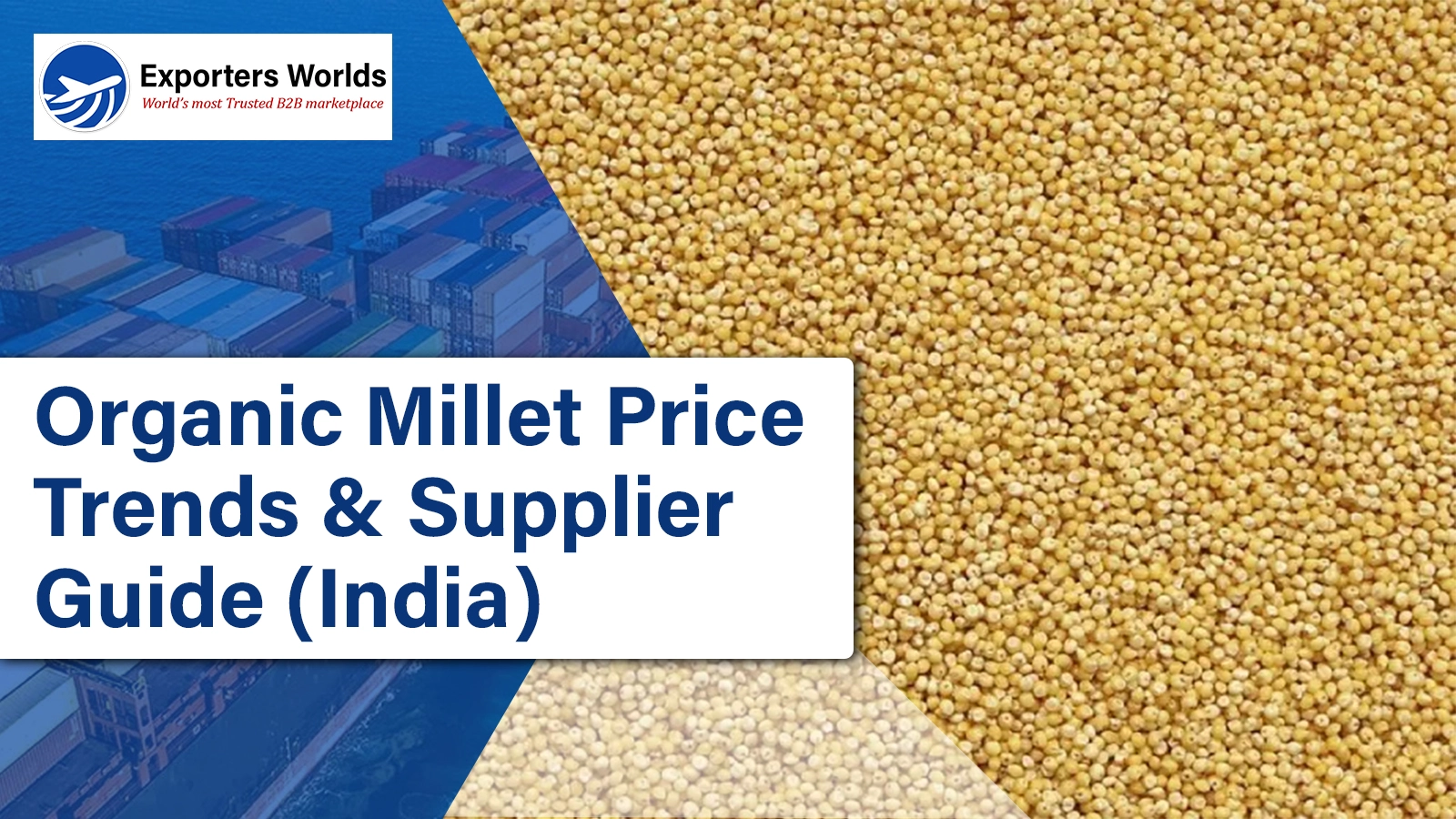
Organic Millet Price Trends & Supplier Guide (India)
For businesses looking to secure stable supply and long-term value, understanding how India’s organic millet market works is now a competitive advantage. Organic millets are no longer a niche product. Today, they are an important part of the global food supply chain. As a business buyer, exporter, or manufacturer, you are likely seeing growing demand for clean-label, plant-based, and sustainable grains. This is where wholesale millet suppliers from India play a major role.
India is one of the world’s largest producers of millets. With strong farming traditions, increasing organic adoption, and export-ready infrastructure, the country has become a trusted sourcing destination for global buyers.
In this guide, you will understand organic millet price trends, supplier insights, sourcing challenges, and how to choose the right partners for your business.
Quick Facts About Organic Millets in India
- India is among the leading global producers of millets
- Organic millets are mainly grown in rain-fed regions
- Millets require fewer natural resources than major cereals
- Most organic millet exports are used in food processing and health food industries
These factors make India a reliable sourcing hub for bulk buyers.
What Are Organic Millets?
Organic millets are small-seeded grains grown without chemical fertilizers, synthetic pesticides, or genetically modified seeds. They are cultivated using natural farming practices and certified under organic standards.
For you as a buyer, organic millets offer:
- Clean and traceable sourcing
- Better acceptance in global markets
- Compliance with organic food regulations
- Higher value for health-focused consumers
Common organic millets from India include finger millet, pearl millet, foxtail millet, little millet, and barnyard millet. These grains are widely used in food processing, baby food, health foods, and gluten-free products.
Organic Millets vs Conventional Millets
Organic millets differ from conventional millets in important ways:
- Organic millets are grown without synthetic chemicals
- Conventional millets may use chemical fertilizers
- Organic millets meet export and clean-label standards
- Conventional millets are usually price-driven
This difference explains why organic millets often carry higher value in international trade.
Why India Is a Global Hub for Organic Millets
India’s strength in millet production comes from both nature and structure.
Millets grow well in Indian climate conditions. They need less water and can grow in poor soil, making them suitable for organic farming.
Indian farmers also have generations of experience in millet cultivation. Many regions have practiced natural farming methods for centuries.
Most importantly, India has a strong network of India-based millet suppliers who can handle bulk orders, processing, and exports. These suppliers work closely with farmers, cooperatives, and exporters.
Government programs and global awareness campaigns have further improved millet infrastructure and international visibility.
Organic Millet Production Landscape in India
Organic millet farming is spread across multiple Indian states. Farmers often grow millets as part of crop rotation, which improves soil health and grain quality.
The supply chain usually follows this path:
- Organic farms and farmer groups
- Local aggregators or cooperatives
- Cleaning, grading, and processing units
- Bulk suppliers and exporters
Many wholesale millet suppliers now invest in traceability systems. This allows you to track the product from farm to shipment, which is critical for global buyers.
Millet Wholesale Price Trends in India
Organic millet prices in India do not follow a single fixed rate. Instead, prices change based on variety, quality, processing level, and market demand.
Current Wholesale Price Trends
Millet wholesale prices in India typically range from ₹20 per kg to over ₹100 per kg, depending on the millet variety and grade.
- Pearl Millet (Bajra) is among the most affordable varieties, often trading between ₹19 and ₹35 per kg in wholesale and mandi markets.
- Average mandi prices for common millets in regions such as Uttar Pradesh are generally observed around ₹19–₹20 per kg, reflecting local supply and seasonal availability.
- Specialty millets such as foxtail millet, little millet, and barnyard millet usually fall in a higher price bracket, commonly ranging from ₹60 to ₹120 per kg or more, depending on quality and processing.
- Organic, certified, and branded millets often command a noticeable premium due to certification costs, traceability, better cleaning, and export-ready packaging.
What This Means for Bulk Buyers
These price ranges indicate that millet pricing is highly variety-specific. While staple millets remain cost-effective, premium and organic segments are value-driven rather than price-driven. For bulk buyers, entering long-term sourcing agreements with wholesale millet suppliers often helps achieve more stable pricing, better quality consistency, and predictable supply.
Key Factors That Influence Organic Millet Prices
Understanding pricing factors helps you negotiate better and plan sourcing efficiently.
1. Farming and Certification
Organic farming follows strict standards. Certification audits, documentation, and compliance add to production costs.
2. Yield and Quality
Organic yields depend on weather conditions. Grains with uniform size, low moisture, and good color have higher value.
3. Processing and Storage
Cleaning, grading, de-stoning, and hygienic packaging improve export readiness and increase value.
4. Logistics and Export Handling
Transport availability, container planning, and destination regulations affect final costs.
Experienced millet suppliers in India usually manage these challenges more effectively.
Types of Organic Millets Available for Bulk Buyers
India offers a wide range of organic millets for different industries:
- Finger Millet: Used in health foods, flour, and beverages
- Pearl Millet: Common in food processing and animal feed
- Foxtail Millet: Popular in ready-to-eat and breakfast products
- Little Millet: Used in specialty health foods
- Barnyard Millet: Preferred in low-calorie diets
Most certified wholesale millet suppliers offer single varieties or mixed bulk shipments.
How Different Industries Use Organic Millets
Organic millets are used across many sectors:
- Food manufacturers use them for flour, snacks, and cereals
- Health food brands use them for gluten-free and high-fiber products
- Exporters supply bulk millets to overseas distributors
- Animal feed producers use specific millet varieties
This wide usage supports long-term demand growth.
How to Identify Reliable Wholesale Millet Suppliers
Choosing the right supplier is critical for consistent quality and timely delivery.
Look for:
- Valid organic certifications
- Experience with international buyers
- Ability to supply bulk volumes
- Transparent pricing and documentation
- Quality testing and inspection support
Reliable suppliers openly share product details, lab reports, and export references.
Quality Checklist Before Finalizing a Supplier
Before confirming an order, you should check:
- Grain cleanliness and uniformity
- Moisture level suitable for storage
- Packaging strength for long-distance shipping
- Batch-wise traceability
- Willingness to support third-party inspection
These checks reduce sourcing risk.
Case Study: How Global Buyers Source Organic Millets from India
Many global food brands source organic millets from India through long-term partnerships.
A common sourcing model includes:
- Connecting with verified suppliers
- Placing trial orders to check quality
- Signing annual supply contracts
- Suppliers coordinating directly with farmers
This approach reduces price volatility and ensures consistent quality. Businesses working with experienced wholesale millet suppliers face fewer disruptions.
Role of Technology in Millet Trade
Technology has improved transparency in millet sourcing.
Digital B2B platforms help you:
- Compare suppliers quickly
- Access verified supplier profiles
- Request quotes and samples
- Communicate directly with exporters
By connecting buyers with millet suppliers in India, these platforms build trust and efficiency.
Export Standards and Compliance
If you import organic millets, compliance is essential.
Suppliers must meet:
- Organic certification standards
- Food safety and hygiene norms
- Packaging and labeling requirements
- Destination country regulations
Common Export Documents for Organic Millets
- Organic certification documents
- Certificate of origin
- Quality inspection reports
- Packing list and commercial invoice
Established wholesale millet suppliers usually manage these requirements smoothly.
Challenges in the Organic Millet Supply Chain
Despite strong demand, challenges exist:
- Weather dependency affects yield
- Organic farming requires strict discipline
- Storage conditions impact quality
- Small farmers may lack infrastructure
How Buyers Can Reduce Sourcing Risks
You can reduce risks by:
- Working with organized supplier networks
- Using long-term contracts instead of spot buying
- Choosing suppliers with export experience
- Using verified B2B sourcing platforms
This ensures stability and quality.
Future Outlook of Organic Millets Market
The future of organic millets is strongly positive, supported by global food trends and policy-level recognition. Millets are now officially recognized as climate-resilient crops, as they require less water and adapt well to changing weather conditions. This makes them suitable for long-term sustainable agriculture.
Globally, food and beverage companies are expanding the use of millets in health foods, gluten-free products, and plant-based diets. Organic millets are increasingly included in product innovation pipelines due to their clean-label acceptance and natural nutritional profile.
India continues to strengthen its position as a leading millet supplier through farmer training programs, organic certification support, and export promotion initiatives. These efforts are improving supply consistency and quality standards, making sourcing from Indian wholesale millet suppliers more reliable for global buyers.
For exporters, manufacturers, and bulk buyers, these developments point toward stable demand, expanding applications, and long-term sourcing opportunities from millet suppliers in India.
How You Can Start Sourcing Organic Millets
If you are new to sourcing, follow these steps:
- Define product type and volume needs
- Shortlist verified suppliers
- Request samples and certifications
- Negotiate pricing and delivery terms
- Build long-term partnerships
Experienced millet suppliers in India often support buyers with documentation and logistics guidance.
Conclusion
Organic millets are no longer just a traditional grain; they are a strategic ingredient in the global food and health industry. As demand for clean-label, sustainable, and traceable products continues to grow, organic millets offer long-term value for exporters, manufacturers, and bulk buyers.
By understanding price trends, production factors, quality requirements, and sourcing risks, you place yourself in a stronger position to make informed purchasing decisions. Working with reliable wholesale millet suppliers ensures consistent quality, regulatory compliance, and a stable supply, three factors that directly impact your business performance.
If you are planning to source organic millets in bulk, starting with verified and export-ready suppliers saves time, reduces risk, and improves cost efficiency.
Platforms like Exporters Worlds make this easier by connecting you with trusted Indian suppliers, helping you compare options, verify credentials, and build reliable sourcing partnerships for global trade. To explore bulk sourcing options or connect directly with verified organic millet suppliers, you can contact exporters through reliable B2B platforms such as Exporters Worlds.
FAQs
1. What are organic millets?
Organic millets are grains grown using natural farming methods without chemical fertilizers, pesticides, or genetically modified seeds. They follow certified organic standards and are preferred in global markets for their safety, quality, and clean-label appeal.
2. Why source organic millets from India?
India offers large-scale millet production, experienced farmers, organic farming adoption, and export-ready infrastructure. This makes Indian suppliers reliable for bulk sourcing and suitable for meeting international food quality and compliance requirements.
3. Are organic millets suitable for bulk export?
Yes, organic millets are widely exported in bulk. Many Indian suppliers specialize in large-volume orders and support buyers with processing, packaging, documentation, and logistics for international shipments.
4. What certifications should organic millet suppliers have?
Suppliers should hold valid organic certifications and follow food safety and hygiene standards. Export-ready suppliers also provide quality inspection reports and required trade documents for international compliance.
5. How do organic millet prices vary?
Organic millet prices vary based on quality, certification status, processing level, seasonal availability, and export demand. Long-term sourcing agreements often help buyers achieve more stable pricing.
6. Which organic millets are most demanded globally?
Finger millet, foxtail millet, and pearl millet are among the most demanded globally. They are commonly used in health foods, gluten-free products, and food processing industries.
7. How can buyers verify organic millet suppliers?
Buyers can verify suppliers by checking certifications, export experience, quality reports, product samples, and trade references. Using verified B2B platforms also helps reduce sourcing risks.
8. What challenges exist in organic millet sourcing?
Common challenges include weather-dependent yields, quality consistency, storage conditions, and logistics coordination. These risks are lower when sourcing from experienced and organized suppliers.
9. Can wholesale millet suppliers offer customized packaging?
Yes, many wholesale suppliers provide customized packaging options based on buyer requirements, including bulk bags and export-friendly packaging suitable for long-distance shipping.
10. Where can buyers find trusted millet suppliers in India?
Buyers can find trusted suppliers through verified B2B platforms like ExportersWorld, which connect global buyers with export-ready Indian suppliers offering transparency, credibility, and multiple sourcing options.