The Impact of the Iran–USA–Israel War on Global Trade in 2026
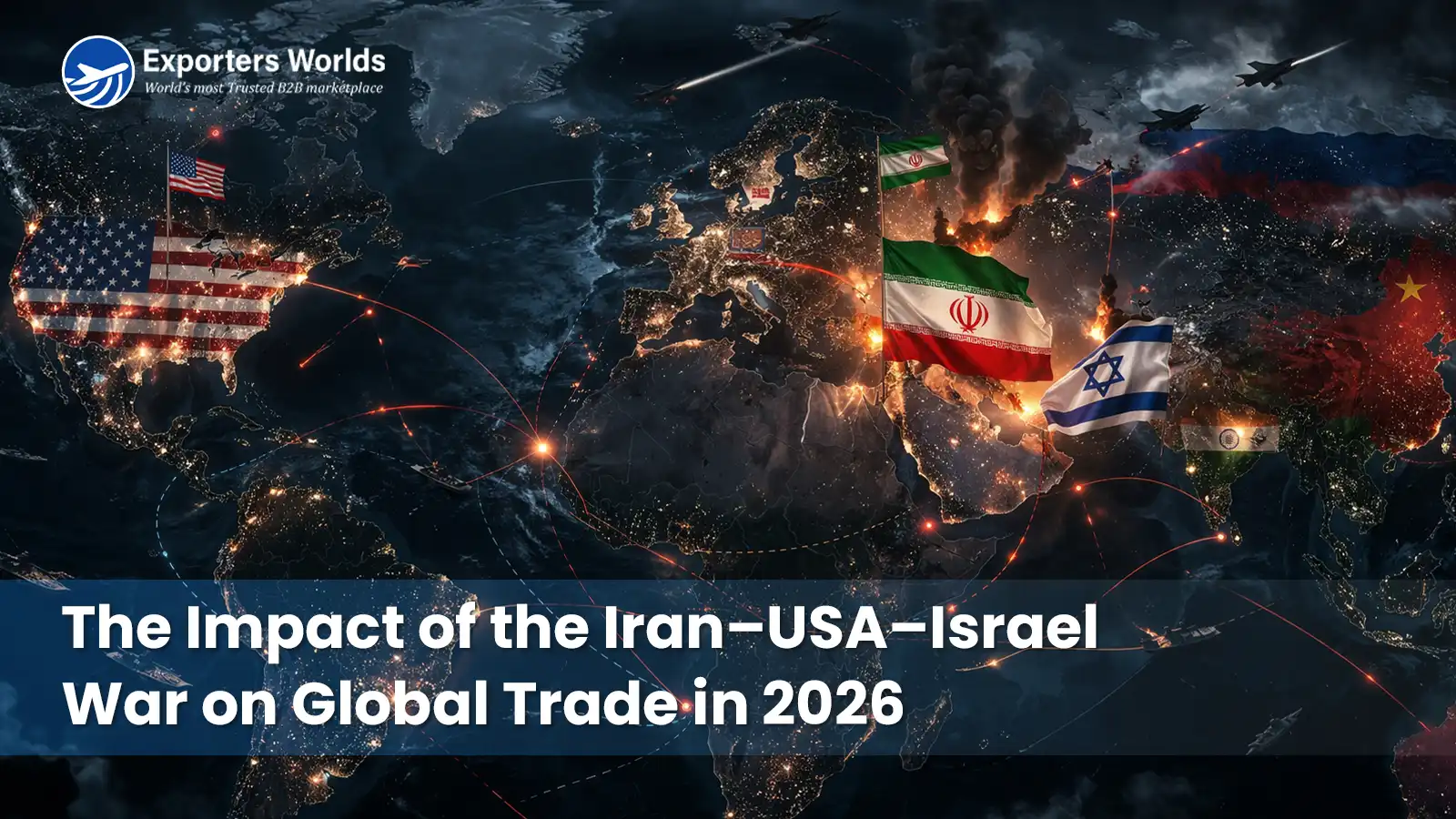
The Impact of the Iran–USA–Israel War on Global Trade in 2026 Global trade has always been impacted by geopolitical tensions, and the growing conflict of Iran, the USA, and Israel has been of the most severe in 2026. What started as a regional dispute has turned into a global economic problem. In this instance, the conflict has impacted shipping lanes, oil prices, and supply costs in most industries, as well as the problems faced by the shipping and transportation industries. The disruption of global trade has impacted businesses involved in international trade and trade in B2B marketplaces, such as exporters, importers, and B2B companies.The international trade and global marketing field has experienced disruptions, and this is a major concern for businesses involved in Intercontinental trade. Over the years, international disputes and wars have impacted global trade.
The Disruption of Global Trade by the War
The Disruption of Global Trade by the War The use of blockade and the destruction of global trade has created a immense problem in the shipping and transportation industries. Global trade is negatively affected, as is the flow of oil and other trade resources. The Restriction of oil resources has negatively impacted industries that depend on the Rapid flow of oil, such as the trade and transportation Industries. The negative impact of International trade has created great trade and transportation industries. The Rapid flow of oil and the Restriction of trade resources flow have greatly impacted the Global trade.The Strait of Hormuz: A Crucial Route for Global Trade
Value of the Route
One of the most crucial trade routes in the world is the Strait of Hormuz. It is Essential for global trade as a large part of world oil and energy supplies pass though this narrow channel. It also helps in the transportation of trade in:
- Crude oil
- Natural gas
- Industrial raw materials
Any trade route that is a disrupted directly affects the global market
Current Situation
Because of the ongoing conflict, the following is true:
- Shipping traffic has reduced significantly
- Tankers are being delayed, and in some cases diverted.
- Risk levels have increased, and
- Insurance has skyrocketed
Global trade has been affected as it has caused uncertainty for exporters.
The War and Trade
One of the most direct effects of the war has been the staggering increase of oil prices. The increase in prices is caused by the disruption of energy supply chains, which in turn causes an increase in costs for all other industries.
Effects of Export Cost Increases
The significant rise in fuel prices have led to increases in:
- Transporting and logistics
- Production
- Profit margin
- Competitive pricing
These costs are impacting global competitiveness and profitability for export industry businesses in India.
Effects of the War
The War is impacting global supply chains with:
- Shipment delays
- Raw material shortages
- Increased Production costs
- Unpredictable delivery
All of the above are impacting industries that trade.
Most Affected
- Agriculture
- Manufactures
- Textiles
- Chemicals
For many b2b businesses, it has become infinitely more difficult to meet buyer demand and maintain a regular supply.
Impact of the War on basic commodities
The war is impacting the supply chains of food globally. For example,
- Disruption in supply of fertilizers
- Increased costs of agricultural production
- Increase in food prices globally
Countries with high import dependencies are facing more challenges, leading to difficulties in trade for exporters.
Shipping Expenses and Logistics Issues because of the war:
- Rerouting of shipping lines
- Longer time of shipping
- Increased cost of freight
- Implementation of new risk-related charges
Logistics companies are staying away from high-risk zones, causing delays and increased costs for the exporters.
Business Impacts
- No one knows when deliveries will come
- Increased cost of logistics for exporters
- Buyers are taking less risk in placing orders
For companies that use the best b2b platform in India, trust and punctual delivery are becoming extremely important.
Impact on Exporting from India
As a major nation for international commerce, India's exports are impacted by these disturbances.
Primary Concerns
- Increase in the cost of shipping
- Exports to the Middle Eastern markets are delayed
- Demand decreases in the impacted areas
Industries That Are Most Affected
- Textiles
- Agriculture (rice, spices)
- Chemicals and pharmaceuticals
For India's exporting community, rapid adaptation to these challenges is critical to retaining a competitive edge.
New Opportunities Despite the Crisis though the war has created continuous disruptions, it has also provided new avenues for exporters.
1. Alteration in Worldwide Supply Chains
Due to the availability of conflict-based alternate suppliers, firms are beginning to seek alternate suppliers in areas free of conflict. With the help of a dependable b2b marketplace, Indian exporters have the greatest potential to widen their business.
2. Higher Need for Basic Goods
Food, medicine, and other necessary items are experiencing an upsurge in demand. Even when the situation is unpredictable, exporters who are able to satisfy this need will experience business growth.
3. Increased Use of Digital B2B Marketplaces
As the uncertainty of conventional trade pathways increases, businesses are utilizing digital marketplaces to identify new collaborators. In this situation, specialized b2b marketplaces in India that operate on a global scale to integrate buyers and suppliers are becoming increasingly significant.
With the help of tools such as Exporters Worlds, businesses can:
- identify prospective buyers
- diversify their trading
- establish trade relations that are consistent
What Exporters Should Do Immediately
1. Market Diversification
Centering on a single region is very risky. Exporters need to consider new potential regions in Europe, Africa, and Southeast Asia.
2. Supply Chain Reinforcement
- partner with multiple logistics providers
- keep additional supplies in storage
- prepare for delays due to unexpected circumstances
3. Use of Digital Tools
In the current climate, having a reliable b2b digital marketplace is essential to drive growth.Exporters must not only list their products and contact international buyers, but also create sustainable partnerships.
Champion Costs
Operational costs require constant improvement of efficiency to remain competitive.
Global trade's future will depend on the conflict's evolution. Businesses may need to prepare for lengthy disruptions if the conflict persists.
Possible disruptions consist of:
- Global supply chains being rearranged
- Digital Trade Platforms being utilized more
- Changes to Trade Routes
B2B companies must thrive during these disruptions.
Final Thoughts
The Israel-USA-Iran war has shown how easily the world’s trade networks can be dismantled. The effects are being felt in every business sector from the soaring cost of oil to supply chain shortages.
With every challenge, there’s an opportunity.
Businesses that quickly adapt to the challenges, diversify their offerings, and utilize a trustworthy b2b marketplace will continue to grow during uncertain times.
Indian exporters need to be constructive, adaptive, and digitally engaged, especially during the current climate. The leading b2b marketplace in India allows exporters to digitize their processes, discover new trade avenues, and connect with buyers across borders to maintain a competitive edge in a dynamic marketplace.
FAQs
Q1. In what ways are global trading operations impacted by the war?
Shipping channels are being disrupted and costs are rising. There are also delays in the chain of supply.
Q2. What are the difficulties being faced by exporter's?
There are increased costs of logistics, delays in shipping, and in some areas there is a decrease in demand.
Q3. Can exported goods still find a market?
Yes. Especially in the supply of essentials and in the market for substitute supplies.
Q4. What can exporters do now to be successful?
Exporters can be successful by utilizing a good b2b marketplace, market diversification, and operational optimization.