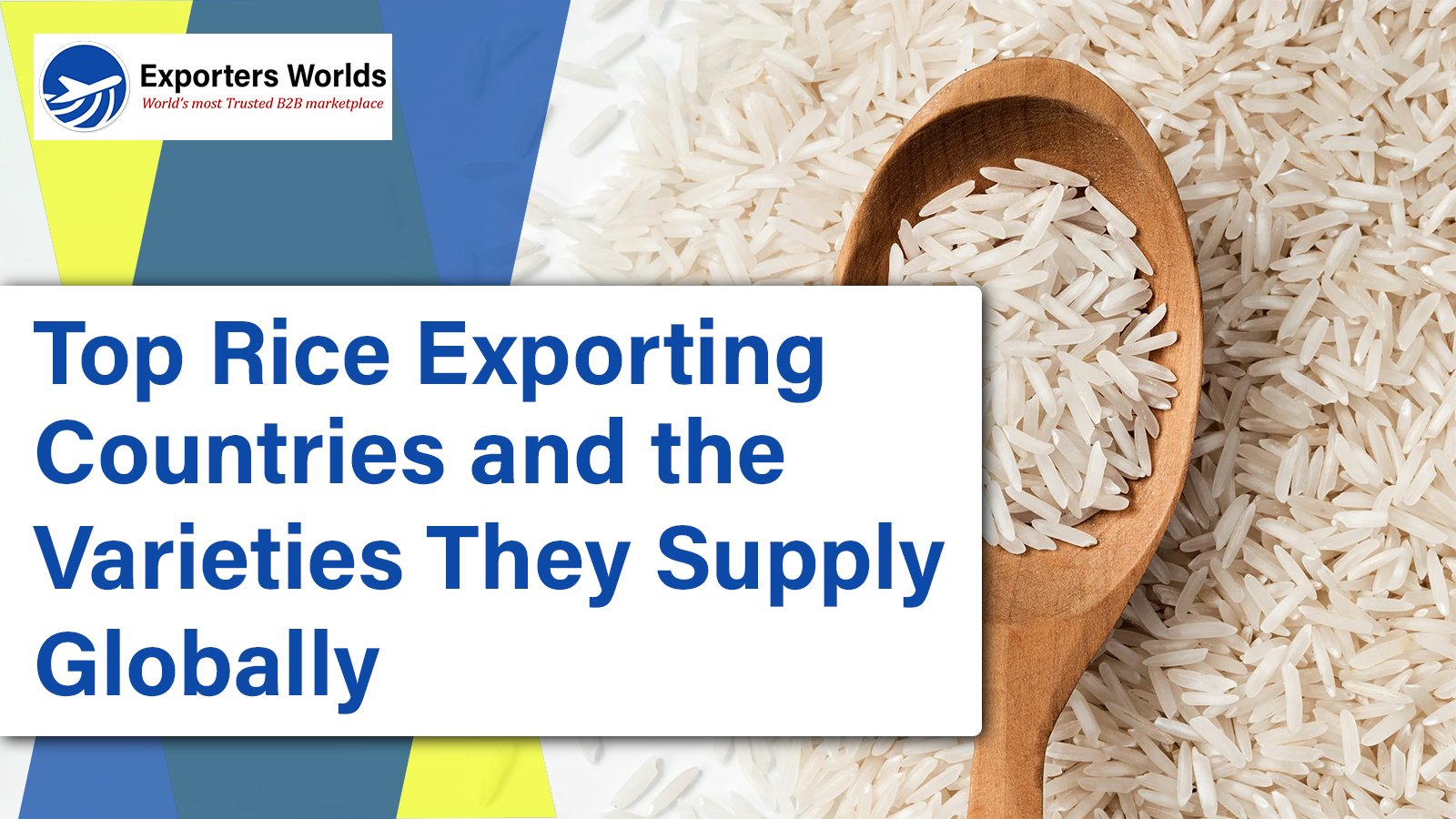
Top Rice Exporting Countries and the Varieties They Supply Globally
Introduction
Rice is more than just a staple food—it’s a global commodity that drives economies, shapes trade policies, and sustains millions of livelihoods. In 2026, the global rice trade continues to reflect the dominance of Asian nations, with India emerging as a powerhouse following its post-2025 export policy reforms. From aromatic Basmati fields to the fragrant Jasmine paddies of Southeast Asia, rice exporting countries are not only supplying grains but also shaping how rice varieties are sourced for international markets.
This article explores the top rice exporting countries, the diverse rice varieties in world markets, current trends, and the factors influencing global demand. Whether you are a trader, importer, or food enthusiast, understanding these dynamics can illuminate opportunities in the international rice landscape.
Global Rice Market Overview
The global rice market in 2025–2026 is characterized by both growth and regional specialization. Worldwide production reached approximately 765 million metric tons, with exports accounting for nearly 55–60 million metric tons. While Asia remains the epicenter of rice exports, key importing countries span the Middle East, Africa, Europe, and North America.
Several factors are shaping the international rice market today:
- Policy reforms: India’s export incentives post-2025 have catalyzed non-Basmati rice shipments to emerging markets.
- Climate and weather patterns: Monsoon variability in Southeast Asia directly influences supply.
- Technological adoption: Drone-assisted farming in Thailand and Vietnam is enhancing yields and reducing costs, ensuring competitive pricing in international markets.
This dynamic environment underscores the importance of staying informed about rice demand trends and rice export volume to navigate a competitive market effectively.
Top Rice Exporting Countries and Their Varieties
India: The World Leader
India continues to dominate as the largest rice exporter, with export volumes ranging between 22–24.5 million metric tons. Its rice offerings are diverse: Basmati, Sella Basmati, Parboiled, and Non-Basmati White varieties.
Key export markets include Saudi Arabia, Iran, the UAE, Bangladesh, and the USA. Post-2025, India has experienced a surge in non-Basmati exports, opening opportunities in countries like Mexico and the Philippines. The combination of premium aromatic grains and cost-competitive varieties has strengthened India’s position in the rice supply chain.
Thailand: Jasmine and Fragrant Rice Specialist
Thailand is renowned for its Jasmine (Hom Mali) rice, celebrated for its aroma and premium quality. Export volumes hover around 7.2–7.5 MMT, with additional varieties including Parboiled, Glutinous, and White Rice.
Primary export markets are China, the USA, Singapore, Japan, and South Africa. Thailand’s rice exports stand out due to the high aromatic value, commanding premium pricing in the Middle East and Western markets. For buyers seeking specialty grains, Thai Jasmine rice remains a hallmark of quality.
Vietnam: Fragrant and Affordable Rice Supplier
Vietnam also exports between 7.2–7.5 MMT of rice, primarily supplying Fragrant, White, Long-Grain, and Broken Rice. Its major markets include the Philippines, Ghana, Malaysia, Singapore, and the UAE.
Vietnam has embraced drone-assisted farming to lower production costs, enhancing competitiveness while maintaining high yield. Its combination of affordability and consistent quality makes Vietnamese rice a preferred choice for many bulk importers.
Pakistan: Basmati and Specialty Grains
Pakistan exports approximately 5–5.3 MMT of rice, specializing in Basmati (Super Kernel), IRRI-6, and Long-Grain varieties. Its key markets include the UAE, Saudi Arabia, EU nations, the UK, Malaysia, and Afghanistan.
The country positions itself as a supplier of premium Basmati, appealing to Middle Eastern and European buyers seeking high-quality aromatic grains. Pakistan’s strategic focus on specialty rice exports highlights the importance of branding in the high-value rice market.
USA: Niche and Medium-Grain Rice
The United States exports around 3.2–3.4 MMT of rice, with Medium-Grain (Calrose), Long-Grain, and Parboiled varieties. Primary export destinations include Mexico, Haiti, Central America, Japan, and Canada.
American rice stands out for its niche medium-grain demand, offering consistent supply to Western hemisphere markets. The USA emphasizes reliability and supply chain efficiency, ensuring smooth delivery to importing nations.
Cambodia: Fragrant Jasmine Varieties
Cambodia contributes around 3.4 MMT of exports, focusing on Phka Rumduol (Jasmine) and Fragrant Long-Grain rice. Key markets include China, the EU, and Vietnam.
Cambodia’s emphasis on premium aromatic varieties aligns with growing EU demand, making it a notable player in premium fragrant rice exports. Its small but specialized export portfolio reflects the increasing global appetite for high-quality rice.
Key Market Trends in 2026
Several trends are shaping the global rice trade in 2026:
- India’s expanding reach, targeting emerging markets in Latin America and Asia.
- Rising global demand for aromatic rice like Basmati and Jasmine.
- Technological innovations in Southeast Asia, including automation and drone farming, enhancing yield and cost efficiency.
- Price competitiveness influencing import decisions, particularly for bulk buyers.
- Regional considerations, such as the Philippines’ dependence on Vietnamese rice for food security.
These dynamics illustrate the complexity of global rice trends and highlight areas of opportunity for traders and importers.
Factors Influencing Rice Export Performance
The performance of top rice exporting countries is shaped by multiple factors:
- Government policies: Export incentives, tariffs, and trade agreements can boost or restrict volumes.
- Climate change: Erratic monsoons and rising temperatures affect yields.
- Technological adoption: Advanced irrigation, drone usage, and mechanized harvesting improve efficiency.
- Consumer trends: Preferences in importing countries, particularly for fragrant or specialty rice, influence export strategies.
Understanding these rice export factors is crucial for stakeholders to navigate a volatile market.
Challenges Faced by Top Rice Exporting Countries
Despite their leadership, rice exporters face several hurdles:
- Intense competition among major exporters drives price sensitivity.
- Fluctuating global rice prices and trade barriers can disrupt supply.
- Logistics challenges, from port congestion to inland transport, affect delivery schedules.
- Maintaining quality standards across diverse varieties remains essential to preserve market reputation.
These challenges underscore the need for strategic planning in the rice trade market.
Future Outlook for Global Rice Exports
Looking ahead to 2026–2027, the future rice exports landscape points toward growth and innovation:
- India and Vietnam are expected to expand into new markets in Africa and Latin America.
- Demand for aromatic and specialty rice varieties is projected to increase steadily.
- Sustainability and innovation, including precision farming and climate-resilient strains, will influence production practices.
- Potential shifts in global rice dominance may arise as exporters leverage technology and trade networks to gain competitive advantage.
This evolving outlook indicates a dynamic global rice supply scenario with ample opportunities for traders, producers, and importers.
FAQs
Which countries dominate the rice export market in 2026?
India, Thailand, Vietnam, Pakistan, the USA, and Cambodia are leading exporters, each with distinct rice varieties catering to global demand.
What are the most popular rice varieties exported globally?
Basmati, Jasmine, Parboiled, Long-Grain, and Medium-Grain rice dominate, alongside specialized aromatic and broken rice varieties.
How do policies affect rice export volumes?
Export incentives, tariffs, and government-led initiatives can significantly influence supply, pricing, and market reach.
Why is India the leading exporter, and how does it compete with Thailand and Vietnam?
India leverages its dual strength in Basmati and non-Basmati exports, offering both premium and bulk options. Thailand and Vietnam focus on fragrant and affordable rice, carving niches in high-end and cost-sensitive markets.
What are the key challenges rice exporters face in the global market?
Competition, price fluctuations, logistics, and quality maintenance are primary concerns for all exporters.
How do technological innovations impact rice export quality and volume?
Automation, drone-assisted farming, and supply chain digitization enhance yield, reduce costs, and ensure consistent quality, boosting export potential.
Conclusion
In 2026, the global rice trade is both a story of tradition and innovation. From India’s expansive Basmati fields to Thailand’s fragrant Jasmine paddies, the top rice exporting countries are supplying diverse rice varieties in world markets, each catering to unique tastes, price points, and culinary cultures.
With rising demand for aromatic rice, technological advancements, and new markets emerging, the opportunities for buyers, importers, and traders are immense. For those seeking quality and reliability, exploring top rice exporters can open doors to premium grains, sustained supply, and vibrant culinary experiences.
For businesses and culinary enthusiasts alike, platforms like Exporters Worlds provide seamless access to verified suppliers, connecting buyers with high-quality rice varieties from around the globe, making sourcing easier and more efficient than ever before. Contact us today!