Why Are Sugar Prices So High in India in 2026? Causes, Trends & Global Impact
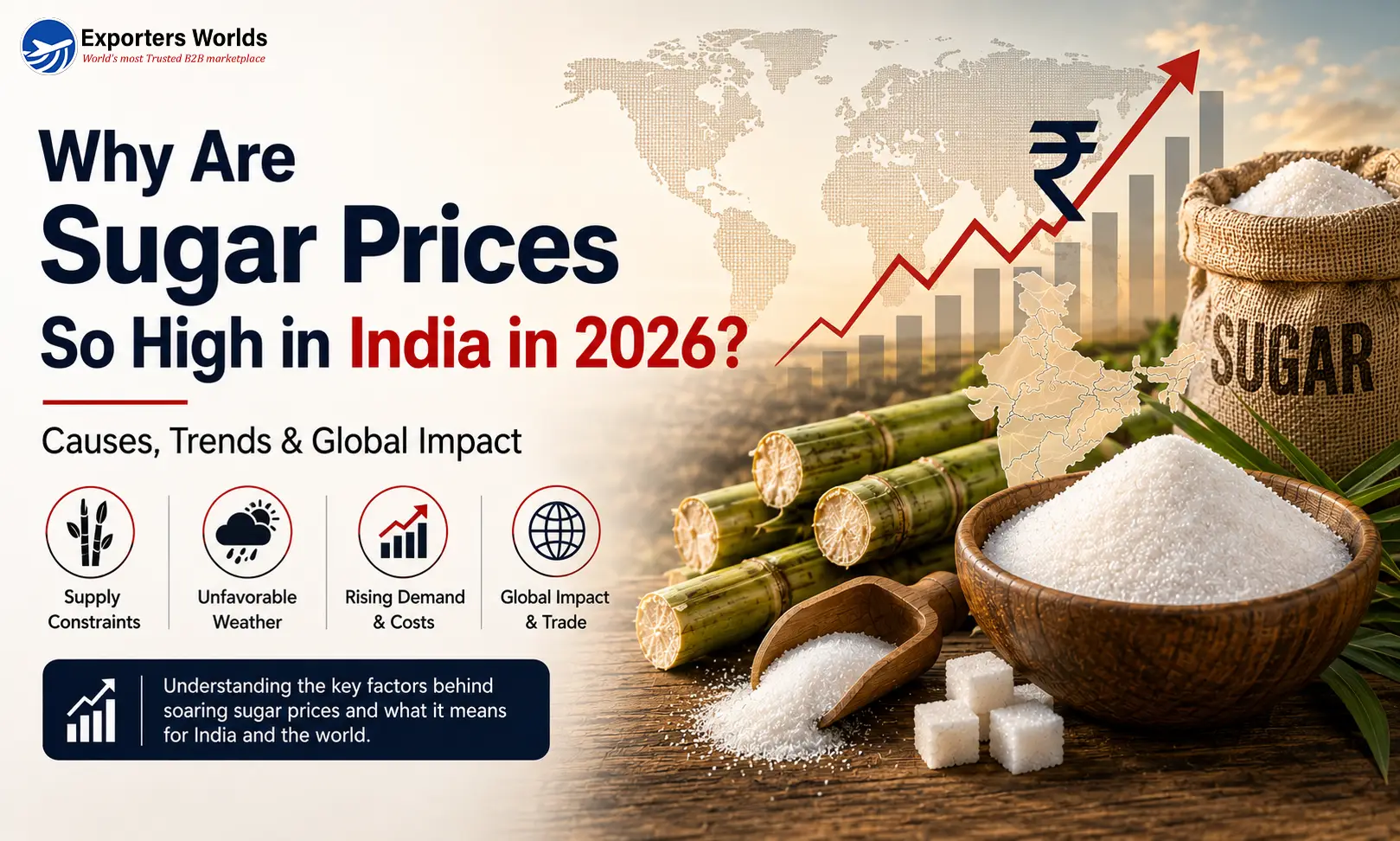
A higher sugar bill at the grocery store can look like a simple retail problem. It is not.
The price consumers see is shaped by what happens in sugarcane fields, sugar mills, warehouses, transport networks and global commodity markets. Weather, production, inventories, ethanol, government policy, exports and imports can all influence the final amount paid for sugar.
That is why the best way to understand a sugar price today is not to look at one number. It is to understand the supply-demand system behind it.
What determines sugar prices in India?
Sugar moves through several market stages before reaching households. A mill may sell at an ex-mill price, after which wholesalers, distributors and retailers add their costs.
So when people search for the sugar price per kg, they may actually mean different levels of the market.
The chain is broadly:
Sugarcane production → sugar recovery → sugar output → stocks → ex-mill prices → wholesale prices → retail prices
When available supply becomes tighter while demand remains strong, prices generally face upward pressure.
1. Sugarcane production is the starting point
India's sugar industry depends heavily on sugarcane. The amount of cane harvested, acreage, yield and sugar recovery rate all affect how much sugar mills can produce.
A large cane crop does not automatically mean large sugar output. Poor weather, water stress, disease or lower cane quality can reduce recovery.
Maharashtra, Uttar Pradesh and Karnataka are especially important to India's sugar balance, so production changes in these states can have nationwide implications.
2. Weather can tighten supply
Sugarcane needs substantial water, making weather a key market variable.
Weak rainfall or prolonged heat can hurt cane growth. Excess rainfall can create harvesting, field and transport problems. The important connection is:
Weather → cane yield and recovery → sugar production → available supply → price pressure
This is why market expectations can change before the impact reaches retail stores.
3. Sugar stocks matter
Production is only one side of the equation. Existing inventories matter too.
Opening stocks, new-season production, domestic consumption and trade flows determine how much sugar is available.
If production is lower and stocks are being drawn down, prices can remain firm even when consumers do not see an obvious shortage.
This is why a reported sugar rate today should be considered alongside production and inventory data.
4. Domestic demand remains important
India has a large sugar-consuming market. Households are important buyers, but food and beverage manufacturers, confectionery companies, bakeries and restaurants also use sugar.
When demand remains strong while supply growth is limited, wholesale and retail prices can rise. Seasonal consumption around festivals and periods of increased food processing can add pressure.
5. Ethanol has changed the supply equation
Ethanol is now a major part of India's sugar economy.
Sugarcane-derived material can be used for ethanol rather than being converted entirely into sugar. This supports ethanol-blending goals and can improve mill economics, but it can also affect the quantity of sugar available.
The relationship is:
Sugarcane → sugar or ethanol allocation → available sugar output → domestic supply
However, ethanol alone should not be blamed for high prices. Its impact depends on cane production, recovery, stocks, policy and the economics of sugar versus ethanol.
Sugar diversion, sugarcane juice, B-heavy molasses and C-heavy molasses are therefore important when assessing the market.
6. Government policy can move the market
India's sugar sector is closely influenced by government decisions.
The Fair and Remunerative Price (FRP) affects sugarcane procurement economics. The Minimum Selling Price framework for sugar can also influence mill selling decisions.
Trade policy matters too. Export restrictions may be used when policymakers want to protect domestic availability. Imports, where permitted and commercially viable, can add supply.
As a result, a policy change can influence prices even when the physical crop has not changed.
7. Global sugar prices affect India
India is part of a connected world sugar market.
Brazil and Thailand are major participants in international sugar trade, while the European Union, United States and China are also important markets.
Brazil is particularly significant because its production and exports influence global availability. Weather, crop performance and decisions about using cane for sugar or ethanol can affect international prices.
The effect can reach India through trade:
Global supply → international prices → export/import economics → Indian market conditions
India can also influence the global market when its own production or exports change materially.
Why does the chini ka rate vary across India?
People often search for the chini ka rate as though India has one fixed retail price. In reality, prices vary between cities and retailers.
Transport costs, local wholesale conditions, retailer margins, packaging, brand and distribution costs can all affect what customers pay.
That is why the 1 kg sugar price in India may differ between Delhi, Mumbai, Lucknow, Pune, Bengaluru and other markets.
Branded packaged sugar can also cost more than loose sugar. Retail pricing is therefore not always a direct reflection of the ex-mill price.
Will sugar prices come down?
They can, but the direction depends on India's supply-demand balance.
Prices could ease if sugarcane production improves, recovery rates strengthen, inventories rebuild, demand softens or additional supply becomes available through trade.
They could remain firm or rise if production disappoints, stocks tighten, weather damages crops or policy restricts available supply.
For businesses tracking the market, the key indicators are sugarcane output, recovery rates, mill production, stocks, domestic consumption, ethanol allocation, export policy and global sugar prices.
What do higher sugar prices mean for businesses?
For consumers, higher sugar prices can increase grocery costs and contribute to food inflation.
For food and beverage manufacturers, sugar is a production input. Sustained increases can squeeze margins, complicate procurement and make cost forecasting harder.
For exporters, importers, traders, wholesalers and suppliers, volatility creates both risks and commercial opportunities. Buyers need dependable supply, while sellers need access to genuine demand and credible trading partners.
This is where Exporters Worlds can be relevant. Its B2B marketplace connects businesses with buyers and suppliers while supporting product visibility, buyer qualification, direct communication and export-related assistance. Companies exploring sugar sourcing or selling opportunities can use such a platform to develop more structured B2B connections.
The larger lesson is simple: sugar pricing is a supply-chain story, not just a grocery-store story. Once you understand sugarcane, production, stocks, ethanol, policy and global trade, movements in the retail market become much easier to interpret.
FAQs
What is the sugar price today in India?
There is no single national retail figure. The current price varies by city, retailer, brand, packaging and market conditions. A reliable sugar price today should be checked against current local retail or official market data.
What is the sugar price per kg in India?
The sugar price per kg depends on whether you mean ex-mill, wholesale or retail sugar. Consumer prices also vary by location and product type.
Why does chini ka rate change?
The chini ka rate changes because sugar supply, demand, stocks, production costs, weather, ethanol allocation, government policy and international trade can all change over time.
What is the sugar rate today in different cities?
There is no single sugar rate today for every city. Delhi, Mumbai, Lucknow, Pune, Bengaluru and other markets can have different prices because logistics, wholesale conditions and retail margins differ.
What is the 1 kg sugar price in India?
The 1 kg sugar price in India varies according to location, brand, packaging and market conditions. Loose and packaged sugar can also have different prices.
Does ethanol production increase sugar prices?
It can contribute to tighter sugar availability when more cane-derived material is directed toward ethanol, but the effect depends on production, inventories, policy and demand.
Will sugar prices fall in India?
They could fall if production and inventories improve. They could remain high if crop conditions weaken, stocks tighten or policy restricts available sugar.