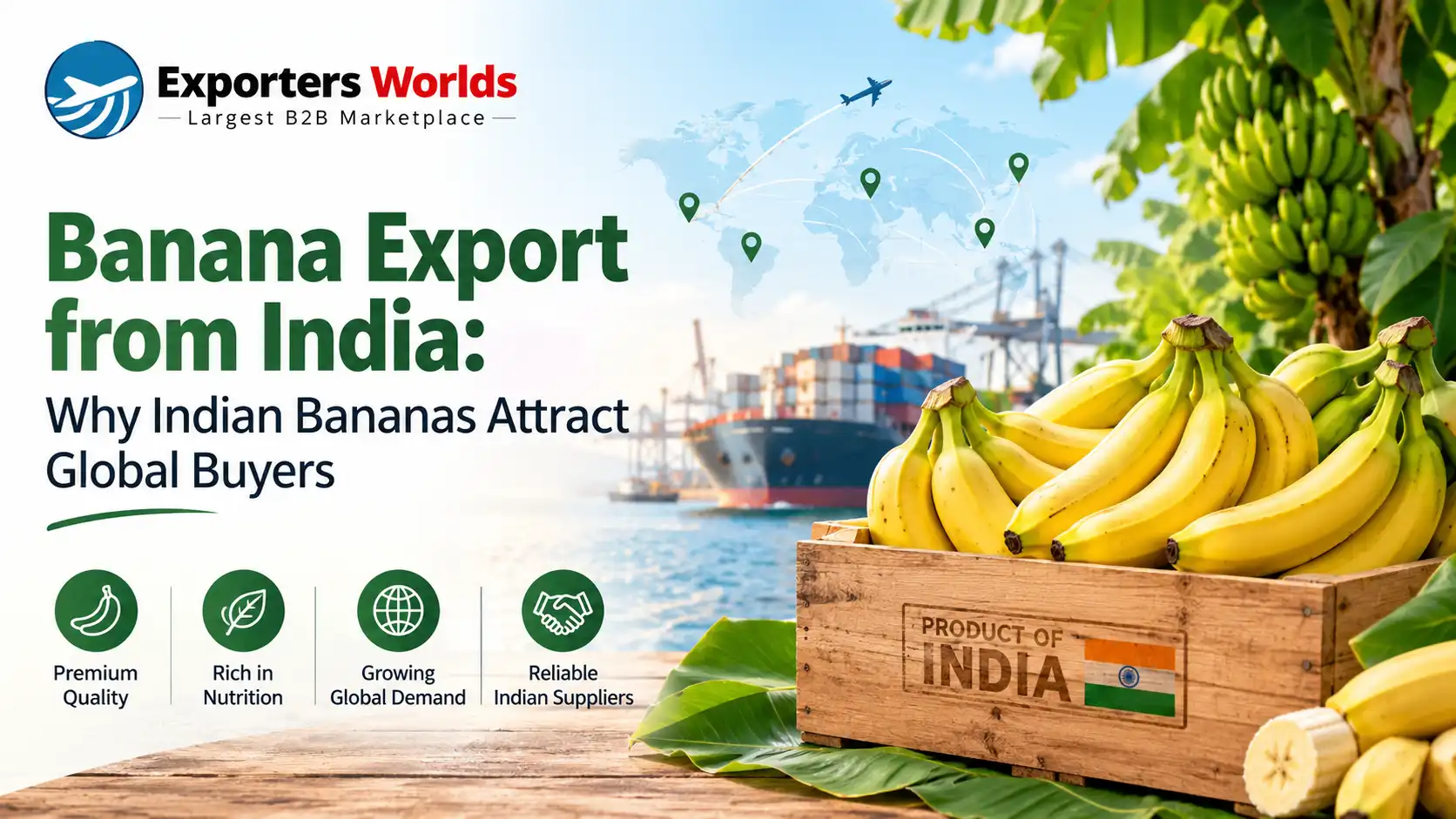
Banana Export from India: Why Indian Bananas Attract Global Buyers
A buyer comparing banana suppliers is not only comparing fruit. They are comparing consistency, variety, pricing, shelf life, documentation, packing quality, and the ability to deliver the same specification repeatedly.
That is where banana export from India has become increasingly relevant. India has a large domestic banana industry, multiple growing regions, important commercial varieties, and a growing export ecosystem. For importers, produce distributors, foodservice companies, retailers, and a wholesaler of fruits, the opportunity is less about finding “cheap bananas” and more about finding a supplier that can meet a precise specification reliably.
Why are Indian bananas in demand?
India's biggest advantage is scale. The country is one of the world's major banana-producing nations, with production spread across several states and climatic zones. That creates a broad sourcing base rather than dependence on one growing area.
Another advantage is varietal choice. Indian suppliers can work with export-oriented bananas such as Cavendish and Grand Naine, along with Robusta and Yelakki for markets with different taste and size preferences.
For international buyers, the “best” banana is not the same for every channel. A supermarket program may prioritize uniform size, appearance, and controlled ripening. A foodservice buyer may care more about pack size, maturity, and dependable weekly supply. A wholesaler of fruits may need flexible grades and volumes for several downstream customers.
Price is also part of the equation. Indian supply can be commercially competitive because of the country's agricultural base and domestic market depth. But banana export pricing should never be judged from a farm-gate number alone. Packaging, grading, inland transport, port handling, freight, insurance, destination requirements, exchange rates, and Incoterms can materially change landed cost.
India's banana production gives exporters sourcing depth
Major banana-producing states include Maharashtra, Andhra Pradesh, Gujarat, Tamil Nadu, Karnataka, Madhya Pradesh, and Bihar, although the importance of each varies by variety and season.
For buyers, this geographic spread can support resilient sourcing. An experienced exporter can source from suitable regions, plan harvests around maturity requirements, and organize collection, grading, and dispatch around an overseas order.
This is why banana export from India should be viewed as a supply-chain business, not simply a farm-to-port transaction.
Which Indian banana varieties are exported?
Cavendish and Grand Naine are particularly important when buyers need bananas with commercial handling and export potential.
Cavendish is widely recognized in international trade and is valued for a familiar eating profile, visual uniformity, and suitability for controlled ripening programs.
Grand Naine, a Cavendish group cultivar widely grown in India, is commercially important because of its bunch characteristics, fruit size, and suitability for organized cultivation and handling.
Robusta is another established Indian variety. It can suit markets with different preferences for size, taste, or eating characteristics.
Yelakki, also known as Ney Poovan in many Indian contexts, is valued for its smaller size and distinctive flavor. It can serve specialty demand rather than the standard large-volume Cavendish channel.
The right variety depends on destination, buyer specification, maturity at shipment, transit time, packaging format, and intended customer. A reliable exporter should discuss these details before quoting.
What makes Indian bananas suitable for international markets?
Export quality begins well before the fruit reaches a container.
Buyers typically need a specification covering variety, fruit size, grade, maturity stage, cleanliness, firmness, defects, presentation, packing method, and acceptable tolerances.
Sorting and grading are critical because a shipment can look attractive at farm level but fail a commercial specification if sizing is inconsistent or handling is poor.
Packaging protects the fruit during handling and transit while supporting ventilation and temperature management where required. The format should match the buyer's retail, wholesale, or foodservice needs.
Phytosanitary and food-safety compliance is equally important. Exporters must meet destination-country rules and maintain appropriate documentation and traceability. For shipments intended for the United States, buyers and exporters should confirm current USDA APHIS and FDA requirements, including product-specific admissibility conditions, before contracting.
How does banana export from India work?
The basic export chain is straightforward, but execution is not.
Fruit is sourced from farms or collection points, inspected, sorted, graded, packed, documented, transported, and dispatched for international shipment. Depending on destination and supply arrangement, exporters may coordinate reefer logistics, port handling, customs, and destination-side requirements.
Commercial success depends on matching harvest maturity with expected transit and ripening. Fruit prepared too early or too late can create quality problems even when it was healthy at packing.
Documentation can include commercial invoices, packing lists, shipping documents, and certificates or permits required by the destination. Buyers should agree on documentation responsibilities, Incoterms, packaging specifications, inspection arrangements, and payment terms before dispatch.
Can U.S. buyers source bananas from India?
The U.S. market has established banana supply routes, so India is not automatically the right source for every buyer.
For a U.S. importer, the useful question is whether an Indian supplier can meet the required specification and current U.S. import conditions consistently.
Before ordering, evaluate sourcing capacity, variety, grading standards, packing setup, shipment history, documentation, communication, and ability to maintain agreed quality across repeat shipments.
For larger buyers, a trial shipment or structured quality-approval process can reduce risk before recurring orders.
What affects banana export prices from India?
There is no single fixed “banana export price from India.”
Pricing can change with variety, grade, season, order volume, packaging, inland transport, freight rates, destination, Incoterms, currency movement, and market conditions.
Compare complete commercial offers rather than only a per-kilogram figure. A lower quotation can become less attractive when packaging, transport, inspection, or other relevant costs are excluded.
How to choose a reliable Indian banana exporter
The safest approach is to qualify the supplier before focusing on price.
Ask for clear product specifications. Confirm varieties, sizes and grades, packing method, and maturity stage at shipment.
Then assess operational capability. Can the exporter handle your required volume? Is there a defined quality-control process? Can the supplier explain collection, grading, packing, documentation, and shipping?
Communication is another practical test. International produce trade involves timing, specification changes, shipping coordination, and decisions. A supplier that communicates clearly before the first order is easier to work with when a shipment is under pressure.
Why the right sourcing partner matters
The global banana trade rewards consistency more than a one-time attractive quote. Buyers need suppliers that understand specifications, export procedures, logistics, documentation, and commercial communication.
This is also why the phrase largest exporter of bananas needs context. The country with the highest production is not necessarily the country with the highest export volume. India is a major producer and an important participant in international banana trade, but buyers should compare countries using trade performance, destination fit, logistics, quality, and supplier capability.
For businesses exploring Indian fruit sourcing, Exporters Worlds can provide a practical starting point for discovering suppliers and trade opportunities. Its B2B marketplace combines supplier and buyer connections with lead qualification, CRM-supported onboarding, direct communication, and export-related support. It also provides digital marketing and business-promotion services for suppliers seeking visibility beyond a single marketplace.
The key takeaway for buyers is simple: do not choose an Indian banana exporter because a listing looks attractive. Choose a supplier that can demonstrate product fit, commercial reliability, documentation readiness, and the ability to support repeat trade.
Frequently asked questions
Why are bananas exported from India?
India has a large banana production base, multiple growing regions, several relevant varieties, and an expanding export network. These factors give international buyers more sourcing options.
Which bananas are exported from India?
Cavendish, Grand Naine, Robusta, and Yelakki are among the Indian varieties buyers may encounter. Availability depends on exporter, region, season, destination requirements, and buyer specification.
Is India the largest exporter of bananas?
Not necessarily. India is one of the world's leading banana producers, but production and exports are different measures. Countries such as Ecuador and other established exporters have historically held major positions in global banana exports. Current trade data should be checked before making a largest exporter of bananas claim.
Can bananas from India be exported to the USA?
Potentially, subject to current U.S. import admissibility, phytosanitary, documentation, and other applicable requirements. U.S. buyers should verify the latest USDA APHIS and FDA requirements for the specific shipment.
What documents are needed for banana export from India?
Requirements vary by shipment and destination, but paperwork can include invoices, packing lists, shipping documents, and certificates or permits required by the importing country. The exact document set should be confirmed before shipment.
What should a U.S. buyer check before choosing an Indian banana exporter?
Check variety, grade, sizing, maturity, packaging, supply capacity, quality controls, documentation, shipment experience, communication, payment terms, and the supplier's ability to meet specifications consistently.
How can I find an Indian banana supplier for wholesale sourcing?
Use established B2B sourcing channels, verify the supplier's business details and product capability, request specifications and commercial terms, and begin with a clearly defined trial or order process. Exporters Worlds can help buyers discover and connect with potential suppliers.