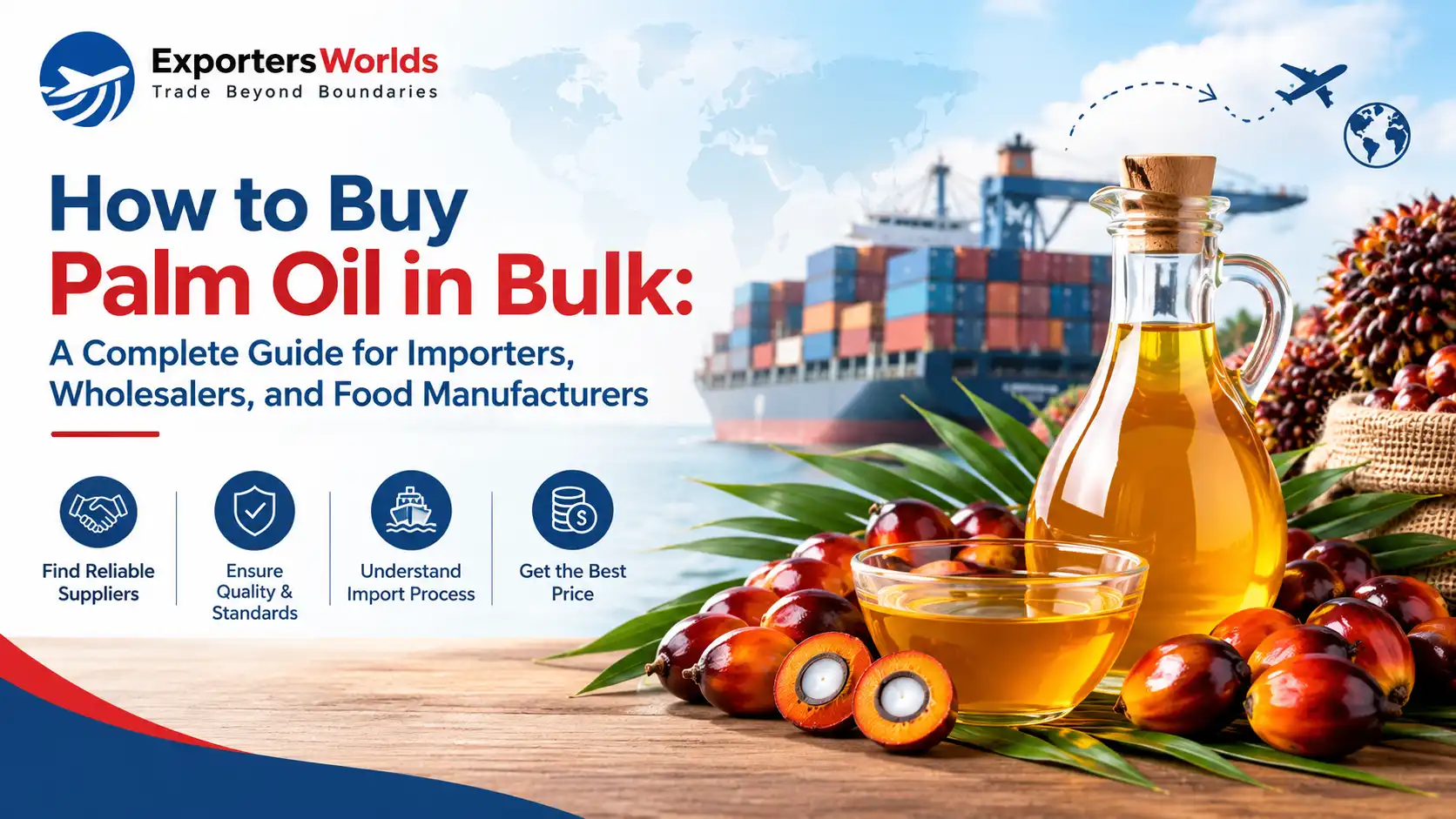
How to Buy Palm Oil in Bulk: A Complete Guide for Importers, Wholesalers, and Food Manufacturers
Buying palm oil in bulk requires more than finding a supplier offering a competitive price. Businesses need the right oil grade, consistent product quality, reliable documentation, suitable shipping arrangements, and a clear understanding of the total landed cost.
For U.S. importers, wholesalers, distributors, and food manufacturers, the process starts with four checks: choose the correct palm oil specification, verify the supplier, compare the full delivered cost, and confirm applicable import requirements before placing an order. Food businesses importing edible oil should also assess relevant U.S. Food and Drug Administration (FDA) requirements, including the Foreign Supplier Verification Program (FSVP) where applicable, and customs documentation.
Whether you are sourcing wholesale palm oil for food production or looking for bulk refined palm oil for sale, a structured purchasing process helps you compare offers fairly, avoid preventable delays, and build a more dependable supply chain.
1. Choose the Right Type of Palm Oil
Before contacting bulk palm oil suppliers, determine which product suits your application. Different grades have different processing characteristics, so a lower-priced option may not be suitable for your production requirements.
- Crude palm oil: Oil extracted from palm fruit that has not undergone full refining. It is generally intended for further processing rather than direct use as a standard refined cooking oil.
- Refined, bleached, and deodorized (RBD) palm oil: Refined oil commonly used in food manufacturing, frying, and other applications requiring defined specifications.
- Palm olein: The liquid fraction obtained through fractionation. It is widely used in frying and cooking applications.
- Palm stearin: The higher-melting, more solid fraction used in certain bakery fats, confectionery products, and fat blends.
When selecting edible oil, consider the finished product, processing temperature, desired texture, shelf-life requirements, and the specifications your production team already uses.
Ask suppliers for a product specification sheet before requesting a final quotation. It should identify the exact grade and relevant quality parameters, such as free fatty acid content, moisture and impurities, color, melting characteristics, and other tests appropriate to the product.
2. Find and Evaluate Bulk Edible Oil Suppliers
Once you know what you need, shortlist suppliers that can meet your required volume, delivery destination, documentation standards, and supply schedule.
Potential sourcing channels include manufacturers, authorized distributors, commodity traders, exporters, and B2B marketplaces. Buying directly from a manufacturer or exporter may reduce intermediary costs in some transactions, but it does not automatically guarantee the best price, quality, or service.
To evaluate bulk edible oil suppliers, review their business identity, operating history, product range, export experience, and ability to provide the documents required for your purchase. Ask whether they source directly from a processing facility or resell products from another supplier.
Before committing, confirm:
- The supplier's legal business identity and verifiable contact details.
- Whether it can supply your required grade and quantity consistently.
- Whether it can provide product specifications and batch-specific quality documents.
- Which delivery terms, packaging formats, and payment terms it offers.
- Whether it can provide relevant business references or evidence of previous shipments.
Independently verify banking instructions and investigate unexpected changes to payment details. Be cautious about unusually low quotations, pressure to pay immediately, vague product specifications, or reluctance to share documentation.
A B2B platform such as Exporters Worlds can serve as one starting point for discovering potential suppliers and submitting sourcing inquiries. Treat every listing as a lead to evaluate, not as a substitute for your own commercial and quality checks.
3. Verify Product Quality and Documentation
A supplier's description is not enough to establish whether its palm oil meets your requirements. Request the technical specifications and quality documents before approving the product.
A Certificate of Analysis (COA) reports test results for a product or batch. Check whether the document corresponds to the actual grade and shipment, identifies the tested parameters, and comes from a credible laboratory or quality-control process.
Depending on the product and transaction, request:
- A current product specification sheet.
- A batch-specific Certificate of Analysis.
- Relevant food safety certifications or audit documentation.
- Information about manufacturing or refining facilities.
- Country-of-origin and traceability documents.
- A sample for evaluation, where practical and commercially appropriate.
Check that the supplier's stated specifications align with your production needs and applicable contractual standards. Certifications can provide useful evidence, but their scope and validity matter. A sustainability certification, for example, does not independently establish that a particular shipment meets every food safety or product-quality requirement.
For recurring orders, agree on acceptable specifications, testing procedures, batch identification, and what happens if delivered oil fails inspection. This is especially important for food manufacturers whose products depend on consistent performance from one production run to the next.
4. Compare Wholesale Palm Oil Prices and Total Landed Cost
The cheapest quotation is not necessarily the most economical purchase. Wholesale palm oil prices can vary with market conditions, oil grade, order volume, origin, packaging, refining requirements, payment terms, and freight costs.
Minimum order quantities (MOQs) also vary. Some suppliers accept packaged orders, while others prioritize container-scale or larger bulk shipments. Ask each supplier to confirm its minimum quantity, available volume, lead time, and price validity.
When comparing quotations, check whether they cover the same product specification, quantity, currency, packaging, delivery location, and shipping terms.
Calculate the total landed cost, which may include:
- The product price.
- Packaging and loading charges.
- Freight and cargo insurance.
- Customs duties and applicable fees.
- Customs broker and port handling charges.
- Inland transportation to your warehouse or facility.
- Storage, inspection, and other applicable costs.
Clarify the agreed Incoterms rule and named location. These terms help define the seller's and buyer's responsibilities for transport, costs, and risk, but they do not replace the purchase contract or determine every aspect of a transaction.
If you are comparing bulk refined palm oil for sale from several suppliers, request itemized quotations with the same delivery basis. This makes it easier to identify whether an attractive headline price remains competitive after shipping and import-related costs.
5. Understand U.S. Import Requirements
Before shipping edible oil to the United States, confirm which regulatory and customs requirements apply to your specific product, supplier, intended use, and import arrangement.
The FDA regulates relevant aspects of imported food safety. Depending on the circumstances, requirements may include applicable food facility registration, prior notice, and compliance with food-related rules. The Foreign Supplier Verification Program (FSVP) generally places responsibilities on the U.S. importer to verify that imported food meets applicable U.S. food safety requirements, subject to relevant exemptions and special circumstances.
Do not assume that a foreign supplier's certificate automatically satisfies the U.S. importer's obligations. Identify who is responsible for each required step and obtain professional guidance if the applicable rules are unclear.
You should also confirm the product's correct tariff classification, country of origin, customs entry documentation, and any applicable duties or trade measures. Requirements can differ according to the product and the facts of the shipment.
For official guidance, consult the FDA's FSVP information, U.S. Customs and Border Protection's importing guidance, and the U.S. International Trade Commission's Harmonized Tariff Schedule.
If the oil will be repackaged or sold as a finished food product, review the labeling and ingredient-documentation requirements that apply to that product. Resolve these questions before dispatch to reduce the risk of unexpected costs or clearance delays.
6. Choose the Right Packaging and Shipping Method
The most suitable transport option depends on the volume, product characteristics, destination, available infrastructure, and receiving facilities.
- Food-grade drums: Useful for smaller commercial quantities and operations that need manageable units.
- Intermediate bulk containers (IBCs): Offer a larger packaged format for suitable storage and handling arrangements.
- Flexitanks: Flexible liners installed in compatible shipping containers, generally considered for suitable liquid bulk cargoes.
- Bulk tankers or other dedicated systems: May suit larger shipments and established supply chains with appropriate loading and unloading facilities.
Confirm that the transport equipment is suitable for food-grade oil and that cleaning, previous-cargo controls, seals, and handling records meet your requirements. Palm oil and its fractions can have different melting characteristics, so ask the supplier and logistics provider whether temperature control, heating, or specific handling procedures are necessary.
Request realistic dispatch and delivery estimates, not just a production lead time. Port congestion, customs clearance, inspections, and inland transport can all affect when the shipment reaches your facility.
7. Place the Order With Clear Commercial Terms
Before making payment, ensure the purchase order or contract clearly identifies the product grade, agreed specifications, quantity, packaging, price, delivery terms, shipment window, inspection arrangements, and required documents.
Clarify payment milestones, procedures for resolving quality disputes, and what happens if delivery is delayed or the product does not meet the agreed specification. For an initial transaction, consider whether independent inspection or a trial order is commercially practical.
After delivery, compare the received goods and batch documents against the agreement. Record any discrepancies and keep traceability information for future orders.
A repeat-supply arrangement can become easier to manage when both parties use consistent specifications, forecast demand, agree on order lead times, and establish a process for handling changes in price or availability.
Find Potential Palm Oil Suppliers With a Clear Buying Requirement
A well-defined inquiry helps suppliers understand your needs and respond with more relevant quotations. Include the palm oil grade, intended application, required quantity, destination, packaging preference, quality specifications, delivery timeframe, and any documentation requirements.
Exporters Worlds provides a B2B marketplace where businesses can explore potential suppliers and submit trade inquiries. Use it as one sourcing channel alongside your own due diligence, technical checks, and import-compliance review.
The objective is not simply to find a supplier offering palm oil. It is to identify a business that can meet your specifications, provide suitable documentation, quote on comparable terms, and support your supply requirements over time.
Frequently Asked Questions
1. What is the minimum order quantity for wholesale palm oil?
There is no single MOQ across the market. It depends on the supplier, product grade, packaging, and shipping arrangement. Confirm the minimum quantity and price breaks directly with each supplier.
2. Where can I buy palm oil in bulk in the USA?
You can approach domestic distributors, importers, manufacturers, international exporters, and B2B sourcing platforms. Evaluate suppliers based on product fit, documentation, delivery capabilities, and total landed cost rather than listing price alone.
3. What should I check before choosing bulk palm oil suppliers?
Check the supplier's business identity, product specifications, batch-specific COA, relevant food safety documentation, traceability, payment terms, and ability to deliver the required volume consistently. Verify important claims independently.
4. How is bulk palm oil shipped to the United States?
Depending on quantity and product requirements, it may be shipped in drums, IBCs, flexitanks, or suitable bulk tank systems. Packaging, temperature management, equipment cleanliness, and receiving-facility capabilities should be confirmed in advance.
5. What documents may U.S. importers need when buying edible oil?
Depending on the transaction, documents may include commercial invoices, packing lists, transport documents, origin information, product specifications, COAs, customs entry information, and relevant FDA-related records or submissions. Confirm the exact requirements with the appropriate regulatory professionals and customs broker.
6. How can food manufacturers maintain consistent palm oil quality?
Set written product specifications, approve suppliers before ordering, review batch-specific test results, maintain traceability records, and establish clear procedures for inspecting deliveries and managing nonconforming products. Monitor repeat shipments instead of relying solely on the first successful delivery.