10 Popular Types of Oranges and Mandarins Found in International Markets
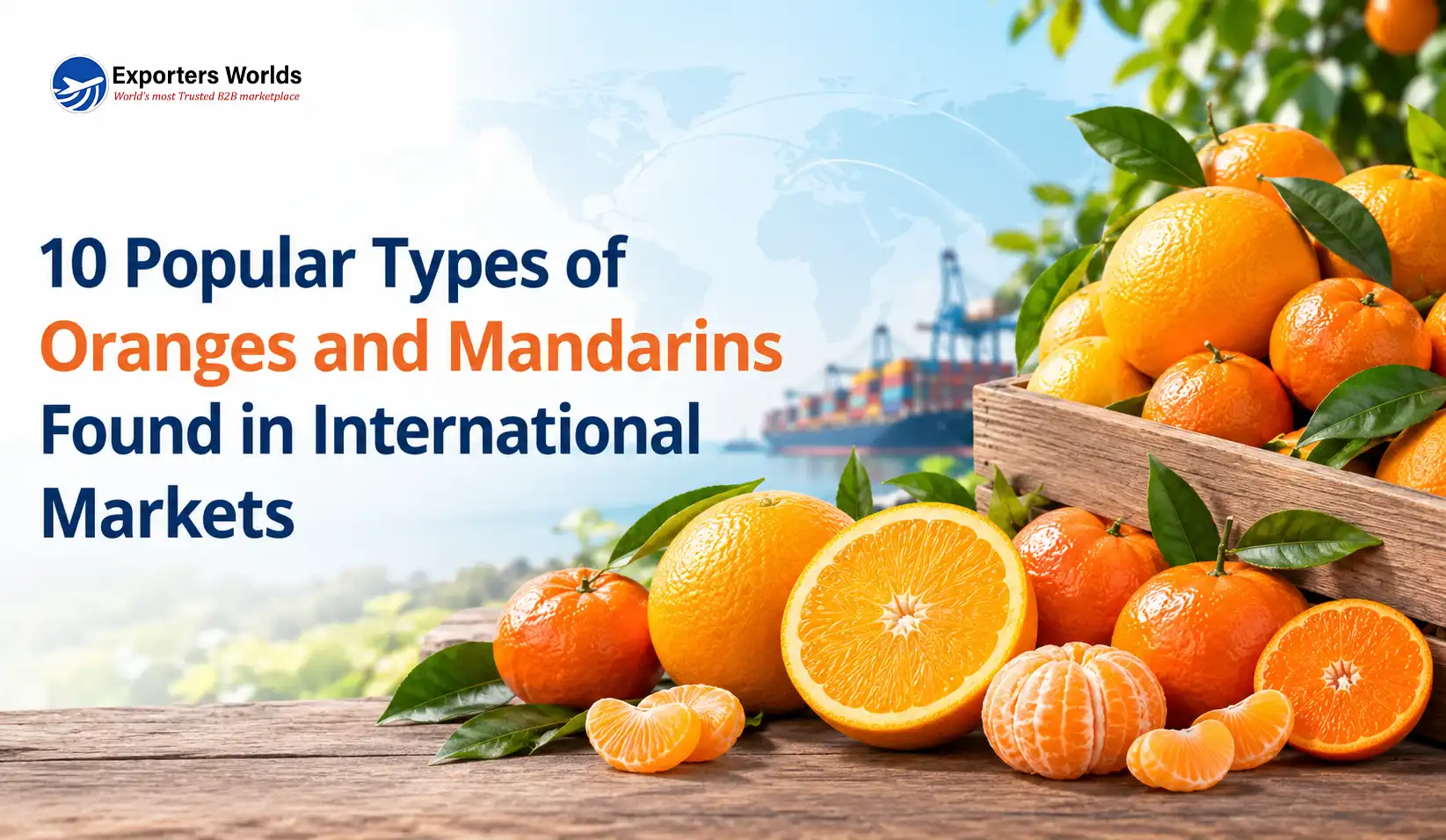
The main types of oranges include Navel, Valencia, Blood, Cara Cara, and Hamlin oranges, while popular mandarin varieties include Clementines, Satsumas, Tangerines, and Murcott mandarins. Each has distinct characteristics in terms of flavor, peelability, seed content, texture, and commercial use.
Navel oranges are popular for fresh consumption, while Valencia oranges are widely associated with juice production. Mandarins are generally smaller and easier to peel, making them suitable for convenient snacking and retail sales. Clementines are a type of mandarin, not a separate citrus group.
For consumers, these differences help determine which fruit to enjoy. For importers, wholesalers, retailers, distributors, and food manufacturers, they influence product selection, packaging, quality specifications, and purchasing decisions.
Understanding these varieties is an important first step toward choosing suitable citrus products for different markets. Whether you're sourcing fresh fruit for supermarket shelves, selecting oranges for processing, or evaluating products for international distribution, the right choice depends on your intended use and your customers' preferences.
What Are the Different Types of Oranges?
Sweet oranges and mandarins belong to the broader citrus family but differ in several practical ways. Sweet oranges generally have a round shape and a firmer peel, while mandarins tend to be smaller, flatter, and easier to peel. Their flavor profiles vary by variety, growing conditions, and maturity.
Here are 10 popular types found in international fresh-fruit and commercial markets.
1. Navel Oranges
Best suited for: Fresh consumption, supermarkets, and retail fruit distribution
Navel oranges are recognizable by the small, navel-like formation at the blossom end. They typically have a sweet flavor, a firm texture, and relatively few or no seeds.
Their easy-to-separate segments and convenient eating experience make them a popular option for fresh-fruit displays. They are also useful for retailers looking for an orange that customers can peel and eat without much preparation.
However, Navel oranges are generally less suitable for juice processing than Valencia oranges because their juice can develop a bitter flavor after extraction.
For commercial buyers: Evaluate fruit size, external appearance, firmness, maturity, and consistency across cartons. These specifications can help retailers maintain a uniform presentation and meet customer expectations.
2. Valencia Oranges
Best suited for: Juice production, food service, and fresh-fruit sales
Valencia oranges are widely recognized for their juicy flesh and balanced sweet-tart flavor. They are particularly associated with orange juice production, making them relevant to juice manufacturers, restaurants, hotels, and other businesses requiring oranges in larger quantities.
They can also be sold as fresh fruit, depending on the market and product specifications. Compared with Navel oranges, Valencia oranges are often favored when juice yield is a major consideration.
For commercial buyers: Ask about fruit maturity, juice yield, size distribution, delivery condition, and intended processing or retail use. If purchasing for juice production, assess the fruit against your own processing requirements rather than relying on appearance alone.
3. Blood Oranges
Best suited for: Premium retail, specialty food service, and distinctive juice products
Blood oranges stand out because their flesh can range from red-streaked to deep crimson. Their color comes from anthocyanin pigments, and its intensity varies with the variety and growing conditions.
Their flavor is usually sweet with refreshing acidity, sometimes accompanied by berry-like notes. The striking color also makes blood oranges useful for specialty beverages, desserts, garnishes, and premium fruit displays.
For commercial buyers: Confirm the expected flesh color, fruit size, maturity, packaging, and consistency between shipments. Appearance alone cannot guarantee that every orange will have the same internal color.
4. Cara Cara Oranges
Best suited for: Premium fresh-fruit retail and specialty produce distribution
Cara Cara oranges are a type of navel orange known for their pinkish-red flesh. They typically have a sweet flavor with relatively mild acidity, offering a distinctive alternative to conventional orange varieties.
Their appearance and flavor can help retailers differentiate premium citrus selections and give consumers more variety in the fresh-produce section.
For commercial buyers: Consider the intended retail segment, fruit size, visual quality, maturity, and packaging needs. Before placing a bulk order, confirm the product identity and specifications with the supplier.
5. Hamlin Oranges
Best suited for: Juice production and commercial citrus applications
Hamlin oranges are a sweet orange variety commonly associated with juice production. They are generally juicy and often contain few seeds, although characteristics vary with growing conditions.
They can be relevant to businesses looking for oranges for processing, blending, or other food applications. Their suitability for a specific operation depends on the required juice characteristics and the available product specification.
For commercial buyers: Clarify whether the order is intended for processing or fresh sale. Request information about maturity, condition on delivery, size range, and any quality requirements needed by your facility.
6. Seville Oranges
Best suited for: Marmalade, preserves, and specialized food manufacturing
Seville oranges are sour oranges with a bitter, aromatic flavor. Unlike sweet oranges commonly sold for snacking, they are particularly valued for marmalade, preserves, and certain culinary applications.
Their distinctive peel and flavor make them useful for manufacturers and food businesses that require a specific ingredient rather than a general-purpose sweet orange.
For commercial buyers: Specify the intended food application and required fruit characteristics. Seville oranges are not a direct substitute for sweet oranges in every recipe or production process.
7. Clementines
Best suited for: Snack-sized fruit, retail packs, and fresh-fruit distribution
Clementines are small mandarins with a sweet flavor, thin peel, and segments that are generally easy to separate. They are often marketed as convenient snack fruit for households, lunch packs, and retail produce sections.
Clementines are frequently seedless, but seed content can vary with cultivar and growing conditions, including cross-pollination.
For commercial buyers: Check fruit size, peel condition, maturity, seed expectations, and packaging format. Retailers may need consistent sizing and attractive presentation, while distributors should also consider handling and storage requirements.
8. Satsuma Mandarins
Best suited for: Easy-peel retail fruit and convenient snacking
Satsumas are mandarin varieties known for their loose, easy-to-remove peel, tender segments, and generally mild sweetness. They are often low in seeds and offer a convenient eating experience.
Their soft texture can make careful handling particularly important during packaging, transport, and storage. Suitability for longer distribution routes depends on fruit condition, packing practices, and temperature management.
For commercial buyers: Confirm firmness, maturity, size, packaging protection, and expected transit conditions. A variety's easy-peeling qualities are valuable, but the fruit must also arrive in a saleable condition.
9. Tangerines
Best suited for: Fresh-fruit retail, mixed citrus ranges, and snack markets
Tangerine is a common commercial term for certain mandarin types. These fruits usually have a loose peel and a flavor that can range from sweet to sweet-tart. Their exact characteristics depend on the cultivar sold under the name.
Because citrus naming can vary between regions and suppliers, the word tangerine does not always identify a single, uniform product specification.
For commercial buyers: Confirm the cultivar or product description, expected seed content, size range, peel color, and maturity before placing an order. This reduces confusion when comparing quotations from multiple suppliers.
10. Murcott (Honey) Mandarins
Best suited for: Sweet-fruit retail and specialty citrus selections
Murcott, often sold as a Honey mandarin or Honey tangerine, is valued for its rich sweetness and juicy segments. It is a hybrid citrus commonly grouped with mandarin-type fruits in produce markets.
Depending on the cultivar and growing conditions, Murcott fruit may contain seeds. Its flavor makes it attractive for consumers who prefer a sweeter citrus option.
For commercial buyers: Check the specific product identity, seed expectations, size, maturity, and handling requirements. Standardizing these details is particularly useful when sourcing repeatedly for retail or distribution.
Clementine vs. Mandarin: What Is the Difference?
A clementine is a type of mandarin, so the two names do not describe entirely separate citrus categories.
Mandarin is the broader group, encompassing several varieties, including Clementines and Satsumas. Clementines are generally small and sweet, with a thin peel that is easy to remove. Other mandarins differ in size, flavor, seed content, and peel characteristics.
Tangerine is another name commonly used for certain mandarin types, although its exact meaning can depend on the market.
For buyers, the practical lesson is simple: don't rely on the general label alone. Confirm the variety and product specifications to make sure the fruit matches the requirements of the intended market.
Which Orange Variety Is Best for Different Business Needs?
The best variety depends on the intended application, customer preferences, and product specifications.
- Fresh-fruit retail: Navel oranges, Cara Cara oranges, Clementines, and Satsumas offer distinct eating experiences.
- Juice production: Valencia and Hamlin oranges are relevant options, subject to processing requirements and juice-yield specifications.
- Premium produce sales: Blood oranges and Cara Cara oranges can help retailers differentiate their citrus selections.
- Food manufacturing: Seville oranges are useful for applications such as marmalade, while other varieties may suit fresh juice and food preparation.
- Wholesale distribution: Several varieties may be suitable, but buyers should compare handling requirements, packaging, maturity, and consistency before committing to an order.
These are general use cases, not guarantees of suitability. Buyers should confirm the actual product specifications with prospective suppliers.
What Should Buyers Consider When Sourcing Oranges?
Before requesting quotations for bulk oranges or mandarins, define your purchasing requirements clearly.
Specify the variety and intended use. State whether you need Navel oranges for retail, Valencia oranges for juicing, or particular mandarin varieties for fresh-fruit distribution.
Define quality requirements. Discuss size, grade, maturity, appearance, firmness, seed expectations, and acceptable defects. Clarify how quality will be assessed before shipment and upon delivery.
Confirm quantity and packaging. Provide the required volume, preferred carton or packaging format, labeling needs, and destination. Requirements can differ between retailers, food processors, and import distributors.
Review logistics and compliance. Ask about storage, transport conditions, shipment timing, product traceability, and relevant documentation. For imports into the United States, verify requirements for the specific citrus product and country of origin with the appropriate authorities, including USDA APHIS where applicable. Requirements can change and should be checked before the transaction.
Evaluate the supplier carefully. Confirm business identity, product availability, specifications, quotation terms, and payment arrangements. Avoid assuming that a supplier can meet a requirement until the details have been confirmed.
Explore Citrus Sourcing Opportunities Through Exporters Worlds
Identifying the right orange variety is only one part of a successful purchase. Commercial buyers also need suitable suppliers, clear specifications, reliable communication, and a shared understanding of delivery requirements.
Exporters Worlds is a B2B marketplace designed to connect buyers, importers, wholesalers, distributors, and suppliers. Businesses can explore marketplace listings and submit enquiries to investigate relevant sourcing opportunities. Its stated approach includes buyer qualification, direct communication, and support for business connections.
If you're sourcing oranges or mandarins for retail, distribution, food service, or processing, prepare your requirements before making an enquiry. Include the desired variety, quantity, destination country, packaging preferences, and intended application. These details can make supplier discussions more focused and help establish whether an opportunity fits your needs.
Visit Exporters Worlds to explore its B2B marketplace and enquire about relevant supplier connections. Specific product availability and export capabilities must be confirmed with the relevant suppliers.
Frequently Asked Questions
1. What are the most popular types of oranges?
Popular types include Navel, Valencia, Blood, Cara Cara, and Hamlin oranges. Clementines, Satsumas, Tangerines, and Murcott mandarins are also widely recognized citrus options.
2. What is the difference between Navel oranges and Valencia oranges?
Navel oranges are generally preferred for eating fresh because they are easy to peel and usually seedless. Valencia oranges are particularly associated with juice production because of their juicy flesh and balanced flavor.
3. Are clementines and mandarins the same thing?
Clementines are a type of mandarin. Mandarin is the broader group, which also includes varieties such as Satsumas and other mandarin-type fruits.
4. Which oranges are best for commercial juice production?
Valencia and Hamlin oranges are commonly associated with juice applications. The best choice depends on juice yield, flavor, maturity, processing needs, and the buyer's product specifications.
5. Which orange varieties are suitable for wholesale distribution?
Navel, Valencia, and other sweet orange varieties may suit wholesale distribution, while Clementines, Satsumas, and other mandarins can serve different fresh-fruit markets. Suitability depends on customer demand, quality, packaging, handling, and logistics.
6. What should buyers check before importing oranges?
Buyers should confirm the variety, quantity, size and grade requirements, maturity, packaging, supplier credentials, quotation terms, shipping conditions, and destination-country import requirements. Product availability and compliance should be verified before placing an order.