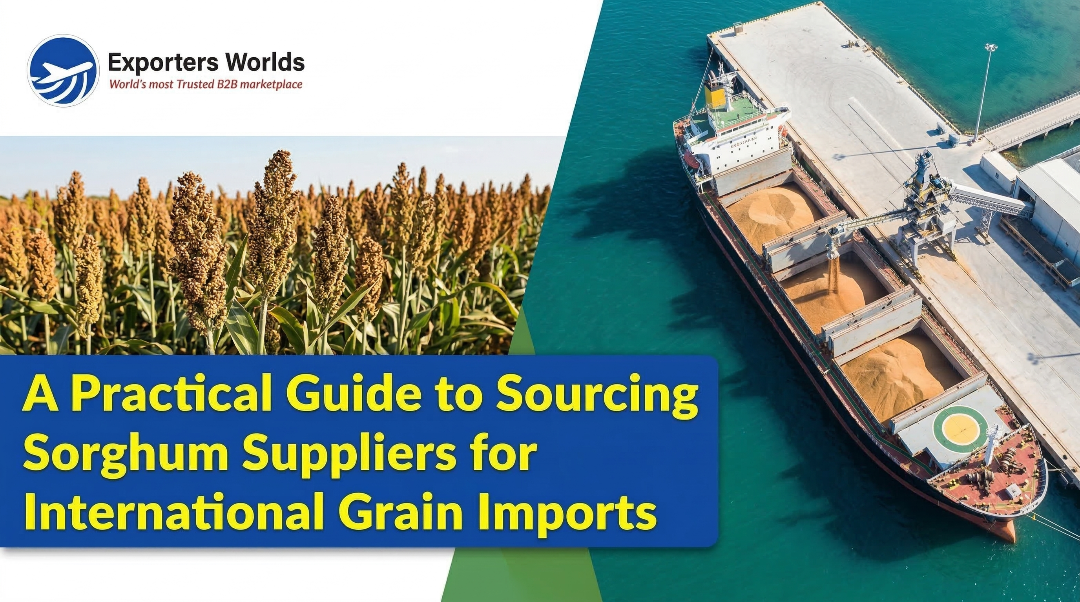
A Practical Guide to Sourcing Sorghum Suppliers for International Grain Imports
Introduction: Why Sourcing Reliable Sorghum Suppliers Is Harder Than It Looks
The first time I evaluated sorghum suppliers for an international shipment, the process appeared surprisingly simple. At first glance, it seemed like a straightforward transaction. Identify a supplier offering competitive pricing, agree on shipment quantities, and place the order. But the deeper I went into the procurement process, the more complex the picture became.
Contracts introduced clauses about quality parameters and inspection protocols. Shipping schedules had to align with port availability and vessel capacity. Regulatory requirements demanded documentation ranging from phytosanitary certificates to origin verification. What initially looked like a simple purchase turned into a highly strategic exercise in global commodity sourcing.
This is especially true when dealing with bulk sorghum shipments that may involve tens of thousands of metric tons moving across continents. Any oversight in supplier evaluation, quality control, or logistics planning can lead to delays, financial losses, or rejected cargo.
At the same time, sorghum itself is becoming a strategically important grain in the global agricultural system. Traditionally cultivated as a staple crop in parts of Africa and Asia, it has gradually evolved into a globally traded commodity serving multiple industries.
Today, sorghum is widely used in:
- Livestock feed production
- Gluten free food manufacturing
- Ethanol and biofuel production
- Industrial alcohol and beverage industries
China’s baijiu industry alone consumes significant quantities of sorghum each year. Feed manufacturers also rely on it as a substitute for corn when maize prices rise or supply chains tighten.
The numbers illustrate the scale of the market. Global sorghum production is estimated at roughly 60 to 63 million metric tons between 2024 and 2025. Major producing countries include the United States, Nigeria, Ethiopia, India, Mexico, Sudan, Argentina, and China.
As international trade expands, buyers are increasingly searching for reliable sorghum exporters capable of delivering consistent volumes and meeting strict quality standards. The result is a growing focus on structured sourcing strategies that go far beyond price comparison.
Understanding the global market landscape is the first step before approaching suppliers. If you need a broader overview of the logistics, customs compliance, and risk management required for this level of trade, refer to our complete guide to importing agricultural products in bulk.
Ready to skip the hassle? Submit a bulk sorghum RFQ on our marketplace to get matched with verified global suppliers instantly.
Understanding the Global Sorghum Market Before You Source Suppliers
The Strategic Importance of Sorghum in Global Agriculture
Over the past decade, sorghum has gradually transitioned from a regional staple crop into a globally traded agricultural commodity. Several structural changes in agriculture and food systems have contributed to this shift.
First, the crop’s versatility allows it to serve multiple industries simultaneously. In many parts of the world, sorghum functions as a staple grain for human consumption. In others, it is primarily used for animal feed or industrial processing.
Key applications include:
- Animal feed production
- Human consumption in Africa and Asia
- Industrial alcohol manufacturing
- Ethanol and biofuel programs
- Gluten free food processing
From a grain sourcing perspective, sorghum often enters procurement conversations when corn markets become volatile. In several feed industry discussions, buyers consider sorghum when maize prices spike or when supply disruptions affect traditional grain supply chains.
Because of this dynamic, sorghum has become an important secondary grain in the global sorghum market, supporting feed security and agricultural diversification.
Major Global Sorghum Exporters and Trade Flows
Although sorghum is grown in many countries, the international export market is dominated by a small number of major producers. This concentration of supply has important implications for sourcing strategies.
Leading sorghum exporters include:
- United States: approximately 5 to 7 million metric tons exported annually
- Argentina: around 2 to 3 million metric tons
- Australia: roughly 1 to 2 million metric tons
- Ukraine: between 0.5 and 1 million metric tons
- Sudan: approximately 0.3 to 0.7 million metric tons
On the demand side, several countries account for the majority of imports.
Key importing markets include:
- China
- Japan
- Mexico
- Spain
- Ethiopia
China is particularly influential in the sorghum import sourcing landscape. During peak demand cycles, Chinese imports have accounted for as much as 60 to 80 percent of global trade.
Because of this concentration, policy decisions in China can significantly influence international sorghum prices and trade volumes.
Understanding these supply and demand dynamics helps buyers navigate the broader global grain trade environment when evaluating potential suppliers.
Key Market Drivers Increasing Demand for Bulk Sorghum
Growth of the Global Feed Industry
The largest driver of sorghum demand today is the global livestock industry.
Feed manufacturers often use sorghum as a substitute for corn due to its comparable nutritional value and energy content. In poultry and cattle production, sorghum performs well in feed formulations and can provide cost advantages depending on market conditions.
Current estimates suggest that 60 to 70 percent of global sorghum consumption occurs in the feed sector.
As global meat consumption continues to grow, the demand for feed grains increases accordingly. This trend strengthens the position of sorghum within the broader feed grain trade.
In several procurement discussions across feed markets, buyers pivot to sorghum whenever corn markets experience price volatility or supply shortages.
Climate Resilience Is Changing Crop Economics
Another reason many importers are actively seeking sorghum suppliers is the crop’s remarkable climate resilience.
Compared to many other grains, sorghum performs well under challenging environmental conditions.
Key agronomic advantages include:
- Requires 30 to 50 percent less water than corn
- Strong tolerance to drought conditions
- High resilience in hot climates
These characteristics make sorghum an attractive crop in regions facing increasing climate stress.
As governments and agricultural institutions promote climate smart farming systems, sorghum is increasingly highlighted as a sustainable alternative within grain commodity sourcing strategies.
Growth of Gluten Free Food Markets
In recent years, sorghum has also gained attention within the food industry.
Food manufacturers are incorporating sorghum into gluten free product lines due to its nutritional profile and functional properties.
Common food applications include:
- Sorghum flour
- Gluten free bakery products
- Specialty breakfast cereals
The global gluten free food market is projected to reach 14 to 18 billion dollars by 2030, creating new demand for food grade sorghum.
As a result, food manufacturers increasingly seek specialized sorghum suppliers capable of meeting stricter quality and safety standards.
Biofuel and Industrial Applications
Industrial uses are also contributing to demand growth.
Several countries are expanding programs that utilize sorghum for:
- Ethanol production
- Industrial alcohol manufacturing
- Biofuel initiatives
Examples include ethanol blending programs in the United States, industrial alcohol demand in China, and biofuel policy initiatives in India.
These emerging applications are strengthening long term demand for bulk sorghum in global markets.
Understanding Sorghum Types Before Choosing a Supplier
A common mistake in international grain procurement is assuming that all sorghum varieties are interchangeable. In reality, different types serve different industries.
Grain Sorghum (Primary Trade Commodity)
Grain sorghum is the most widely traded variety in international markets.
Typical applications include:
- Livestock feed
- Human food production
- Alcohol and beverage manufacturing
Most large scale bulk sorghum shipments fall within this category.
Sweet Sorghum
Sweet sorghum contains high sugar content in its stalks and is primarily used for:
- Ethanol production
- Syrup processing
This variety is less common in international grain trade.
Forage Sorghum
Forage sorghum is mainly used for livestock silage and animal fodder. It is usually consumed domestically and rarely exported.
Understanding these distinctions helps importers select the most appropriate sorghum exporters for their specific industry requirements.
Quality Specifications Every Sorghum Importer Must Define
When negotiating with sorghum suppliers, clear quality specifications are essential.
Standard Export Quality Parameters
Typical benchmarks in international grain trade include:
- Moisture content: usually less than or equal to 14 percent
- Foreign matter: typically below 2 percent
- Broken kernels: generally under 5 percent
- Damaged kernels: around 3 percent or less
- Test weight: approximately 68 to 72 kilograms per hectoliter
- Aflatoxin levels: usually limited to 20 parts per billion
These specifications directly influence pricing, storage stability, and buyer confidence.
Regional Quality Compliance Requirements
Some importing markets maintain stricter safety thresholds.
For example, the European Union sets aflatoxin limits between 2 and 10 parts per billion depending on end use.
Such regulatory differences can significantly affect which sorghum exporters are suitable for a particular market.
Sorghum Color and Variety Preferences
Grain color and variety preferences vary across regions.
Examples include:
- China often prefers red sorghum
- Japan frequently imports yellow sorghum
- Many African markets consume white sorghum
- European buyers typically accept both red and white varieties
These preferences influence supplier selection and sourcing strategy.
How to Identify Reliable Sorghum Suppliers
Categories of Sorghum Suppliers in the Global Market
In practice, international sourcing involves three main supplier categories.
Primary producers include large commercial farms and farmer cooperatives that cultivate sorghum directly.
Aggregators and grain elevators collect harvests from multiple farms, store them, and consolidate export shipments.
Global commodity traders represent the third category. Major firms such as Cargill, ADM, Bunge, and Louis Dreyfus dominate large scale grain exports.
Understanding these supplier structures helps buyers navigate the grain commodity sourcing ecosystem.
Practical Channels for Discovering Sorghum Suppliers
Identifying trustworthy sorghum suppliers requires exploring multiple sourcing channels.
Commodity exchanges such as the Chicago Board of Trade and the Dalian Commodity Exchange provide valuable pricing benchmarks.
B2B agricultural trading platforms also serve as important sourcing channels. Platforms like Alibaba, Tradekey, and Global Sources host numerous international suppliers.
Industry events can be particularly valuable for networking with sorghum exporters. Notable conferences include Gulfood in the UAE, VIV Asia for feed industry stakeholders, and international grain conferences such as GrainCom.
Agricultural export organizations also play an important role. Institutions like the US Grains Council or the Australian Export Grains Innovation Centre frequently connect buyers with certified exporters.
To streamline this process, buyers can leverage our global agricultural RFQ marketplace, allowing you to bypass middlemen and request quotes directly from certified sorghum exporters.
Evaluating Sorghum Suppliers: A Commercial Due Diligence Framework
Assessing Commercial Capacity
When evaluating suppliers, importers typically begin with commercial capacity.
Key questions include:
- What is the supplier’s annual export volume?
- What minimum order quantities apply to bulk sorghum shipments?
- How competitive are their prices compared to global benchmarks?
Reliable suppliers usually maintain consistent production or aggregation capabilities that support large scale exports.
Reviewing Operational Infrastructure
Strong operational infrastructure is another critical indicator.
Established sorghum exporters often operate or partner with facilities such as:
- Grain elevators
- Modern storage silos
- Bulk export terminals
- Port logistics networks
These assets ensure smooth handling, storage, and shipping operations.
Quality Assurance and Certifications
Professional exporters typically maintain international certifications such as:
- ISO quality standards
- HACCP food safety systems
- FSSC 22000 certification
Third party inspection agencies including SGS and Intertek are commonly used to verify shipment quality.
Compliance Documentation in Grain Trade
Proper documentation is essential for international shipments.
Typical documents include:
- Phytosanitary certificates
- Certificates of origin
- Fumigation certificates
- Independent inspection reports
Without these documents, cargo clearance at destination ports can become complicated.
Pricing Structures and Benchmarking in Sorghum Trade
Sorghum prices often move in relation to broader feed grain markets.
Key reference indicators include CBOT corn futures and USDA market reports.
Recent market conditions place bulk sorghum export prices between 230 and 320 dollars per metric ton, depending on origin, harvest quality, and shipping costs.
Because prices fluctuate based on freight and harvest conditions, we recommend requesting live sorghum quotes through our platform, or you can contact our commodity sourcing team to help benchmark your current offers.
Common contract structures include FOB, CIF, and CFR terms, each distributing logistics responsibilities differently between buyers and sellers.
Logistics and Bulk Sorghum Shipping Considerations
Sorghum is typically transported in bulk carrier vessels.
Common shipping categories include:
- Handysize vessels carrying 15,000 to 35,000 tons
- Supramax vessels carrying 40,000 to 60,000 tons
- Panamax vessels carrying 60,000 to 80,000 tons
Proper storage and handling are equally important. Grain must be kept in aerated silos with controlled humidity and pest management systems.
Improper storage can lead to mold growth, aflatoxin contamination, and significant quality deterioration.
Risk Management Strategies for Sorghum Imports
Price volatility remains a constant factor in grain markets. Weather disruptions, export restrictions, and currency fluctuations can all affect sorghum prices.
Importers often use futures hedging and long term supply agreements to manage these risks.
If you need assistance navigating quality risks or drafting secure supply agreements, contact our grain procurement specialists for tailored sourcing support.
Quality risk is typically mitigated through pre shipment inspections and detailed contract clauses.
Payment structures in international grain trade frequently rely on Letters of Credit, which provide financial security for both buyers and sorghum exporters.
Sustainability and ESG Trends in Sorghum Sourcing
Sustainability is becoming increasingly important in agricultural supply chains.
Many buyers now request traceability documentation that confirms responsible farming practices.
Common sustainability expectations include:
- Reduced pesticide residues
- Transparent supply chains
- Climate resilient crop production
Programs supporting climate smart agriculture and regenerative farming are gradually influencing sourcing decisions within the global sorghum market.
Future Outlook for the Global Sorghum Trade (2025–2035)
Industry forecasts suggest global sorghum demand could grow between 1.5 and 2.5 percent annually over the next decade.
Growth will likely be driven by feed industry expansion, climate resilient agriculture initiatives, and rising biofuel production.
Emerging import markets include Southeast Asia, the Middle East, and parts of Sub Saharan Africa.
Digital transformation is also beginning to reshape sorghum import sourcing. Technologies such as blockchain supply chain tracking, satellite crop monitoring, and digital commodity trading platforms are improving transparency and efficiency in global trade.
Strategic Best Practices for Sourcing Sorghum Suppliers
Experienced importers often follow several best practices when developing reliable sourcing strategies.
These include diversifying supply across multiple exporting countries, conducting independent quality inspections, and monitoring global crop forecasts.
Long term supplier relationships also play a crucial role in ensuring consistent supply of bulk sorghum.
Digital B2B trade platforms have begun to support these strategies by making it easier for buyers to identify verified suppliers, compare offerings, and communicate directly with exporters.
In particular, platforms that combine supplier verification, trade documentation support, and international networking can significantly simplify the sourcing process for businesses entering the global grain trade.
Conclusion: Building a Reliable Sorghum Supply Chain
Sourcing dependable sorghum suppliers for international trade requires far more than comparing prices.
Successful importers approach the process strategically. They analyze the global sorghum market, evaluate exporter infrastructure, define clear quality standards, and carefully manage logistics and compliance risks.
As demand for bulk sorghum continues to expand across feed industries, food processing, and industrial applications, the ability to identify trustworthy sorghum exporters will remain a critical competitive advantage.
In this increasingly interconnected marketplace, digital trade ecosystems are playing a growing role in bridging the gap between buyers and suppliers.
Platforms such as Exporters Worlds have emerged as valuable hubs for international businesses seeking reliable sourcing opportunities. As one of India’s established B2B marketplaces, Exporters Worlds connects importers with verified suppliers while simplifying the complex processes that often accompany global trade.
Through supplier verification, streamlined communication, and integrated export support, the platform enables businesses to discover credible trading partners and build long term supply relationships.
For companies planning to import sorghum, access to such networks can make a meaningful difference. Reliable sourcing is rarely about a single transaction. It is about building partnerships that ensure consistency, transparency, and trust across the entire supply chain.
Platforms such as Exporters Worlds have emerged as valuable hubs... To start building your reliable supply chain today, post your sorghum RFQ to our verified exporter network, or contact us directly to learn how we can simplify your next bulk shipment.
FAQs
What should importers check before selecting sorghum suppliers?
Buyers should evaluate export capacity, quality certifications, storage infrastructure, documentation reliability, and financial stability before finalizing contracts.
Which countries are the largest sorghum exporters?
Major exporters include the United States, Argentina, Australia, Ukraine, and Sudan.
What industries drive global demand for sorghum?
The feed industry accounts for approximately 60 to 70 percent of global consumption, followed by food processing, alcohol production, and biofuel applications.
What is the typical price of bulk sorghum in international markets?
FOB export prices generally range between 230 and 320 dollars per metric ton depending on origin, harvest conditions, and logistics costs.
Why is sorghum gaining importance in climate resilient agriculture?
Sorghum requires significantly less water than corn and tolerates drought and high temperatures, making it an ideal crop for regions affected by climate change.
What documentation is required when importing sorghum?
Common documentation includes phytosanitary certificates, certificates of origin, fumigation certificates, and inspection reports issued by agencies such as SGS or Intertek.