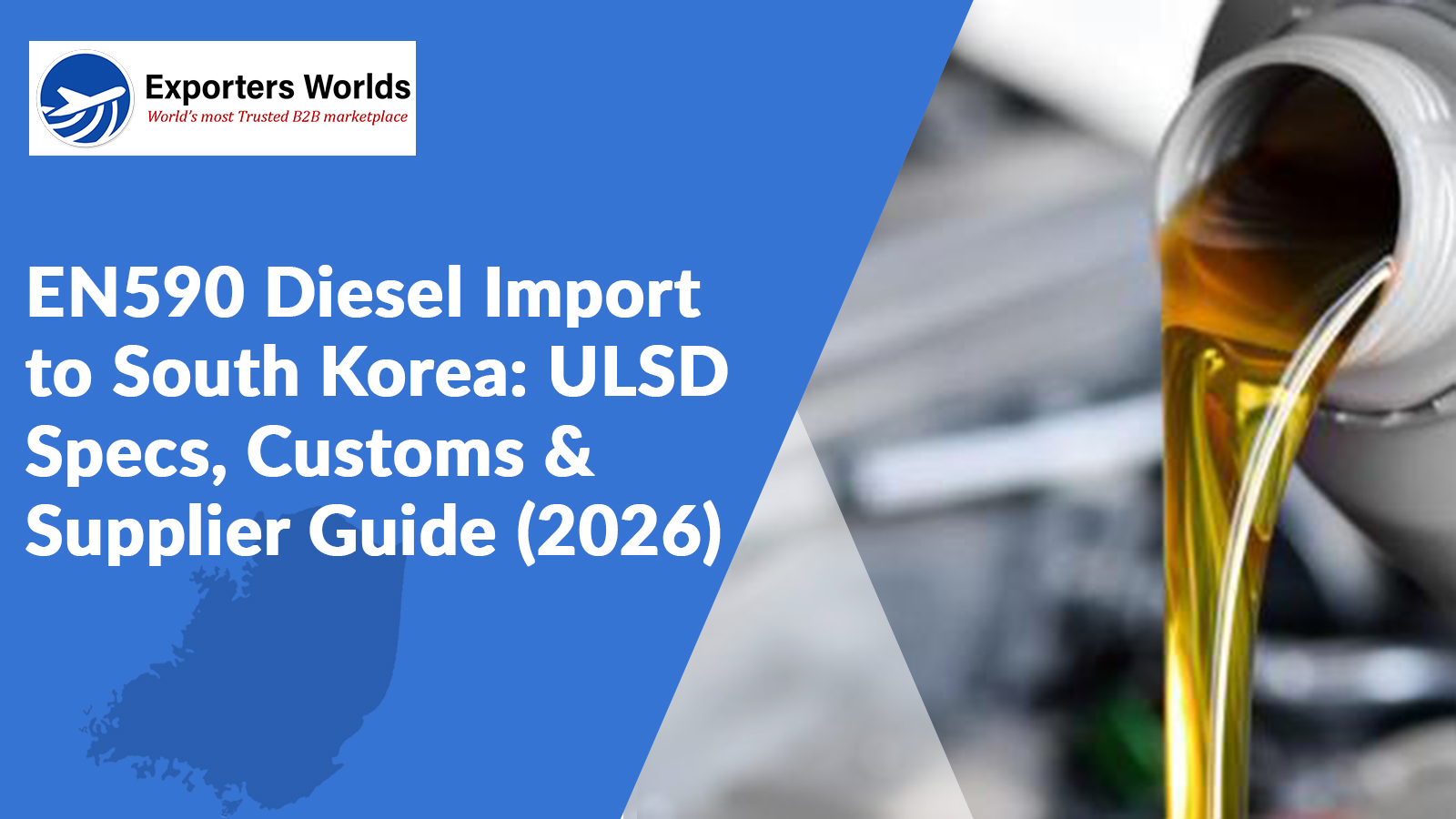
EN590 Diesel Import to South Korea: ULSD Specs, Customs & Supplier Guide (2026)
Navigating EN590 Diesel Imports in South Korea
This guide provides a practical overview of EN590 Diesel Import to South Korea, covering specifications, regulatory considerations, customs procedures, supplier selection, logistics planning, and risk management.
Importing EN590 diesel into South Korea requires careful compliance with fuel quality standards, import regulations, and supplier verification practices. As transport, logistics, and industrial sectors continue to prioritize cleaner fuels, demand for EN590 (10 ppm Ultra-Low Sulfur Diesel – ULSD) remains strong.
This guide provides a practical overview of the EN590 diesel import process for South Korea, covering specifications, regulatory considerations, customs procedures, supplier selection, logistics planning, and risk management. It is designed to help importers reduce exposure to off-spec cargo, clearance delays, and contractual disputes.
Step 1: Understand EN590 Diesel and Its Relevance in South Korea
Before sourcing diesel, importers must clearly understand what defines EN590 fuel and why it is widely referenced in international trade.
Definition
EN590 diesel is Ultra-Low Sulfur Diesel with a maximum sulfur content of 10 ppm, supporting reduced emissions and improved engine performance.
Key properties
EN590 fuel specifications include controlled cetane number, density, viscosity, and Cold Filter Plugging Point (CFPP), ensuring stable combustion and operational reliability across varying conditions.
Market relevance
South Korea places strong emphasis on environmental compliance and fuel efficiency, making 10 ppm ULSD the commonly accepted specification for commercial transport and industrial applications.
Understanding these fundamentals helps ensure alignment with buyer requirements and regulatory expectations.
Step 2: Check EN590 Diesel Specifications in South Korea
Compliance with applicable domestic fuel standards is essential. Before shipment, importers should verify the following parameters against supplier test reports:
- Sulfur content: Maximum 10 ppm
- Cetane number: Typically minimum 51 (some buyers prefer higher values)
- Density & viscosity: Within EN590 limits for proper engine operation
- CFPP (Cold Filter Plugging Point): Appropriate seasonal grade to prevent gelling
- Flash point & lubricity: Required for safe handling and engine protection
Independent laboratory testing and comparison against contractual tolerances help prevent quality disputes and cargo rejection. Adhering to EN590 diesel specifications is critical for successful imports.
Step 3: Meet EN590 Diesel Import Requirements in South Korea
South Korea maintains regulatory oversight on energy imports. Importers should confirm and comply with the following:
- Importer registration: Companies may need to be registered or authorized under applicable petroleum and energy regulations.
- Mandatory documentation: Customs declarations, certificates of analysis, inspection reports, and import approvals where applicable.
- Regulatory compliance: Imported diesel is subject to environmental, safety, and quality verification upon arrival.
Confirming requirements in advance reduces the risk of clearance delays and compliance issues.
Step 4: Navigate Customs Procedures and Port Clearance
Customs clearance can be managed efficiently with proper preparation:
- Document submission: Ensure all customs and quality documents are complete and consistent.
- Sampling and testing: Imported diesel is commonly sampled at the port to confirm conformity with declared specifications.
- Duties and taxes: Applicable VAT, duties, and fuel-related taxes should be confirmed before final pricing.
- Logistics coordination: Experienced customs brokers and freight forwarders help streamline the clearance process.
Accurate documentation and coordination reduce costs, delays, and demurrage exposure.
Step 5: Select Reliable Suppliers and Build Procurement Strategies
Supplier credibility directly impacts import success.
Evaluation criteria
- Verifiable company background and trade history
- Recent certificates of analysis and inspection reports
- Transparent pricing aligned with market conditions
Contract considerations
- Clearly defined Incoterms and delivery responsibilities
- Inspection and sampling clauses
- Payment terms and dispute resolution mechanisms
Building long-term supplier relationships helps stabilize quality and supply continuity.
Step 6: Plan Logistics and Storage Carefully
Proper logistics planning preserves diesel quality throughout the supply chain:
- Shipping options: Product tankers or containerized solutions depending on shipment size
- Tank cleanliness: Ensure prior cargo compatibility and tank cleanliness certification
- Storage: Use clean, approved tanks to prevent contamination
- Handling practices: Trained personnel and approved transfer procedures are essential
Strong logistics controls help maintain fuel integrity from loading to delivery.
Step 7: Market Trends and Pricing Considerations (2026)
Understanding market conditions supports better procurement decisions:
- Diesel demand remains linked to industrial activity and transport volumes
- Prices are influenced by crude oil markets, refinery margins, and seasonal demand
- Regulatory developments may impact short-term pricing and logistics costs
Importers who monitor market trends are better positioned to time purchases and negotiate contracts.
Step 8: Manage Risks and Ensure Ongoing Compliance
Common risks in EN590 diesel imports include:
- Regulatory non-compliance: Leading to fines or shipment rejection
- Supply chain disruptions: Shipping delays or supplier performance issues
- Quality deviations: Off-spec sulfur or cetane levels detected at discharge
Risk mitigation measures
- Independent pre-shipment inspection and testing
- Supplier audits and contractual safeguards
- Cargo insurance and regulatory due diligence
Proactive risk management protects both cargo and capital.
Step 9: Conclusion and Next Steps
Importing EN590 diesel into South Korea requires a structured approach that combines technical knowledge, regulatory compliance, supplier due diligence, and logistics planning. Importers who follow defined specifications, verify suppliers, and prepare thoroughly for customs procedures significantly reduce operational and commercial risk.
For buyers who want to explore compliant sourcing options or need clarity on specifications, documentation, or supplier verification, contact us to connect with the Exporters Worlds team. Our platform helps importers engage with reliable EN590 diesel suppliers and navigate international trade requirements with greater confidence.
Approach EN590 diesel imports with clarity, compliance, and informed decision-making to build sustainable trade operations in South Korea.
Frequently Asked Questions (FAQs)
What is EN590 diesel and why is it required for import into South Korea?
EN590 diesel is Ultra-Low Sulfur Diesel (ULSD) with a maximum sulfur content of 10 ppm. South Korea prioritizes low-emission, high-efficiency fuels, making EN590 the commonly accepted specification for commercial transport and industrial diesel imports.
What EN590 diesel specifications must importers verify for South Korea?
Importers should verify sulfur content (max 10 ppm), cetane number (typically minimum 51), density, viscosity, CFPP (seasonal grade), flash point, and lubricity. These parameters should be confirmed through accredited laboratory test reports before shipment.
What are the EN590 diesel import requirements in South Korea?
EN590 diesel imports generally require importer authorization under applicable energy regulations, complete customs documentation, quality certificates, and compliance with environmental and safety standards. Imported cargo is subject to verification and testing upon arrival.
Is EN590 diesel tested during customs clearance in South Korea?
Yes. EN590 diesel is commonly sampled and tested at the port of entry to confirm that the fuel matches the declared specifications. Any deviation between test results and documentation may lead to delays, penalties, or rejection.
How can buyers find reliable EN590 diesel suppliers for South Korea?
Buyers should evaluate suppliers based on verifiable trade history, recent inspection reports, consistent fuel quality, and transparent pricing. Using verified B2B trade platforms can further reduce supplier risk and improve procurement confidence.