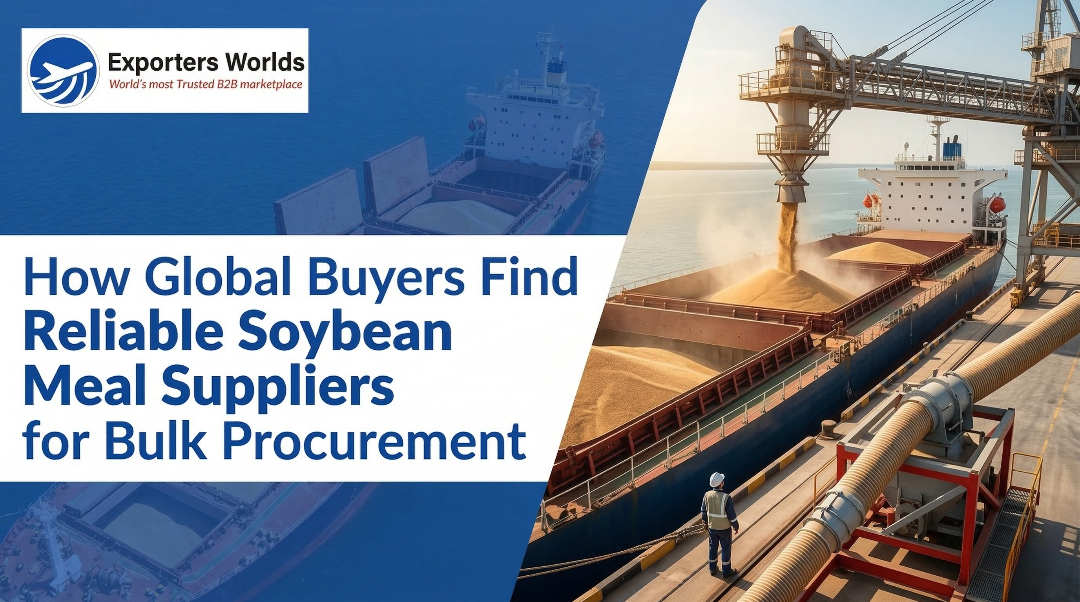
How Global Buyers Find Reliable Soybean Meal Suppliers for Bulk Procurement
Introduction: Why Finding the Right Soybean Meal Supplier Is Harder Than It Looks
A few years ago, many procurement managers believed sourcing bulk soybean meal was straightforward. The logic was simple. Find a trader, negotiate a price, and move the cargo.
In today’s global market, that assumption no longer holds.
Over the past decade, supply chain disruptions, sustainability regulations, and volatile commodity prices have dramatically changed how global buyers approach procurement. Conversations with feed manufacturers, livestock integrators, and importers often reveal the same pattern of challenges.
Shipments arrive late due to port congestion. Suppliers fail to meet consistent protein specifications. Unexpected price fluctuations disrupt feed production budgets.
For businesses that rely on soybean meal, these issues are not minor operational inconveniences. They directly impact feed formulation, production schedules, and long term profitability.
This matters because soybean meal sits at the center of the global animal feed ecosystem.
Global soybean meal consumption surpassed 250 million metric tons in 2023, making it one of the most widely traded agricultural commodities in the world. Market projections indicate continued growth, with the industry expected to expand from USD 103.3 billion in 2025 to approximately USD 165.3 billion by 2035, growing at a compound annual growth rate of about 4.8 percent.
Nearly 72 percent of global soybean meal production is used in animal feed, highlighting its critical role in livestock and aquaculture industries.
From a procurement perspective, finding reliable soybean meal suppliers or soybean meal exporters is no longer about chasing the lowest price. The real priority is building stable, traceable, and scalable supply relationships that ensure long term operational continuity.
This guide explores how global buyers actually discover, evaluate, and secure dependable suppliers when sourcing bulk soybean meal.
This guide explores how global buyers actually discover, evaluate, and secure dependable suppliers when sourcing bulk soybean meal. If you need to understand the broader logistics, customs processes, and risk management involved in moving this cargo, be sure to review our complete guide to importing agricultural products in bulk.
Understanding the Global Soybean Meal Market Before Choosing Suppliers
Why Soybean Meal Dominates the Global Feed Industry
Soybean meal has become the primary plant based protein source in livestock feed around the world.
The reason is simple. It offers a strong combination of nutritional density, availability, and cost efficiency.
Typical soybean meal contains:
- 44 to 48 percent protein
- A well balanced amino acid profile
- High digestibility for poultry, swine, and aquaculture species
In many feed formulations, soybean meal forms the protein backbone that supports animal growth and production efficiency.
The largest demand segments include:
- Poultry feed, which accounts for nearly 58 percent of soybean meal consumption in feed.
- Swine feed, representing around 24 percent of demand.
- The rapidly expanding aquaculture feed industry.
Aquaculture is particularly interesting. In several Asian markets, soybean meal usage in fish and shrimp farming has increased dramatically. Some aquaculture regions have reported up to 39 percent year over year growth in soybean meal consumption.
For procurement teams managing feed mills, the most important factor is not always price. Consistency matters more.
Even small variations in protein levels can affect feed conversion ratios, which directly influence livestock productivity.
That is why buyers place enormous emphasis on selecting dependable soybean meal suppliers who can maintain consistent product specifications across shipments.
Global Production Landscape: Where Most Soybean Meal Suppliers Are Located
One of the first realities global buyers notice is that soybean meal production is geographically concentrated.
A small number of countries dominate global supply.
Major exporting regions include:
- Argentina – roughly 23.4 million tons exported in 2023
- Brazil – about 22 million tons exported
- United States – approximately 13.9 million tons
- Paraguay
- Bolivia
Brazil alone contributes nearly 37 percent of global soybean meal production, while the United States accounts for around 19 percent.
China is another key player, though its role is slightly different. The country leads in soybean crushing capacity but imports large volumes of soybeans rather than exporting meal.
For procurement teams searching for reliable soybean meal exporters, this geographic concentration creates a practical challenge.
Most global supply flows through South American export infrastructure, particularly major ports such as Rosario in Argentina and Santos in Brazil.
As a result, logistics efficiency and port infrastructure often influence supplier selection just as much as price or quality.
Mapping the Global Soybean Meal Supply Chain
From Soybean Farms to Feed Mills
Understanding the supply chain is essential for buyers sourcing bulk soybean meal.
The journey from farm to feed mill typically involves several stages:
- Soybean cultivation
- Transportation to crushing facilities
- Oil extraction and meal production
- Storage at export terminals
- Distribution through commodity traders
- Delivery to feed manufacturers or importers
During the crushing process, soybeans undergo solvent extraction that separates oil from the protein rich meal.
Modern crushing facilities typically achieve yields of approximately:
- 78 to 80 percent soybean meal
- 18 to 20 percent soybean oil
Technological improvements in extraction processes have increased crushing efficiency by about 22 percent over the past decade, enabling higher production capacity.
Buyers who understand these production stages tend to negotiate better procurement contracts. They know where operational risks occur and where suppliers add value.
Who Actually Buys Bulk Soybean Meal Globally?
Several industries drive global demand for soybean meal exporters and large scale suppliers.
Poultry Feed Manufacturers
The poultry sector is the largest consumer of soybean meal. Chicken and egg production rely heavily on protein rich feed formulations.
Aquaculture Feed Companies
Fish and shrimp farming industries are expanding rapidly across Southeast Asia and Latin America. These sectors increasingly depend on soybean meal as a cost effective protein source.
Livestock Feed Producers
Swine and dairy operations also rely heavily on soybean meal to balance protein levels in animal diets.
Feed Additive and Blend Manufacturers
Many companies use soybean meal as a base ingredient in compound feed products.
Regionally, the Asia Pacific market dominates global soybean meal demand, largely due to rapid livestock expansion and growing food consumption.
How Global Buyers Discover Reliable Soybean Meal Suppliers
Finding reliable soybean meal suppliers requires a mix of market intelligence, supplier verification, and logistics planning.
Direct Procurement from Crushing Plants
Some buyers source directly from crushing facilities.
Typical suppliers in this category include:
- Large crushing plants
- Vertically integrated agricultural conglomerates
- Regional soybean processors
Advantages include lower procurement costs and stronger supply traceability.
However, direct sourcing also requires managing shipping logistics, export documentation, and high minimum order quantities.
A medium sized feed mill importing 50,000 tons annually may find this option viable only if it has strong logistics coordination.
Working with Global Commodity Traders
Many buyers choose to work with major agricultural trading companies such as:
- ADM
- Bunge
- Cargill
- Louis Dreyfus
- Wilmar
These firms dominate global commodity flows and maintain extensive logistics networks.
For example, ADM produced around 52 million tons of soybean meal in 2023.
Working with global traders provides reliability, but typically involves higher margins compared with direct sourcing.
Export Brokers and Trade Intermediaries
Export brokers play an important role in connecting buyers with mid sized soybean meal exporters who may not have global brand visibility.
They often assist with:
- Supplier discovery
- Contract negotiation
- Quality verification
- Export documentation
This approach is particularly helpful for first time importers.
Digital B2B Platforms and Trade Networks
In recent years, digital trade ecosystems have transformed how buyers identify suppliers.
Instead of relying solely on traditional networks, procurement teams now use global B2B marketplaces that connect buyers with verified exporters across multiple industries.
Platforms such as Exporters Worlds, a leading B2B marketplace established in 2015, help businesses discover verified suppliers, analyze market opportunities, and initiate international trade partnerships. Instead of spending weeks cold-calling, procurement teams can simply submit a Request for Quotation (RFQ) on our global marketplace to instantly receive competitive bids from vetted soybean meal exporters.
By bringing buyers and suppliers onto a single platform, such marketplaces simplify supplier discovery while providing additional support such as trade documentation assistance, marketing visibility, and communication tools.
For many businesses entering global commodity markets, digital B2B networks significantly reduce the time required to identify trustworthy soybean meal suppliers.
Key Criteria Buyers Use to Evaluate Soybean Meal Suppliers
Product Specifications and Nutritional Consistency
Reliable soybean meal suppliers must consistently meet strict nutritional benchmarks.
Typical specifications include:
- Protein: 44 to 48 percent
- Moisture: maximum 12 percent
- Fiber: 3 to 7 percent
- Fat: 1 to 2 percent
- Ash: 6 to 7 percent
Feed manufacturers also evaluate amino acid profiles, digestibility levels, and contamination risks.
Even minor variations can affect feed formulation efficiency.
Certifications and Compliance Standards
International buyers increasingly prioritize certified suppliers.
Common certifications include:
- ISO 22000
- HACCP
- GMP+
- Non GMO certification
- Organic certification
- RTRS sustainable soy certification
Currently, around 28 percent of global soybean meal exports are certified sustainable, reflecting growing ESG requirements.
Production Capacity and Scalability
Large feed producers often require steady supply volumes.
Procurement teams therefore evaluate:
- Monthly production capacity
- Export history
- Inventory levels
- Ability to scale production for large contracts
Suppliers with reliable capacity often secure multi year agreements with buyers.
Logistics Infrastructure
Logistics efficiency can determine whether a supplier is viable.
Key factors include proximity to export ports, bulk loading facilities, container shipment capabilities, and shipping frequency.
Suppliers located near major ports such as Rosario, Santos, or U.S. Gulf ports often provide lower freight costs and faster shipping.
Understanding Soybean Meal Pricing in Global Trade
Pricing for bulk soybean meal generally follows global commodity exchanges.
Common reference benchmarks include:
- Chicago Board of Trade (CBOT)
- Dalian Commodity Exchange
- Brazilian export price indices
Final export prices usually combine several cost components:
- Raw soybean prices
- Crushing margins
- Freight costs
- Insurance
- Export duties
- Trading margins
Experienced buyers rarely evaluate supplier quotes without comparing them with commodity exchange benchmarks. To see current market rates for your specific volume and delivery requirements, post a free RFQ on our platform and compare live quotes from verified international suppliers.
Contract Structures Used in Bulk Procurement
Global buyers typically rely on several procurement models.
Spot Purchases
Spot buying involves immediate transactions and short term delivery. It works well when supply shortages arise or prices temporarily fall.
Forward Contracts
Forward contracts allow buyers to lock in future supply at fixed prices, reducing exposure to market volatility.
Long Term Supply Agreements
Large feed manufacturers often sign multi year agreements with reliable soybean meal exporters to ensure stable supply.
Supplier Verification: The Due Diligence Process
Professional procurement teams rarely commit to large contracts without extensive verification.
The process usually involves several steps.
Supplier Identification
Potential suppliers are identified through trade shows, industry associations, commodity traders, or global B2B marketplaces.
Documentation Review
Buyers examine export history, financial stability, certifications, and compliance documentation.
Product Sample Testing
Laboratory tests evaluate protein levels, moisture content, contaminants, and mycotoxins.
Factory Audits
Audits assess processing technology, storage infrastructure, and quality control standards.
Trial Shipments
Before signing long term contracts, many buyers conduct trial shipments to verify product quality and logistics performance.
Platforms like Exporters Worlds have simplified this process by enabling businesses to connect with verified suppliers while also facilitating communication and documentation support between parties.
Risks Buyers Must Manage When Sourcing Soybean Meal
Supply Chain Risks
Soybean production depends heavily on agricultural conditions.
Weather disruptions, climate change, and geopolitical tensions can significantly affect supply.
Price Volatility
Soybean meal prices fluctuate due to harvest conditions, currency movements, and global oilseed demand.
Regulatory Changes
Environmental regulations are becoming increasingly important.
For example, new European Union deforestation rules may restrict imports from non compliant supply chains.
Sustainability and Traceability in Soybean Procurement
Sustainability has become a major factor in modern commodity sourcing.
Buyers increasingly demand:
- Deforestation free supply chains
- Traceable sourcing
- Certified sustainable soybean production
Major agricultural companies are investing heavily in traceability systems.
Currently, around 28 percent of global soybean meal exports already meet sustainability certification standards.
Emerging Trends Shaping Soybean Meal Procurement
Several trends are reshaping how buyers work with soybean meal suppliers.
Supply Diversification
Companies are expanding sourcing beyond traditional South American exporters.
Emerging sourcing regions include Eastern Europe and Southeast Asia.
Blended Protein Feed Formulations
About 31 percent of feed companies are experimenting with blended protein feeds using canola meal, sunflower meal, and other alternatives.
Logistics Infrastructure Investments
Approximately 31 percent of soybean exporters upgraded logistics infrastructure in 2023, improving port capacity and shipment speed.
Digital Procurement Platforms
Digital platforms are becoming essential tools for supplier discovery, shipment monitoring, and price analysis.
Marketplaces like Exporters Worlds play an increasing role by connecting global buyers with verified exporters while offering end to end support that simplifies international trade.
Strategic Procurement Models Used by Experienced Buyers
Professional procurement teams rarely rely on a single supplier.
Instead, they implement structured strategies such as:
Multi supplier sourcing, which reduces dependency on a single exporter.
Strategic partnerships, where buyers build long term relationships with trusted suppliers.
Commodity hedging, using futures markets to manage price volatility.
These approaches help stabilize procurement costs and protect supply continuity.
Practical Checklist for Choosing the Right Supplier
Before finalizing a supplier, buyers usually evaluate several key factors.
These include:
- Production capacity
- Product quality specifications
- Certification compliance
- Export experience
- Price competitiveness
- Logistics reliability
- Traceability systems
Businesses that combine rigorous supplier evaluation with strong industry networks often achieve more stable sourcing outcomes.
In many cases, procurement teams rely on global B2B ecosystems such as Exporters Worlds to identify reliable partners, verify supplier credentials, and simplify international trade relationships.
Conclusion: Reliable Soybean Meal Sourcing Is a Strategic Decision
At first glance, sourcing bulk soybean meal appears to be a simple commodity purchase. In reality, it involves navigating a complex network of production systems, logistics infrastructure, global trade regulations, and volatile commodity markets.
Buyers must evaluate suppliers carefully, verify product specifications, assess export capabilities, and build relationships that support long term supply stability. Organizations that approach procurement strategically tend to achieve better results. They diversify suppliers, conduct thorough due diligence, and build partnerships with trustworthy soybean meal exporters.
As global demand for animal feed continues to grow, procurement teams will increasingly rely on technology and international trade networks to identify dependable suppliers. Platforms such as Exporters Worlds are helping reshape this process by connecting businesses with verified exporters, streamlining communication, and supporting end to end trade operations. By bringing buyers and suppliers into a structured global marketplace, such ecosystems make it easier to discover reliable soybean meal suppliers, evaluate opportunities, and build lasting trade partnerships.
In a world where supply chain reliability determines operational success, choosing the right sourcing network can be just as important as choosing the right supplier. If you are ready to secure a consistent, high-quality supply without the usual guesswork, contact our sourcing experts today to discuss your specific bulk procurement needs and let us connect you with vetted global partners.
FAQs
What is the typical protein content of soybean meal used in animal feed?
Most commercial soybean meal contains between 44 and 48 percent protein, making it one of the most concentrated plant based protein sources for livestock feed.
Which countries export the most soybean meal?
Argentina, Brazil, and the United States dominate global soybean meal exports.
How do buyers verify soybean meal suppliers?
Buyers usually review certifications, conduct laboratory testing, perform factory audits, and run trial shipments before signing contracts.
Which industries purchase bulk soybean meal?
Major buyers include poultry feed manufacturers, aquaculture feed producers, livestock feed companies, and compound feed manufacturers.
What influences soybean meal prices globally?
Prices depend on soybean harvest conditions, commodity exchange benchmarks, freight costs, currency movements, and global oilseed demand.
Why is sustainability important in soybean sourcing?
Many markets now require deforestation free supply chains and traceable sourcing, and nearly 28 percent of global soybean meal exports already meet sustainability certification standards.