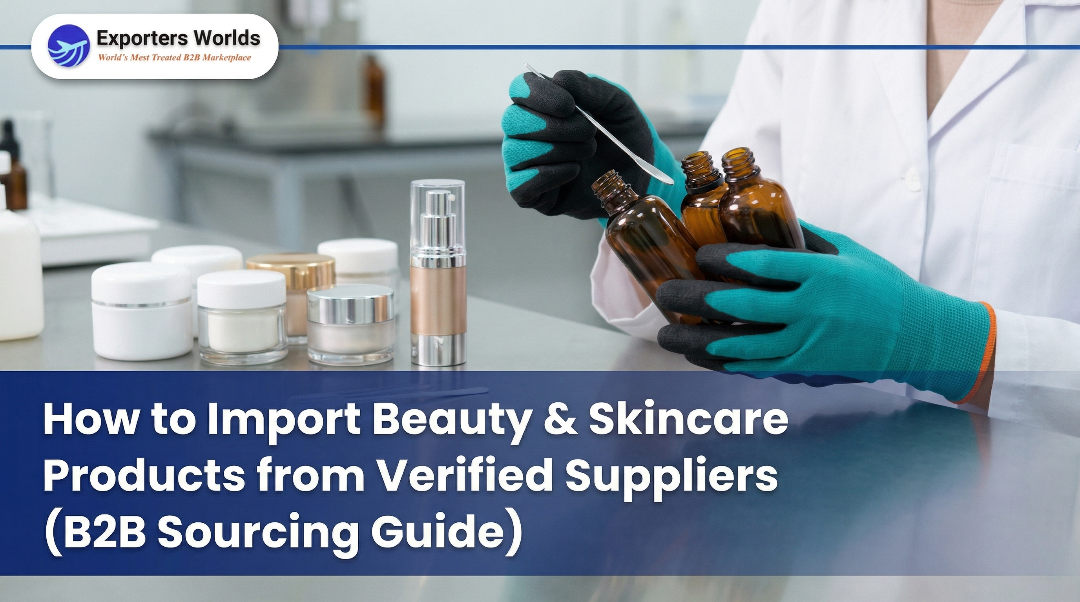
How to Import Beauty & Skincare Products from Verified Suppliers (B2B Sourcing Guide)
Introduction: Why Importing Beauty Products Isn’t as Simple as It Looks
Scroll through TikTok for five minutes and you will spot a familiar pattern. A Vitamin C serum goes viral. Within weeks, dozens of brands start selling what looks like the same product, just packaged differently. That is when it hits you. Most of these products are coming from the same underlying network of beauty products suppliers.
It feels like an easy opportunity. Find a supplier, import the product, add a margin, and sell. Simple.
Except it rarely works that way.
Many first-time importers underestimate what actually drives success in this space. The assumption is straightforward. Source cheap, sell high. The reality is more layered. Margins shrink quickly when compliance, logistics, branding, and quality control enter the picture. One overlooked regulation or one unreliable supplier can wipe out months of effort.
This matters now more than ever. The global beauty and personal care market is valued at over $600 billion in 2025, growing steadily at 5 to 7 percent annually. Skincare alone accounts for more than 40 percent of that market. Demand is massive, but so is competition.
So this is not just about finding wholesale skincare products suppliers. It is about building a system that is scalable, compliant, and profitable.
Understanding the Global Beauty Import Landscape
Where the Demand Is Coming From (And Why It Matters for Importers)
Spend some time analyzing product listings across marketplaces and one thing becomes obvious. Not all skincare products perform equally.
Serums, SPF products, and clinical-grade skincare dominate demand. Generic creams do not.
This shift is being driven by several factors:
- K-beauty and J-beauty trends are expanding globally, especially in Western markets
- Consumers are prioritizing clean, vegan, and organic formulations
- Private label skincare brands are booming on Amazon and direct-to-consumer platforms
- Cosmeceuticals are gaining traction due to dermatological backing
- Sustainability is no longer optional, with eco-packaging and cruelty-free claims becoming standard
These are not just trends. They shape what sells and what does not.
Top Exporting Countries You’ll Keep Running Into
As you start exploring skincare products manufacturers, you will notice certain countries appear repeatedly:
- South Korea leads in innovation and trend-driven formulations
- France dominates premium and luxury cosmetics
- The United States focuses on clinical and dermatologist-backed products
- China offers scale and cost efficiency through wholesale skincare products suppliers
- Japan is known for high-quality, minimal, and effective formulations
Additionally, it is worth noting how Indian suppliers are shaping the global beauty & cosmetics market, particularly in Ayurvedic, herbal, and highly scalable contract manufacturing. Each region signals something different. Pricing, innovation, compliance complexity. Choosing the right supplier is also about choosing your market positioning.
Choosing the Right Import Business Model (Where Most People Misstep)
Reselling Branded Products (Distribution Model)
This is often the starting point. You import established brands and sell them locally.
It is simple, but not easy.
You need brand authorization. Margins are thin. Competition is intense. You are essentially competing on price.
For example, importing a popular Korean sunscreen might bring quick sales, but it offers little room for differentiation. If this is the route you choose, partnering with established networks is critical; reviewing the top 10 wholesale distributors for beauty supplies in India is a great place to start finding reliable regional partners.
Private Label Skincare (Most Popular Route)
This is where most successful importers land.
You work with skincare products manufacturers, create your own branding, and sell under your label. Margins typically range from 30 to 70 percent.
It requires investment. Packaging, branding, and minimum order quantities. But it gives you control.
Most successful Amazon skincare brands follow this model for a reason.
OEM and ODM Contract Manufacturing
This is the advanced route.
You create fully customized formulations. Higher differentiation, but longer timelines and higher costs.
It is ideal for scaling brands, not beginners. The biggest tension here is control versus speed. Many underestimate how long product development actually takes. To minimize these delays and maintain quality control, checking our ultimate guide to choosing the right skin care manufacturer in India can help you vet potential production partners effectively before signing any contracts.
How to Find Verified Beauty Products Suppliers
B2B Platforms That Actually Work
Most importers begin their journey on platforms like Alibaba, Global Sources, and Made-in-China. That makes sense. These platforms host thousands of beauty products suppliers, offering everything from basic skincare to advanced formulations at competitive prices.
But here is the reality most people learn the hard way.
Platform presence does not equal supplier credibility.
According to industry estimates, over 30 percent of listed suppliers on large B2B marketplaces operate as trading companies rather than actual manufacturers. That does not make them unreliable by default, but it does introduce additional layers in pricing, communication, and accountability.
This is where many beginners misstep. They assume that verified badges, response rates, or years on the platform automatically signal trustworthiness. In practice, those indicators only scratch the surface.
A smarter approach is to treat these platforms as discovery tools rather than decision-making tools. Use them to build an initial shortlist, compare pricing benchmarks, and understand product ranges. But the real validation must happen outside the platform.
Increasingly, importers are also exploring curated B2B ecosystems like Exporters Worlds, where supplier credibility is not just self-declared but actively vetted. This reduces the noise that typically comes with large, open marketplaces. If you are ready to bypass unverified sellers and focus on suppliers aligned with international trade standards, you can Register Now to start building your customized supplier network.
Direct Manufacturer Sourcing
Once you move beyond marketplaces, direct sourcing becomes a powerful advantage.
Trade shows such as Cosmoprof, Beautyworld Middle East, and In-Cosmetics Global bring together some of the most credible skincare products manufacturers under one roof. These events are not just about discovery. They are about validation.
You get to see product quality firsthand. You can have real conversations about formulations, compliance, and customization. That level of interaction is difficult to replicate online.
LinkedIn has also emerged as a surprisingly effective sourcing channel. Many manufacturers actively showcase their capabilities, certifications, and production facilities. Reaching out directly often leads to more transparent discussions and better negotiation leverage.
The biggest benefit of direct sourcing is control.
You reduce dependency on intermediaries, gain better visibility into production processes, and often secure better pricing structures. However, it requires effort. Research, outreach, follow-ups, and due diligence. To bypass some of this initial friction, you can reference our top 10 cosmetic product manufacturers in India – a buyer’s guide to instantly build a vetted shortlist.
However, it requires effort. Research, outreach, follow-ups, and due diligence.
That is why many businesses balance direct sourcing with structured B2B platforms that simplify access to verified wholesale skincare products suppliers without compromising on credibility.
Working with Sourcing Agents
Sourcing agents are often misunderstood. They are not just middlemen. The right agent acts as your local representative in a foreign market.
In regions like China and South Korea, where language barriers and regulatory nuances can complicate sourcing, agents can significantly reduce risk. They help with supplier identification, negotiation, quality checks, and even logistics coordination.
But this convenience comes at a cost. Typically, agents charge between 5 to 10 percent of the order value.
For small or first-time importers, this cost can be justified as a risk management investment. For larger businesses, it can erode margins over time.
The decision comes down to your operational capability.
If you have the resources to verify and manage suppliers independently, you retain higher margins. If not, an agent can prevent costly mistakes.
Supplier Verification Framework (Where Deals Usually Go Wrong)
Non-Negotiable Checks
This is where most import businesses either build a strong foundation or set themselves up for failure.
Before committing to any wholesale skincare products suppliers, a structured verification process is essential.
Start with the basics:
- Business license verification to confirm legal existence
- Certifications such as ISO 22716 for cosmetic GMP compliance
- FDA registration for suppliers targeting the US market
- EU compliance documentation for European distribution
Then go deeper:
- Factory audit reports to understand production capabilities
- Product documentation including COA and MSDS
- Export history to assess experience with international markets
According to trade compliance data, nearly 25 percent of import-related disputes stem from incomplete or inaccurate documentation. That alone highlights how critical this stage is.
Skipping these checks might save time upfront, but it significantly increases the risk of financial and reputational damage.
Red Flags That Are Easy to Miss
Not all risks are obvious.
Some of the most damaging supplier issues come from signals that are easy to overlook:
- Unrealistically low pricing that undercuts market averages by a large margin
- Lack of third-party certifications or vague claims about compliance
- Delayed, inconsistent, or evasive communication
- Reluctance or refusal to provide product samples
These are not minor concerns. They are early indicators of deeper operational issues.
A common pattern in the industry is this:
Importers chasing the lowest price often end up dealing with quality issues, shipment delays, or compliance failures that cost far more than the initial savings.
Navigating Compliance & Regulations (The Silent Profit Killer)
Regulations are rarely the exciting part of importing. But they are often the most decisive.
United States
The FDA does not require pre-approval for most cosmetic products. However, that does not mean the process is simple.
Products must comply with labeling requirements using INCI ingredient names. Safety must be ensured, and participation in the Voluntary Cosmetic Registration Program adds credibility.
European Union
The EU is one of the strictest markets globally.
- CPNP registration is mandatory before selling any cosmetic product
- A Responsible Person must be appointed within the EU
- A Cosmetic Product Safety Report is required
Non-compliance can lead to immediate product recalls and financial penalties.
UK and Middle East
Post-Brexit, the UK operates its own compliance system similar to the EU.
In the Middle East, markets like the UAE and Saudi Arabia require specific approvals. For example, Dubai’s Montaji system mandates product registration before sale.
Essential Documentation Checklist
Every importer should maintain:
- MSDS
- COA
- INCI ingredient list
- Stability testing reports
- Shelf-life validation
A single missing document can delay shipments by weeks or even months.
In fact, logistics studies suggest that compliance-related delays account for nearly 20 percent of shipment hold-ups in the cosmetics industry.
Product Selection Strategy (What Actually Sells vs What Sounds Good)
High-Demand Skincare Categories
Not all products are worth importing.
The categories currently dominating global demand include:
- Serums featuring Vitamin C, Retinol, and Niacinamide
- High-SPF sunscreens, especially mineral-based
- Anti-aging and skin-repair creams
- Acne treatment solutions
- Hair and scalp care products
These categories align with both consumer demand and repeat purchase behavior.
Smart Selection Criteria
Choosing the right product involves more than following trends.
You need to evaluate:
- Regulatory complexity
- Market demand consistency
- Margin potential
- Shipping feasibility
For example, serums are often easier to import than sunscreens. Sunscreens face stricter regulatory scrutiny in many markets, increasing both cost and time to market.
The goal is to balance demand with operational feasibility.
Cost Breakdown & Profit Margins (The Numbers Most People Ignore)
Typical Cost Structure
A realistic cost structure for imported skincare products looks like this:
- Product cost: 30 to 50 percent
- Shipping: 10 to 25 percent
- Duties and taxes: 5 to 20 percent
- Packaging: 5 to 15 percent
- Marketing: 15 to 40 percent
Marketing is often the most underestimated expense.
Realistic Pricing Scenario
Consider a private label serum:
- Unit cost: $3.50
- Shipping: $0.80
- Duty: $0.50
- Packaging: $1.20
This brings the landed cost to approximately $6.
Retail pricing typically ranges between $18 and $30.
At first glance, the margins look strong. But once you factor in customer acquisition costs, returns, and platform fees, the actual profit margin narrows significantly.
This is why efficient sourcing and cost control are critical.
Logistics & Shipping (Where Timelines Break Down)
Shipping Methods Explained
- Air freight offers speed but comes at a higher cost
- Sea freight is cost-effective for bulk shipments but slower
- Courier services are ideal for small or urgent orders
Understanding Incoterms
- EXW places full responsibility on the buyer
- FOB means the supplier manages export logistics
- DDP provides a fully managed delivery solution
Choosing the right Incoterm can significantly impact both cost and operational complexity.
Special Considerations
Skincare products often involve liquids, which may be classified as hazardous goods. Some formulations are also sensitive to temperature changes.
Failure to account for these factors can lead to damaged products or compliance issues during transit.
Quality Control Process (Consistency Is Everything)
Quality is not a one-time check. It is an ongoing process.
Pre-Production
Verify raw materials and test formulations thoroughly.
During Production
Conduct batch-level inspections to ensure consistency.
Pre-Shipment
Use third-party inspection agencies such as SGS or Bureau Veritas.
Post-Arrival
In some cases, additional lab testing may be required.
Data from eCommerce platforms shows that product quality issues account for over 35 percent of negative reviews in the beauty category. That alone highlights the importance of a robust QC process.
Step-by-Step Import Process (From Idea to Shelf)
The import journey typically follows this sequence:
- Market research
- Product selection
- Supplier shortlisting
- Sample testing
- Compliance validation
- Price negotiation
- Contract agreement
- Production monitoring
- Inspection
- Shipping and customs clearance
- Warehousing and distribution
The most common delays occur between sampling and compliance approval, where unforeseen regulatory requirements often surface.
Payment Methods & Risk Management (Protecting Your Capital)
Common Payment Options
- Bank transfers remain widely used
- Letters of credit offer higher security for large transactions
- Platform-based protection systems add an extra layer of safety
Risk Mitigation Tactics
- Start with smaller trial orders
- Use escrow services where possible
- Conduct thorough supplier verification
Financial risk in importing is not just about fraud. It is about misalignment between expectations and actual delivery.
Branding & Labeling (Where Products Become Brands)
Mandatory Label Elements
- Product name
- INCI ingredient list
- Net content
- Manufacturer or importer details
- Expiry date
Current Branding Trends
- Clean, minimalist packaging
- Sustainability-focused messaging
- Dermatologist-tested positioning
Interestingly, consumer studies indicate that over 60 percent of skincare purchasing decisions are influenced by packaging and perceived brand trust rather than formulation alone.
Common Challenges Importers Face
- Regulatory delays that disrupt launch timelines
- Inconsistent or low-quality products
- High minimum order quantities
- Logistics disruptions
- Evolving compliance requirements
These challenges are not unexpected. They are part of the process. The key is anticipating and managing them effectively.
Opportunities & Future Outlook in Skincare Imports
The industry continues to evolve rapidly.
- Men’s grooming is projected to grow at over 6 percent annually
- Derma-cosmetics are gaining mainstream acceptance
- AI-driven personalized skincare is emerging as a major trend
- Cross-border eCommerce is expanding access to global markets
The next phase of growth will be driven by personalization, clinical validation, and transparency.
Key Success Factors for Long-Term Growth
Sustainable success in this space depends on:
- Strong, reliable supplier relationships
- In-depth understanding of compliance requirements
- Clear and differentiated product positioning
- Efficient logistics and supply chain systems
- Consistent quality control
The pattern is clear.
The most successful businesses are not those chasing the lowest cost. They are the ones building the most reliable systems.
Tools & Resources for B2B Skincare Sourcing
To reduce uncertainty and improve efficiency, importers rely on:
- Supplier verification agencies like SGS and Intertek
- Trend analysis tools such as Google Trends and Statista
- Regulatory portals including FDA and EU systems
- Logistics providers like DHL and Flexport
Alongside these, structured B2B platforms such as Exporters Worlds are becoming increasingly relevant by combining supplier discovery, verification, and communication into a single ecosystem. For instance, submitting your exact product specifications through an RFQ marketplace page allows you to receive competitive bids from multiple vetted suppliers at once, reducing fragmentation and helping businesses make more informed sourcing decisions without relying on scattered channels.
These tools reduce guesswork and improve decision-making.
Conclusion: What Actually Makes an Import Business Work
Importing skincare products sits at the intersection of sourcing, compliance, logistics, and branding. Finding beauty products suppliers is just the starting point. What you build around that supplier determines your success.
In practice, the difference between a struggling importer and a scaling brand often comes down to two things. Supplier quality and regulatory readiness. Marketing amplifies success, but it rarely fixes weak foundations.
This is where having access to a structured ecosystem becomes valuable.
Platforms like Exporters Worlds quietly solve one of the biggest bottlenecks in this process. Instead of navigating fragmented directories, uncertain supplier credibility, and inconsistent communication, businesses can connect with verified wholesale skincare products suppliers and skincare products manufacturers within a more streamlined environment.
The advantage is not just access. It is the combination of verification, ease of communication, and end-to-end support that reduces friction across the entire import journey. From supplier discovery to deal execution, the process becomes more predictable. If you are scaling an existing brand or want to see exactly how our ecosystem can streamline your supply chain, Book A Demo with our sourcing experts today. Otherwise, if you are just planning to enter this space, start simple... Shortlist a few verified suppliers. Test samples. Map out compliance early. Move slower at the beginning so you can scale faster later.
Because in this business, the real edge is not finding a product. It is building a system that works every single time.
FAQs
What is the safest way to find verified skincare products manufacturers?
Use multiple channels including B2B platforms, trade shows, and third-party verification services instead of relying on a single source.
Do I need FDA approval to import skincare products?
No pre-approval is required for most products, but proper labeling and safety compliance are mandatory.
What is the minimum order quantity for private label skincare?
It typically ranges from 500 to 5000 units depending on the manufacturer.
How profitable is importing beauty products?
Margins can range from 30 to 70 percent depending on sourcing, branding, and marketing efficiency.
How long does it take to import skincare products?
Usually between 4 to 12 weeks depending on production timelines and shipping methods.
What are the biggest risks in importing beauty products?
Supplier fraud, regulatory non-compliance, and inconsistent product quality are the most common risks.