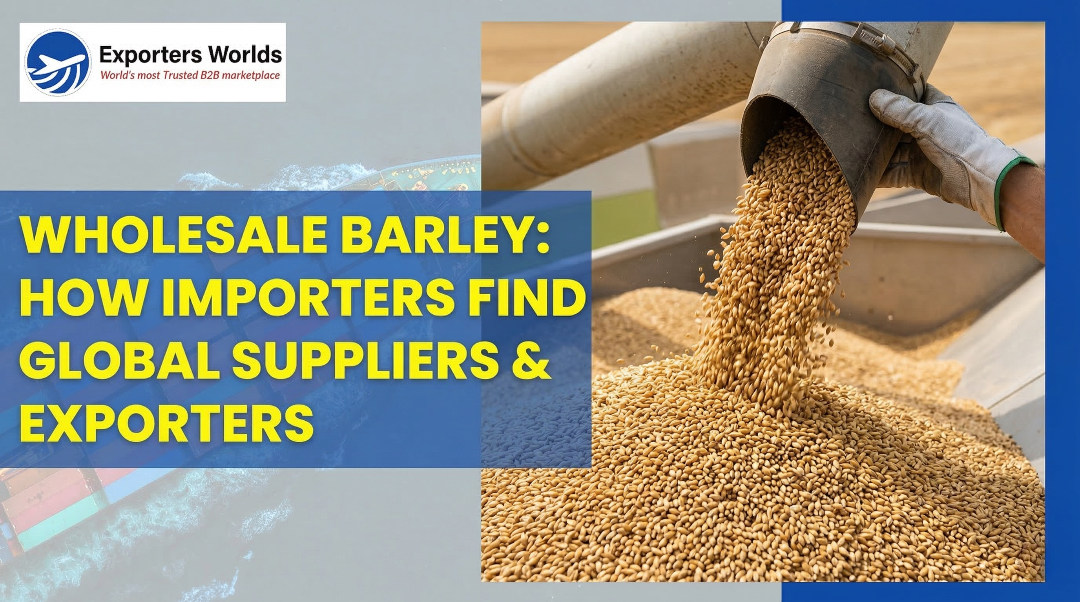
Wholesale Barley: How Importers Find Global Suppliers & Exporters
Introduction: The Real Challenge Behind Finding Reliable Wholesale Barley Suppliers
In my early exposure to grain commodity sourcing conversations, I noticed something interesting. Finding barley itself is rarely the challenge. The real complexity begins when businesses try to identify reliable, consistent sources of wholesale barley across international markets.
On the surface, the global grain trade appears simple. Countries grow crops, exporters ship them, and importers purchase them. Yet once you look closer, the process of identifying dependable barley suppliers and trustworthy barley exporters becomes far more intricate. Quality standards vary by region, logistics networks differ widely, and price volatility can change procurement strategies almost overnight.
Over the past decade, global barley sourcing has become significantly more strategic. Importers are no longer simply searching for availability. They are evaluating supply stability, climate risks, quality specifications, freight costs, and long term trade relationships before making purchasing decisions.
The scale of the barley market explains why this level of diligence matters. Global barley consumption reached approximately 156 million tons in 2024, and demand continues to expand. Industry projections suggest that consumption could reach 198 million tons by 2035, while the market value is expected to grow to roughly $63.4 billion. Analysts forecast growth of around 2.2 percent CAGR in volume and 3.1 percent CAGR in value over the next decade.
These figures raise important questions for importers entering the market.
Where do reliable barley exporters actually come from?
How do experienced importers evaluate global barley suppliers?
And what processes ensure consistent access to wholesale barley in an increasingly competitive market?
This article explores those questions in depth. From global supply geography and sourcing channels to supplier verification, trade logistics, pricing structures, and risk management, we will walk through the real mechanics behind sourcing barley in international markets.
Note: If you need a broader understanding of the customs compliance and freight frameworks required for these massive shipments, we highly recommend reviewing our complete guide to importing agricultural products in bulk.
Why Global Demand for Wholesale Barley Is Rising
The Expanding Role of Barley Across Multiple Industries
Barley has evolved into one of the most versatile grains in the global agricultural economy. Its adaptability across several industries is one of the main reasons demand for wholesale barley continues to grow.
The largest share of barley consumption comes from the animal feed industry. Livestock producers rely on barley as a nutrient rich feed grain, particularly in regions where corn prices fluctuate or supply becomes constrained.
Another major driver is the brewing and malting industry. Barley serves as the foundational ingredient for beer production, and the growth of craft brewing markets across Europe, Asia, and North America has significantly increased demand for high quality malting varieties.
The food processing sector has also contributed to rising consumption. Products such as pearl barley, barley flour, and functional grain blends are gaining popularity among consumers seeking whole grain and fiber rich foods.
Additionally, the biofuel and ethanol industry has begun incorporating barley into certain production processes, creating another demand channel.
In conversations with grain traders, one pattern often comes up repeatedly. When feed grain markets become volatile, barley demand often spikes quickly. Livestock producers frequently switch between grains depending on pricing conditions, making barley a valuable alternative.
How Feed Markets Influence Global Barley Imports
Feed markets play a significant role in shaping global barley trade flows. When prices for primary feed grains increase, barley often becomes an attractive substitute.
Livestock producers commonly replace:
- Corn
- Sorghum
- Wheat
with barley in feed formulations.
A notable example occurred when Chinese feed producers increased their barley imports after corn prices surged. This shift significantly boosted demand for wholesale barley from exporting countries such as Australia and France.
Such substitution dynamics illustrate why barley demand often moves in response to broader grain market conditions.
Regions Driving the Global Barley Import Market
Several regions dominate global barley imports due to structural agricultural factors.
China remains the largest importer, accounting for approximately 34 percent of global barley imports. Rapid expansion in livestock production and brewing industries has fueled this demand.
The Middle East, particularly Saudi Arabia and Iran, represents another major import hub. Limited arable land and water constraints make large scale domestic barley production difficult, forcing these countries to rely heavily on imports for livestock feed.
In North Africa, nations such as Morocco and Tunisia import barley to support growing agricultural sectors and food processing industries.
Meanwhile, Southeast Asia is emerging as a new demand center. Rising incomes, expanding beer consumption, and increased livestock production are gradually increasing the region’s reliance on international barley suppliers.
Global Barley Production Landscape: Where the Supply Comes From
Global Production Snapshot
Global barley production reached roughly 151 million tons in 2024, making it one of the most widely cultivated cereal crops worldwide.
Several countries dominate global production due to favorable climate conditions and advanced agricultural systems. The largest producers include:
- Russia
- Australia
- France
- Germany
- Canada
These regions benefit from temperate climates, extensive farmland, and efficient grain storage and transportation infrastructure. Such advantages enable them to produce barley at scale and maintain strong export capacity.
Major Barley Exporters Controlling the Market
Although barley is grown in many countries, the export market is highly concentrated. A relatively small group of nations supplies the majority of international demand.
Leading barley exporters by value include:
- Australia — approximately $1.6 billion
- France — approximately $1.4 billion
- Russia — approximately $950 million
- Germany — approximately $698 million
- Canada — approximately $659 million
Other notable exporters include Argentina, Ukraine, Romania, Kazakhstan, and Hungary.
An important insight for importers is that the top fifteen exporting countries control nearly 93 percent of global barley exports. This concentration means that supply disruptions in just a few regions can quickly affect international availability and pricing.
Currently, global barley exports total around 36.9 million tons annually.
For businesses seeking wholesale barley, these major exporting countries typically serve as the starting point for supplier discovery.
Understanding the Types of Barley Traded in Wholesale Markets
Many new importers underestimate how important barley classification is in international trade. Not all barley varieties serve the same purpose, and each type carries different quality requirements and price structures.
Feed Barley
Feed barley represents the largest traded segment of wholesale barley worldwide.
It is primarily used in livestock feed and typically has less stringent quality specifications than barley used for brewing.
Key characteristics include:
- Moderate protein content
- Lower germination requirements
- Slightly higher tolerance for impurities
Because of its broader quality range, feed barley generally trades at lower prices than premium varieties.
Malting Barley
Malting barley is specifically cultivated for beer brewing, distillation, and malt production. It must meet strict quality specifications that ensure proper fermentation during brewing.
Key parameters include:
- Controlled protein levels
- Uniform kernel size
- High germination rate
- Low moisture content
Countries known for producing premium malting barley include France, Australia, Germany, Canada, and Argentina.
Due to these quality standards, malting barley commands significantly higher prices than feed barley in global markets.
Food Grade and Specialty Barley
Food grade barley is used in consumer food products such as:
- Pearl barley
- Barley flour
- Whole grain blends
- Nutritional supplements
As consumer interest in whole grains and high fiber foods grows, demand for these specialty products continues to expand.
Processed Barley Products
Value added barley processing is another fast growing segment. Products such as malt extract, flaked barley, and barley starch are widely used in food manufacturing and brewing.
Globally, value added barley products generate over $25 billion annually, highlighting the increasing commercial importance of processed grain products.
Trade Classification: How Barley Is Identified in International Trade
In global trade, commodities are classified using the Harmonized System, commonly known as HS codes.
Barley trade relies primarily on two key classifications.
HS Code 1003 refers to raw barley.
HS Code 1104 covers processed barley products.
These codes appear in customs documentation, shipping declarations, and international trade databases.
Importers often rely on HS code data when analyzing global trade flows. By studying import and export records, businesses can identify leading barley exporters, evaluate supply trends, and track market activity.
How Importers Actually Find Reliable Barley Suppliers Worldwide
Using Trade Data Platforms to Identify Exporters
Professional importers rely heavily on trade intelligence when searching for reliable barley suppliers.
Common data platforms include:
- UN Comtrade
- ITC Trade Map
- FAOSTAT
- World Bank trade datasets
These databases allow buyers to analyze:
- export volumes by country
- price movements
- seasonal harvest cycles
- long term supply trends
The first time many buyers examine these dashboards, the sourcing process begins to resemble financial market analysis. Data driven decisions often separate experienced importers from new entrants.
Global B2B Marketplaces for Barley Sourcing
Digital platforms have also become a major discovery channel for wholesale barley suppliers.
Common sourcing platforms include:
- Alibaba
- Global Sources
- Tradekey
- Made in China
- EC21
- Exporters Worlds
Ready to bypass the endless searching? Post your Wholesale Barley RFQ here and let verified global exporters send you competitive quotes directly.
These marketplaces connect buyers with international exporters across many industries.
However, experienced importers still conduct careful verification before entering contracts. Typical checks include reviewing export licenses, shipment records, certifications, and buyer feedback.
Commodity Brokers and Grain Trading Houses
Large multinational trading houses play a dominant role in global grain flows.
Major companies include:
- ADM
- Cargill
- Bunge
- Louis Dreyfus
- Glencore Agriculture
These firms operate extensive procurement networks that source grain from farmers and distribute it to international markets.
Many large scale barley contracts move through these trading houses because they control significant logistics infrastructure.
Commodity Exchanges and Price Tracking
Importers often monitor grain prices through commodity exchanges such as:
- Chicago Board of Trade
- Euronext
- ICE Futures
Although barley futures markets are less liquid than corn or wheat, these exchanges still influence broader grain price trends.
Trade Fairs and Global Grain Conferences
Despite the rise of digital sourcing, networking events remain highly valuable.
Major industry gatherings include:
- Gulfood
- SIAL
- Anuga
- Global Grain Conferences
These events allow importers to meet new barley exporters, evaluate products, and negotiate supply contracts.
The Global Barley Supply Chain: From Farm to Importer
The barley trade involves multiple participants across a complex supply chain.
A typical flow looks like this:
Farmers → Grain collectors → Storage elevators → Exporters → Importers → Processors → End users
Each participant plays a specific role.
Farmers produce the crop.
Aggregators collect and consolidate grain.
Export companies manage shipping and documentation.
Logistics providers coordinate transportation.
Importers distribute the product to feed mills, breweries, or food manufacturers.
Intermediaries are common because bulk grain trade requires specialized infrastructure such as storage silos, rail transport, and export terminals.
How Importers Evaluate and Verify Barley Suppliers
Product Quality Specifications
Quality verification is one of the most important steps when sourcing wholesale barley.
Importers typically analyze parameters such as:
- moisture content (usually below 12 to 13 percent)
- protein levels
- kernel size
- germination rate for malting barley
- foreign matter and impurities
Certifications and Inspection Requirements
Many international buyers require suppliers to hold certifications such as:
- ISO 22000
- HACCP
- GMP+
Third party inspection agencies are often used to verify shipments before export.
Leading inspection firms include:
- SGS
- Bureau Veritas
- Intertek
- Cotecna
Independent testing ensures that grain shipments meet contractual quality specifications.
Supplier Capacity and Infrastructure
Beyond quality, importers also examine operational capacity.
Key considerations include:
- annual production volume
- grain storage facilities
- port access and export terminals
- logistics and shipping capabilities
Reliable barley suppliers must demonstrate consistent supply capacity to support long term contracts.
Logistics and Export Infrastructure in the Barley Trade
Bulk Shipping Methods
Most wholesale barley shipments move through bulk cargo vessels.
Common vessel types include:
- Handymax vessels
- Supramax vessels
- Panamax vessels
Larger vessels typically reduce per ton shipping costs, making them attractive for high volume import contracts.
Major Global Grain Export Ports
Several ports serve as major barley export hubs.
Australia
Kwinana
Port Adelaide
France
Rouen
La Rochelle
Russia
Novorossiysk
Astrakhan
Canada
Vancouver
Prince Rupert
These ports feature advanced grain handling facilities that enable efficient bulk loading operations.
Freight Cost Factors
Shipping costs depend on several factors including:
- transport distance
- vessel availability
- fuel prices
- canal transit fees
- seasonal port congestion
For large importers, freight expenses can represent a significant portion of total procurement cost.
Understanding Wholesale Barley Pricing
Components of the Barley Price
The final price of wholesale barley typically includes several cost layers.
These include:
- farm gate price
- storage costs
- inland transportation
- port handling charges
- ocean freight
- cargo insurance
Each component influences the final landed price for importers.
Common Trade Contract Terms
International grain contracts commonly use several Incoterms.
FOB (Free on Board)
CIF (Cost Insurance Freight)
CFR (Cost and Freight)
EXW (Ex Works)
Each term determines which party assumes responsibility for shipping costs, risk, and logistics management.
Key Factors Influencing Barley Prices
Several global factors affect barley pricing.
These include:
- weather conditions
- crop yields
- currency exchange rates
- feed demand
- geopolitical developments
- tariffs or trade restrictions
For example, increased Chinese buying once pushed Australian barley prices up by nearly 10 percent within three months, demonstrating how quickly markets can respond to demand shifts.
Risk Factors Importers Must Consider in Global Barley Trade
Geopolitical Risks
Trade policies and political developments can influence barley supply chains.
Examples include export restrictions, sanctions, or conflict disruptions that force importers to shift sourcing strategies.
Climate Risks Affecting Barley Supply
Weather conditions significantly affect barley production.
Key risks include:
- drought
- El Niño or La Niña cycles
- flooding
For example, Australian barley harvests often fluctuate due to seasonal climate patterns.
Supply Chain Disruptions
Operational disruptions can also affect shipments.
Common risks include port congestion, vessel delays, and rising marine insurance costs.
Due Diligence Checklist for Importers Sourcing Barley
Importers typically follow a structured verification process before confirming supply contracts.
Supplier verification involves:
- confirming export registrations
- reviewing company background
- checking shipment references
Product verification includes:
- sample testing
- laboratory analysis
- pre shipment inspection
Financial protection methods include:
- Letters of Credit
- escrow payment systems
- bank guarantees
These safeguards reduce transaction risks in international grain trade.
Navigating international grain contracts and supplier verification can be complex. Need help finding a vetted barley exporter? Contact our Trade Support Team for personalized sourcing assistance.
Emerging Trends Shaping the Global Barley Trade
Rising Trade in Value Added Barley Products
Markets for organic barley, specialty brewing barley, and malt derivatives are expanding rapidly.
These segments offer higher margins for both barley exporters and processors.
Digital Commodity Trading Platforms
Technology is transforming agricultural trade.
Digital commodity platforms and blockchain based documentation systems are improving:
- supply chain traceability
- transaction transparency
- payment security
Asia’s Growing Influence on Barley Trade
China alone accounts for more than one third of global barley imports.
As Asian economies expand, this demand will likely continue shaping global barley pricing and production strategies.
Step by Step Guide: How Importers Source Wholesale Barley
The real procurement process typically follows a structured workflow.
Step 1: Market research and crop forecasting
Step 2: Trade data analysis
Step 3: Supplier discovery through B2B platforms and brokers
Step 4: Supplier screening and certification checks
Step 5: Sample evaluation and laboratory testing
Step 6: Price negotiation and Incoterm selection
Step 7: Contract signing and payment structuring
Step 8: Logistics planning and vessel booking
Step 9: Customs clearance and documentation
Each stage ensures that imported wholesale barley meets quality, compliance, and pricing expectations.
Skip the cold outreach. Submit your Bulk Barley Requirement (RFQ) to our network of global exporters and start receiving quotes within 24 hours.
Key Strategic Insights for Importers Entering the Barley Trade
Several strategic insights emerge from the global barley market.
Global supply is concentrated among a relatively small number of exporting countries.
Demand growth is increasingly driven by Asia and the Middle East, particularly within livestock feed markets.
Weather volatility and geopolitical developments can significantly disrupt supply chains.
Malting barley offers higher margins compared to feed barley, although it requires stricter quality control.
Most importantly, data driven sourcing strategies help importers reduce procurement risk and identify dependable barley suppliers.
Conclusion: Finding the Right Barley Supplier Is Part Data, Part Experience
In global grain sourcing, identifying dependable wholesale barley partners is rarely about browsing a single directory or contacting a random exporter. Successful procurement is built on a combination of market intelligence, supplier verification, logistics planning, and long term trade relationships.
Experienced importers often rely on multiple tools to navigate the market. Trade data platforms reveal supply trends. Industry events help build professional networks. Third party inspections ensure product quality. And trusted barley exporters provide consistent shipments over time.
Equally important is having access to platforms that simplify the process of discovering and verifying global barley suppliers. Digital B2B ecosystems have become an important bridge between buyers and exporters, particularly for businesses entering new markets or expanding their sourcing networks.
This is where platforms like Exporters Worlds are increasingly becoming valuable within the international trade ecosystem. As a global B2B marketplace connecting buyers with verified exporters and manufacturers, the platform helps businesses identify reliable trading partners, evaluate supplier credibility, and streamline communication throughout the sourcing process. With its network of international suppliers, trade assistance services, and data driven approach to connecting businesses, Exporters Worlds offers importers a structured way to explore global sourcing opportunities without navigating the complexity alone.
For companies looking to secure stable barley supply chains, combining market research, careful supplier evaluation, and trusted trade networks can make the difference between inconsistent procurement and long term reliability.
Businesses seeking wholesale barley should begin by studying supply regions, analyzing global trade data, and connecting with reputable barley exporters through verified sourcing platforms. Building strong partnerships with credible barley suppliers ultimately leads to more stable pricing, reliable shipments, and sustainable growth in international grain trade.
Ready to secure your next bulk shipment? Post a Free RFQ to connect with our network of verified barley suppliers, or Contact Us to discuss your specific import requirements with our team.
Frequently Asked Questions (FAQs)
Where do most wholesale barley exporters operate from?
The largest barley exporters are located in Australia, France, Russia, Germany, and Canada. These countries dominate global supply due to strong agricultural production and export infrastructure.
What is the difference between feed barley and malting barley?
Feed barley is primarily used in livestock feed and has lower quality specifications. Malting barley must meet strict requirements for brewing and distillation, including controlled protein levels and high germination rates.
How do importers verify barley suppliers?
Importers evaluate barley suppliers by reviewing export licenses, shipment history, certifications, and conducting third party inspections through agencies such as SGS or Bureau Veritas.
What factors influence wholesale barley prices?
Prices for wholesale barley depend on crop yields, weather conditions, global feed demand, currency fluctuations, transportation costs, and geopolitical developments.
Which countries import the most barley globally?
China is the largest barley importer worldwide, followed by countries across the Middle East and North Africa.
What logistics methods are used for bulk barley trade?
Most wholesale barley shipments move through bulk cargo vessels such as Handymax, Supramax, and Panamax carriers, which transport large quantities efficiently across international markets.