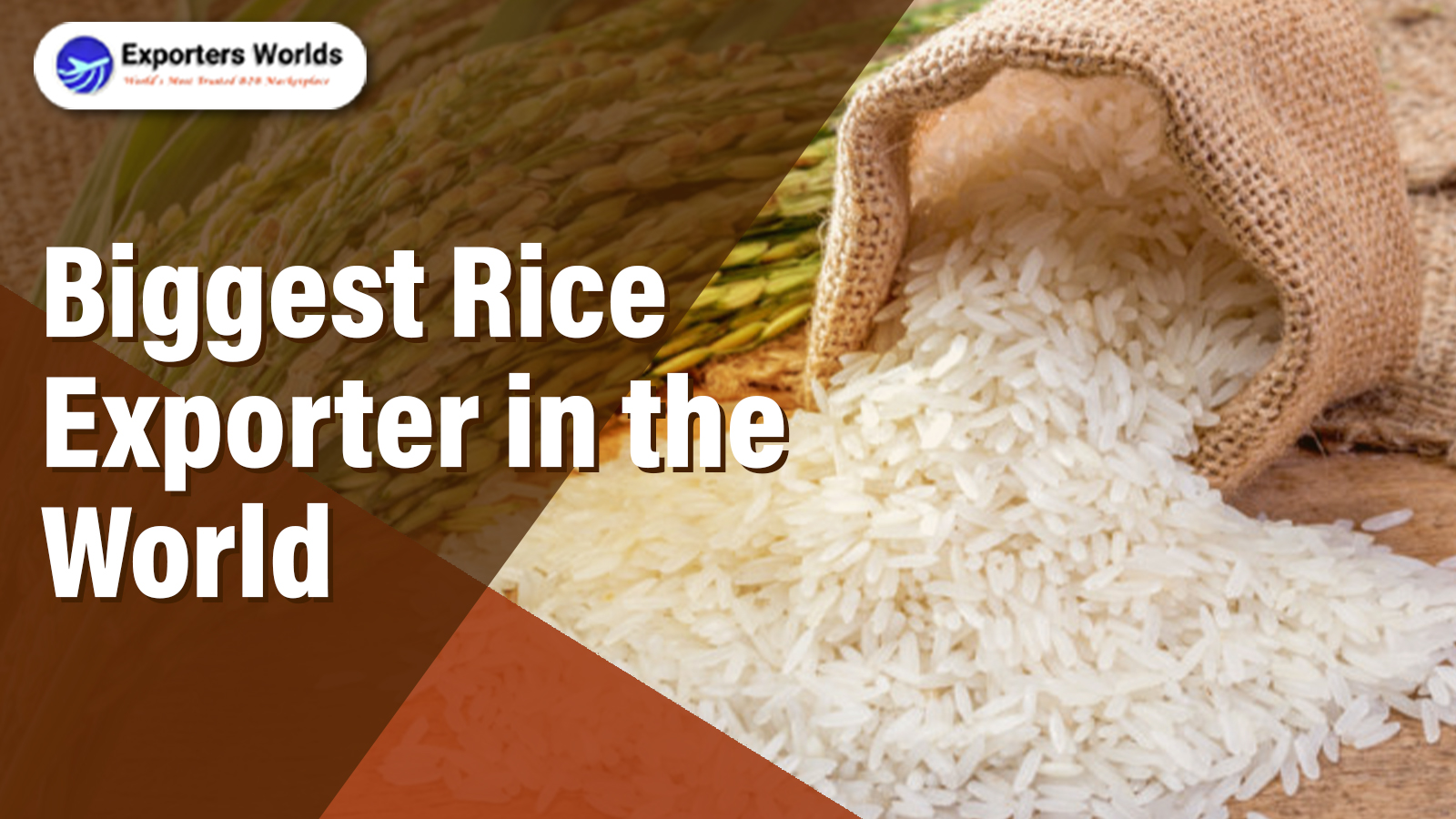
Biggest Rice Exporter in the World (2025–2026 Updated Analysis)
- 2026 Market Update
This article has been updated to reflect 2026 rice export trends, including trade policy shifts, buyer demand changes, and supplier market movements. While 2025 data remains relevant for trend comparison, the insights below now reflect the current global rice trade landscape.
Rice is more than a staple food—it’s a global economic driver. As of 2025–2026, more than 150+ countries rely on imported rice for everyday consumption, food manufacturing, and retail supply. With rising population demand and shifting trade policies, competition to dominate global rice exports has intensified, making supplier positioning more strategic than ever.
In fact, just a few nations control the majority of global trade volume, influencing pricing, quality benchmarks, and long-term supply contracts across Asia, the Middle East, Africa, Europe, and North America.
So the big question evolves into:
Who is the biggest rice exporter in the world—and does that leadership still hold in 2026?
Let’s break it down using updated market insights, recent trade patterns, and real examples shaping today’s global rice economy.
Who Is the Biggest Rice Exporter in the World in 2025-2026?
India remains the biggest rice exporter in the world, extending its leadership from 2025 into 2026, despite past export restrictions and regulatory interventions.
Backed by:
-
Massive production capacity
-
Cost efficiency
-
Strong basmati dominance
-
Rising non-basmati demand
India continues to lead global rice exports by volume and buyer reach.
Top Rice Exporting Countries in the World (2025-2026 Rankings)
- India – Largest global supplier (basmati + non-basmati)
- Thailand – Premium aromatic rice expert
- Vietnam – High-volume, affordable long-grain exports
- Pakistan – One of the biggest basmati exporters
- USA – Specialized medium-grain and long-grain varieties
These five nations collectively move more than 78% of the world’s traded rice.
Detailed Breakdown of Top Rice Exporting Countries (Updated)
1. India — The Undisputed Global Leader
India dominates due to volume, variety, and strong buyer markets like the UAE, USA, Qatar, Iraq, and Europe. For a deep dive into the specialty aromatic sector, see our report on the latest India Basmati export growth and trends to understand how heritage grains are driving 2026 valuations.
- Key Exports: Basmati, Non-Basmati, Parboiled
- Major Routes:
- Export rice from India to USA (high basmati demand)
- Export rice from India to Dubai (large parboiled shipments)
- Export rice from India to USA (high basmati demand)
- Why India leads: Massive crop area, skilled farmers, strong global trust, competitive pricing, and diverse grades.
Mini-story:
In 2024, a UAE distributor reportedly switched half of their supply from Vietnam to India after buyers rated Indian basmati higher for aroma consistency. By mid-2025, their sales soared 24%—a direct reflection of India’s quality dominance.
2. Thailand — Premium & Fragrant Rice Specialist
Thailand focuses on Jasmine rice, known for its softness and natural fragrance.
- Major Buyers: China, US retail chains, Singapore
- 2026 strength: Government-backed farmer support and strict quality control
3. Vietnam — The Affordable High-Volume Exporter
Vietnam continues to be among the largest rice exporting countries due to its efficient farming and mechanized production.
- Strength: Cost-effective long-grain rice
- Top buyers: Philippines, Malaysia, Africa, China
- 2026 trends: Yield optimization through smart farming tools
4. Pakistan — Basmati Excellence
Pakistan continues to strengthen its position as a basmati-focused exporter.
- Major Markets: Middle East, EU, UK
- Rising 2026 trend: Increased demand for pesticide-tested and EU-compliant basmati rice
5. United States — Technology-Driven Rice Exporter
The USA exports millions of tonnes annually, primarily for industrial and specialty use.
- Known for: Medium-grain rice used in food processing and sushi
- Buyers: Mexico, Central America, Japan
Why These Countries Dominate the Rice Export Market
Key Factors Behind Their Success
- Climate & Soil Strength: Perfect for long-grain rice
- Government Support: Subsidies, export incentives, irrigation programs
- Advanced Farming: Drones, hybrid seeds, smart irrigation
- Strong Supply Chains: Large mills, storage, modern logistics
- Trade Agreements: Duty advantages and stable long-term contracts
These factors allow them to retain their status as top rice exporting countries even as global conditions evolve.
Case Study: How India Became the Global Rice Powerhouse
India’s rise wasn’t accidental. Its leadership continues into 2026 due to:
1. Basmati Brand Value
Indian basmati rice is a global luxury product. The fragrance, length, and aging quality make it the preferred choice in the Middle East, Europe, and the US.
2. Affordable Non-Basmati Rice
Countries with price-sensitive markets—like Africa and Bangladesh—prefer India due to consistency and low freight costs.
3. A Real Importer Example
A California-based Asian grocery chain transitioned from Thai rice to Indian Sella Basmati between 2023–2025. By 2026, Indian rice became their primary SKU, driving an 18% increase in repeat customer sales.
This story reflects how India built trust globally. However, for an importer, the choice often comes down to margins; we recommend comparing the profitability of basmati vs non-basmati rice before finalizing your 2026 procurement strategy.
Recent Global Trends in Rice Trade (2025-2026)
1. Rising Middle East Demand
Countries like UAE, Saudi Arabia, and Qatar increased rice imports by 12–18% due to population growth and tourism.
2. Shift Toward Healthier Rice
Brown rice, low-GI rice, and organic rice categories saw a 22% increase in demand globally.
3. Drone Farming in Asia
Vietnam and Thailand now use drones on 30–40% of rice farmland, reducing production cost and increasing yield.
4. Africa Becoming the Fastest-Growing Market
Nigeria, Senegal, and Kenya increased imports significantly as domestic production couldn’t match consumption growth.
Interesting Facts About Global Rice Exports
- More than 3.5 billion people eat rice daily.
- Pakistan’s Super Kernel Basmati is one of the world’s most premium rice types.
- India alone produces over 130 million tonnes of rice annually.
- Thailand’s Jasmine Rice is often called the “Champagne of Rice”.
- USA uses more rice in food industries than households.
Challenges & Opportunities in the Rice Market (2025-2026)
Challenges
- Climate-driven crop losses
- Water-intensive cultivation
- High shipping costs
- Policy fluctuations
Opportunities
- Organic rice boom
- Parboiled and broken rice demand
- High-margin basmati export opportunities
- New markets in Mediterranean and Central Asia
How Global Rice Prices Are Determined in 2026
Understanding who the biggest rice exporter is also requires understanding how global rice prices are set. In 2026, pricing is influenced by a combination of production volume, government export policies, freight costs, currency fluctuations, and regional demand spikes.
For example, when major exporting nations introduce temporary export restrictions, global prices can surge within weeks due to supply tightening. Similarly, increased demand from Middle Eastern and African markets can push basmati and parboiled rice prices upward during peak seasons.
Key pricing drivers in 2026 include:
- Export policy decisions in major producing countries
- Climate impact on crop yields
- Shipping and container availability
- Currency exchange rates (USD dominance in trade contracts)
- Seasonal demand from bulk-importing nations
India’s leadership in global rice exports also gives it pricing influence, especially in basmati and non-basmati segments. However, competition from Thailand and Vietnam helps stabilize the market by offering alternative supply options.
For importers, tracking these factors is crucial. Securing contracts during stable cycles is key. Because rice logistics are complex, ensure you've reviewed our complete guide to importing agricultural products in bulk to master customs compliance and risk management.
Final Thoughts
The global rice trade continues to evolve in 2026, but India remains the biggest rice exporter in the world, supported by scale, quality diversity, and buyer trust. Thailand, Vietnam, Pakistan, and the USA continue to shape the market through specialization and efficiency.
For importers, understanding these shifts is essential to selecting the right supplier through a structured procurement process and securing long-term margins.
Where to Source Rice?
If you're looking to import rice from verified global exporters, we at Exporters Worlds help buyers connect with trusted suppliers worldwide. You can explore different rice varieties, compare sellers, and start sourcing confidently—because we provide end-to-end support, from verification to smooth trade communication, all in one place.
But you don't have to wait for the right partner to find you. Skip the endless searching and heavy commissions. Join our verified WhatsApp channel to get active buyer requirements, direct export opportunities, and real-time agricultural trade leads delivered straight to your phone. Join the Exporters Worlds WhatsApp Channel Here
FAQs (Updated for 2026)
1. Which country is the biggest rice exporter in the world in 2026?
India remains the biggest rice exporter globally, continuing its leadership from 2025 into 2026.
2. What are the top rice exporting countries today?
The top countries are India, Thailand, Vietnam, Pakistan, and the USA.
3. Which rice is most exported from India?
India mainly exports Basmati, Sella Basmati, and Parboiled Non-Basmati rice.
4. Can I export rice from India to the USA?
Yes, Indian basmati rice is one of the most imported varieties in the USA due to its long-grain fragrance and cooking quality.
5. How to export rice from India to Dubai?
Rice exporters ship directly to Dubai through established trade lanes, with documentation like phytosanitary certificates, fumigation reports, and invoice packing lists.
6. Which country imports the most rice?
China, Philippines, the Middle East, and several African nations are among the world’s largest rice importers.
7. What documents are required to export rice internationally?
Typical docs: commercial invoice, packing list, bill of lading / airway bill, certificate of origin, phytosanitary certificate, fumigation certificate, and any country-specific health or residue test reports. Some markets also require export licenses, HACCP/ISO evidence, or third-party inspection reports. Always confirm importer country rules before shipping.
8. How do export restrictions or bans affect supply and price — and how can importers mitigate the risk?
When a major exporter announces restrictions/quota/bans it can quickly raise global prices and tighten supply. Mitigation: diversify suppliers across countries, secure forward contracts or volume commitments, keep buffer stock, negotiate flexible terms, and work with certified exporters who can fast-ship alternate grades. Regular market monitoring and multi-sourcing are the fastest ways to reduce risk.