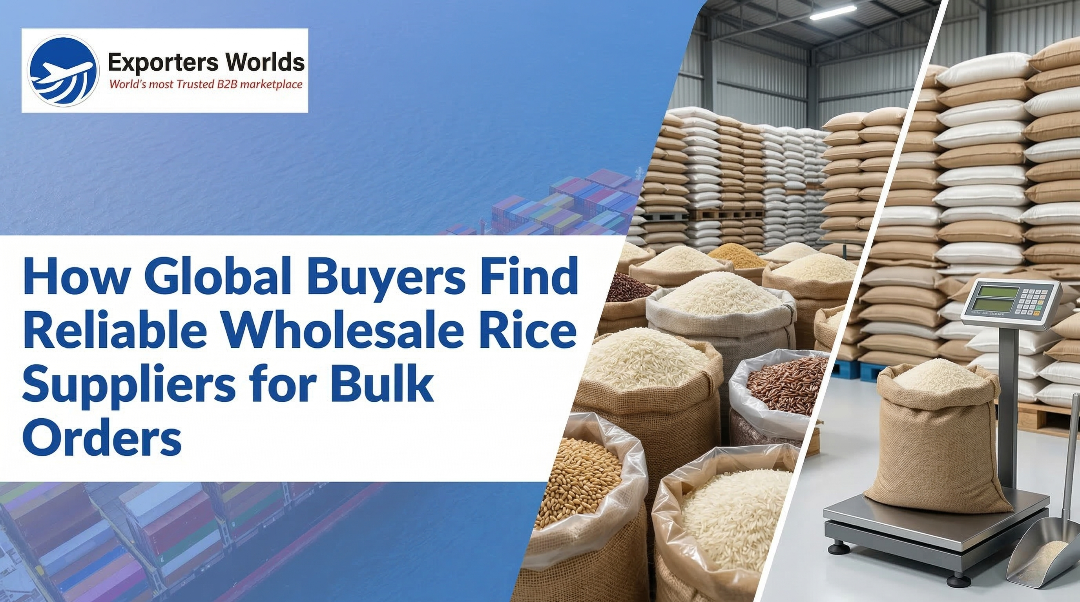
How Global Buyers Find Reliable Wholesale Rice Suppliers for Bulk Orders
Introduction: Why Finding Reliable Wholesale Rice Suppliers Is Harder Than It Looks
Imagine you are responsible for sourcing 20,000 tons of rice for a regional distributor. Prices fluctuate weekly, shipping costs change overnight, and dozens of suppliers claim to offer “premium export quality.” On paper, the process appears straightforward. In reality, it becomes a careful balance of market research, supplier verification, logistics planning, and risk management.
In global agricultural trade, sourcing rice is rarely just about price. Professional buyers are constantly searching for reliable, scalable, and consistent partners. The challenge is not simply identifying sellers but identifying dependable wholesale rice suppliers that can meet strict quality requirements, deliver large volumes, and manage international shipping without disruption.
In many ways, rice procurement sits at the intersection of commodity trading and long-term relationship building. Buyers must balance cost efficiency with supply reliability, and the margin for error is small when shipments involve thousands of metric tons moving across continents.
The scale of the global rice trade highlights the complexity of this process.
The global rice export market reached approximately $39.1 billion in 2024, growing around 12 percent year over year. Asia dominates the global supply chain, contributing nearly 80 percent of worldwide rice exports. Analysts also project that global rice trade could reach around 65 million tonnes by 2034, expanding steadily at about 1.5 percent annually.
As demand increases, more buyers are entering the international market. At the same time, the pressure to find trustworthy bulk rice suppliers continues to grow. Procurement teams must filter through hundreds of exporters, assess certifications, and confirm supply reliability before signing large contracts.
Understanding how experienced buyers approach this challenge reveals a structured process shaped by market intelligence, supplier vetting, and strategic sourcing. Because rice shipments of this magnitude require precise logistics and strict customs compliance, we highly recommend reviewing our complete guide to importing agricultural products in bulk before finalizing any massive commodity contracts.
Understanding the Global Rice Trade Landscape Before Choosing Suppliers
Before contacting potential bulk rice suppliers, professional buyers usually begin with research. Market intelligence plays a critical role in identifying where supply originates and which export markets offer the most reliable sourcing options.
Global Production and Supply Concentration
Rice production is geographically concentrated, which significantly shapes global trade patterns.
Recent industry estimates suggest that global rice production for 2024–2025 stands at approximately 543 million metric tons.
India alone produces nearly 150 million tonnes, representing about 28 percent of global output. The top five exporting countries collectively account for nearly 77 to 81 percent of worldwide rice exports.
These major exporters include:
- India
- Thailand
- Vietnam
- Pakistan
- United States
For a deeper dive into market shares and volume data, see our latest analysis on the biggest rice exporter in the world for 2025–2026.
Because of this concentration, international buyers typically begin their supplier search by identifying the right exporting country first. Only after narrowing down the supply region do they evaluate individual wholesale rice suppliers operating within that ecosystem.
Global Demand Centers Driving Bulk Procurement
On the demand side, several countries import large volumes of rice due to population size, food security programs, or domestic production limitations.
Some of the largest importing markets include:
- Indonesia – about $2.71 billion in imports
- Philippines – around $2.51 billion
- Saudi Arabia – approximately $2 billion
- Vietnam – roughly $1.71 billion
- Iraq – about $1.66 billion
- United States – close to $1.61 billion
These markets represent some of the most active buyers searching for dependable bulk rice suppliers capable of delivering consistent shipments throughout the year.
Who Actually Buys Rice in Bulk in the Global Market
Not every buyer operates in the same way. Different organizations source rice for different reasons, and their procurement strategies often vary significantly.
Government Procurement Agencies
Government agencies play a central role in global rice procurement. Many countries maintain national food reserves or public distribution programs that require large quantities of imported rice.
These organizations typically manage:
- Extremely large contracts
- Long-term supply agreements
- Strict compliance and regulatory standards
Examples include national food ministries, state procurement boards, and humanitarian food programs associated with international organizations.
Single procurement tenders from these buyers can involve tens of thousands of tons.
Food Importers and Commodity Distributors
Commodity importers and distribution companies are among the most active participants in international rice trade.
They often purchase from multiple wholesale rice suppliers to maintain stable supply chains and reduce sourcing risks.
These businesses typically:
- Import rice from Asian exporters
- Distribute it to regional wholesalers
- Maintain ongoing procurement cycles throughout the year
Diversification is a common strategy. By working with several bulk rice suppliers, distributors can maintain inventory stability even when one supply region faces disruptions.
Retail Chains and Private Label Brands
Supermarket chains and consumer brands frequently purchase rice in bulk before packaging it under private labels.
Their procurement priorities often include:
- Consistent grain quality
- Standardized packaging formats
- Reliable delivery schedules
For these buyers, long-term supplier relationships are critical to maintain brand reputation.
Food Processing Companies
Rice also serves as an ingredient in many processed food products.
Manufacturers producing items such as rice flour, instant meals, and snack foods often source large volumes from bulk rice suppliers specializing in specific grain characteristics.
In these cases, factors such as starch content, grain breakage rates, and moisture levels may be more important than premium appearance.
Hospitality and Foodservice Networks
Restaurant chains, catering companies, and hotel groups also represent a significant segment of rice buyers. Large hospitality networks often purchase rice in bulk to maintain supply consistency across multiple locations.
Types of Wholesale Rice Suppliers Buyers Encounter
Not every supplier in the global rice market operates under the same business model. Buyers often interact with several types of wholesale rice suppliers before selecting the right partner.
Primary Producers and Farmer Cooperatives
Farmer cooperatives consist of agricultural producers who pool their harvests for collective sales.
Advantages include:
- Direct farm sourcing
- Competitive pricing
- Transparent origin information
However, these suppliers may have limited export infrastructure, which can create logistical challenges for international shipments.
Rice Millers and Processing Facilities
Rice mills are central to the global supply chain. They transform raw paddy rice into export-ready grains.
Typical responsibilities include:
- Milling and polishing
- Grain grading
- Packaging and labeling
Many mills serve as direct bulk rice suppliers for international buyers.
Export Houses
Export companies often act as intermediaries between producers and international markets.
They manage critical operational functions such as:
- Procurement from farmers
- Quality control inspections
- Export documentation
- Shipping coordination
In many global trade networks, export houses serve as the bridge connecting agricultural producers to global buyers.
Commodity Trading Companies
Large commodity trading firms handle multiple agricultural products and operate across international markets.
Their strengths often include:
- Diverse sourcing networks
- Trade financing capabilities
- Logistics coordination expertise
Aggregators and Brokerage Networks
These intermediaries help buyers discover new wholesale rice suppliers in unfamiliar markets.
Broker networks frequently connect importers with verified exporters and assist with negotiations and contract arrangements.
Understanding the Major Rice Categories in Global Trade
Selecting the right supplier also depends heavily on the type of rice being sourced.
Basmati Rice
Basmati is known for its long grains and distinctive aroma. Major markets for basmati include the Middle East, Europe, and North America. When deciding on a product mix, it is essential to compare the margins of Basmati rice vs non-Basmati rice to maximize import ROI.
Long Grain White Rice
This variety is widely consumed across Africa and Southeast Asia and is often purchased in very large volumes.
Parboiled Rice
Parboiled rice is particularly popular in West African markets due to its durability and longer shelf life.
Broken Rice
Broken rice is commonly used for animal feed, rice flour production, and industrial applications such as ethanol production.
Jasmine Rice
Jasmine rice is a premium aromatic variety commonly associated with Thai exports and high-end retail markets.
In international trade classification systems, rice falls under HS Code 1006, which includes subcategories for husked rice, parboiled rice, and aromatic varieties.
How Global Buyers Discover Wholesale Rice Suppliers
Professional buyers rarely rely on a single sourcing channel. Instead, they combine multiple discovery methods to identify reliable bulk rice suppliers.
B2B Marketplace Platforms
Online B2B marketplaces often serve as the first step in supplier discovery.
These platforms allow buyers to:
- Browse supplier directories
- Compare minimum order quantities
- Submit requests for quotation
- Review company credentials
Well-known marketplaces include Alibaba, Global Sources, IndiaMART, TradeIndia, and specialized agricultural trade portals.
International Trade Exhibitions and Agricultural Events
Trade fairs remain one of the most valuable environments for supplier discovery.
Buyers attend international exhibitions to:
- Meet exporters face-to-face
- Inspect rice samples
- Build direct relationships
Many long-term supplier partnerships begin with a simple conversation at a trade show booth.
Export Promotion Councils and Government Trade Bodies
Many governments maintain official exporter registries.
Export promotion councils often provide verified directories of wholesale rice suppliers, along with compliance certifications and trade support programs.
Commodity Trading Networks and Brokerage Systems
Commodity brokers and trading networks frequently introduce buyers to reputable bulk rice suppliers.
These networks rely on industry relationships and market expertise to match buyers with reliable exporters
.
Freight Forwarders and Shipping Networks
Logistics partners sometimes play an unexpected role in supplier discovery.
Freight forwarders and port agents often have insight into which exporters consistently ship large volumes of rice and maintain reliable shipping schedules.
Supplier Verification: How Buyers Evaluate Wholesale Rice Suppliers
After identifying potential suppliers, buyers begin a rigorous verification process.
Business Legitimacy and Documentation
Key documents usually reviewed include:
- Company registration certificates
- Export licenses
- Tax identification numbers
- International trade certifications
This step helps buyers filter out fraudulent exporters.
Food Safety and Quality Certifications
Many buyers require certifications such as:
- ISO 22000 food safety standards
- HACCP compliance
- FDA or FSSAI approvals
- APEDA registration for Indian exporters
These certifications confirm that the supplier meets international food safety standards.
Buyers focusing specifically on the Indian market should track India’s Basmati rice export growth to time their bulk purchases correctly.
Production and Supply Capacity
Large importers often require 10,000 to 50,000 tons per contract.
Buyers assess milling capacity, warehouse storage, and sourcing networks to determine whether a supplier can handle such volumes.
Quality Testing Standards
Rice quality is typically measured using parameters such as:
- Broken grain percentage
- Moisture content
- Grain length
- Foreign matter levels
Third-party inspection laboratories frequently perform these tests before shipments leave the exporting country.
Supply Chain Reliability
Experienced buyers evaluate sourcing regions, climate risks, and historical export performance to determine whether a supplier can maintain consistent deliveries.
The Typical Bulk Rice Procurement Process
Global rice procurement often follows a structured workflow. First, buyers conduct market research using data from international trade databases and agricultural reports. Next, they create a shortlist of wholesale rice suppliers using directories and export databases. Buyers then send RFQs requesting detailed pricing, packaging specifications, and shipping terms.
Streamline Your Sourcing: Don't waste time emailing dozens of suppliers individually. Post your specific bulk rice requirements on the Exporters Worlds RFQ Marketplace, and let verified international suppliers send competitive quotes directly to you.
After receiving quotations, buyers typically request product samples. These samples undergo laboratory testing and cooking evaluations.
Supplier audits may follow, including factory inspections or documentation reviews.
Once quality and pricing are confirmed, buyers negotiate contracts using trade terms such as FOB, CIF, or EXW.
Shipments then move through containerized maritime transport, often supported by payment structures such as letters of credit.
Logistics and Shipping Factors That Influence Supplier Selection
Even after supplier verification, logistics remain a crucial factor.
Buyers evaluate elements such as:
- Port proximity to milling facilities
- Container availability
- Freight rates
- Shipping insurance costs
Recent geopolitical tensions and shipping disruptions have significantly increased transportation costs in global rice trade.
Suppliers with strong logistics networks often become preferred partners.
Key Factors That Influence Global Rice Pricing
Rice prices are shaped by multiple forces.
Supply-side factors include harvest yields, weather patterns, export restrictions, and government agricultural policies.
Demand-side drivers include population growth, urban food consumption, and national food security programs.
Financial factors such as currency exchange rates, energy prices, and shipping costs also play an important role.
Regional Demand Trends Buyers Monitor
West Africa
Demand for parboiled rice imports has surged dramatically, with some countries experiencing growth between 50 and 100 percent in recent years.
Middle East
The Middle East remains one of the largest global markets for basmati rice imports.
Southeast Asia
Although Southeast Asia produces large quantities of rice, seasonal production fluctuations still lead to periodic import demand.
Common Risks in Global Rice Procurement
Even experienced buyers face challenges when sourcing rice internationally.
Supplier fraud can occur when exporters misrepresent company credentials or product quality.
Quality disputes may arise due to contamination, excessive moisture, or inconsistent grain size.
Logistics disruptions such as port congestion or shipping delays can affect delivery timelines.
Regulatory risks also exist. Export bans or sudden policy changes may disrupt supply chains.
For this reason, buyers often conduct extensive verification before selecting bulk rice suppliers.
Technology Changing How Buyers Find Bulk Rice Suppliers
Technology is rapidly transforming commodity sourcing.
Digital trade platforms now offer AI-driven supplier discovery and integrated RFQ systems.
Blockchain systems are also being explored to track product origins and verify shipment authenticity.
Satellite crop monitoring tools allow buyers to analyze harvest forecasts and regional supply availability.
These technologies are gradually making supplier discovery more transparent and data driven.
Strategic Procurement Models Used by Large Buyers
Large importers often adopt different sourcing strategies depending on risk tolerance and operational scale.
Some buyers source directly from rice mills to reduce costs and eliminate intermediaries.
Others rely on commodity trading contracts to stabilize supply and manage price volatility.
Many multinational food companies prefer long-term supply agreements with trusted wholesale rice suppliers, ensuring predictable deliveries over extended periods.
Key Success Factors When Choosing Reliable Wholesale Rice Suppliers
Across global agricultural markets, the most trusted suppliers usually share several characteristics.
They maintain consistent export histories and internationally recognized certifications.
They possess scalable production capacity and transparent pricing structures.
They also operate efficient logistics networks that ensure timely shipments.
For professional buyers, reliability and predictability often matter just as much as competitive pricing.
Conclusion: Why Reliable Rice Sourcing Is About Relationships, Not Just Price
At first glance, sourcing rice in bulk may appear to be a straightforward commodity purchase.
However, experienced buyers know the process requires far more than comparing prices. Successful procurement involves deep market research, supplier verification, logistics planning, and long-term relationship building.
As global rice demand continues to grow toward an estimated 65 million tonnes in international trade by 2034, buyers who invest in building strong networks of trusted bulk rice suppliers will maintain a clear competitive advantage.
This is where modern digital trade ecosystems are increasingly reshaping how buyers connect with exporters. Platforms designed specifically for global B2B commerce help bridge the gap between verified suppliers and international buyers who need reliable sourcing partners.
Among these platforms, Exporters Worlds has emerged as a powerful facilitator of international trade relationships. As a leading B2B marketplace, it connects global buyers with verified exporters across multiple industries, including agricultural commodities such as rice. By emphasizing supplier verification, direct communication channels, and streamlined trade processes, the platform helps businesses navigate the complexities of cross-border sourcing with greater confidence.
For buyers navigating a market filled with options, platforms like Exporters Worlds provide something essential that traditional sourcing methods often lack: structured access to trusted global suppliers within a single ecosystem. In a world where supply chain reliability matters more than ever, that kind of connectivity can make the difference between a risky transaction and a long-term sourcing partnership.
Ready to secure your next bulk shipment with confidence? Whether you need help navigating our verified supplier directory or have highly specific sourcing requirements, our team is ready to assist.
Contact Exporters Worlds today to discuss your procurement needs and connect with the right suppliers.
FAQs
How do global buyers find reliable wholesale rice suppliers?
Buyers typically rely on B2B marketplaces, trade exhibitions, export promotion councils, and commodity trading networks to identify verified wholesale rice suppliers.
What certifications should bulk rice suppliers have?
Common certifications include ISO 22000, HACCP, FDA or FSSAI approvals, and APEDA registration for Indian exporters.
What is the typical minimum order quantity for bulk rice?
Large international contracts often range between 10,000 and 50,000 tons, although smaller distributors may purchase lower volumes.
Which countries export the most rice globally?
The leading exporters include India, Thailand, Vietnam, Pakistan, and the United States.
What factors influence global rice prices?
Rice prices are affected by harvest yields, weather conditions, export restrictions, population demand, currency exchange rates, and shipping costs.
How do buyers verify the quality of rice before bulk orders?
Buyers usually request samples, conduct laboratory testing, and perform pre-shipment inspections to confirm quality standards.