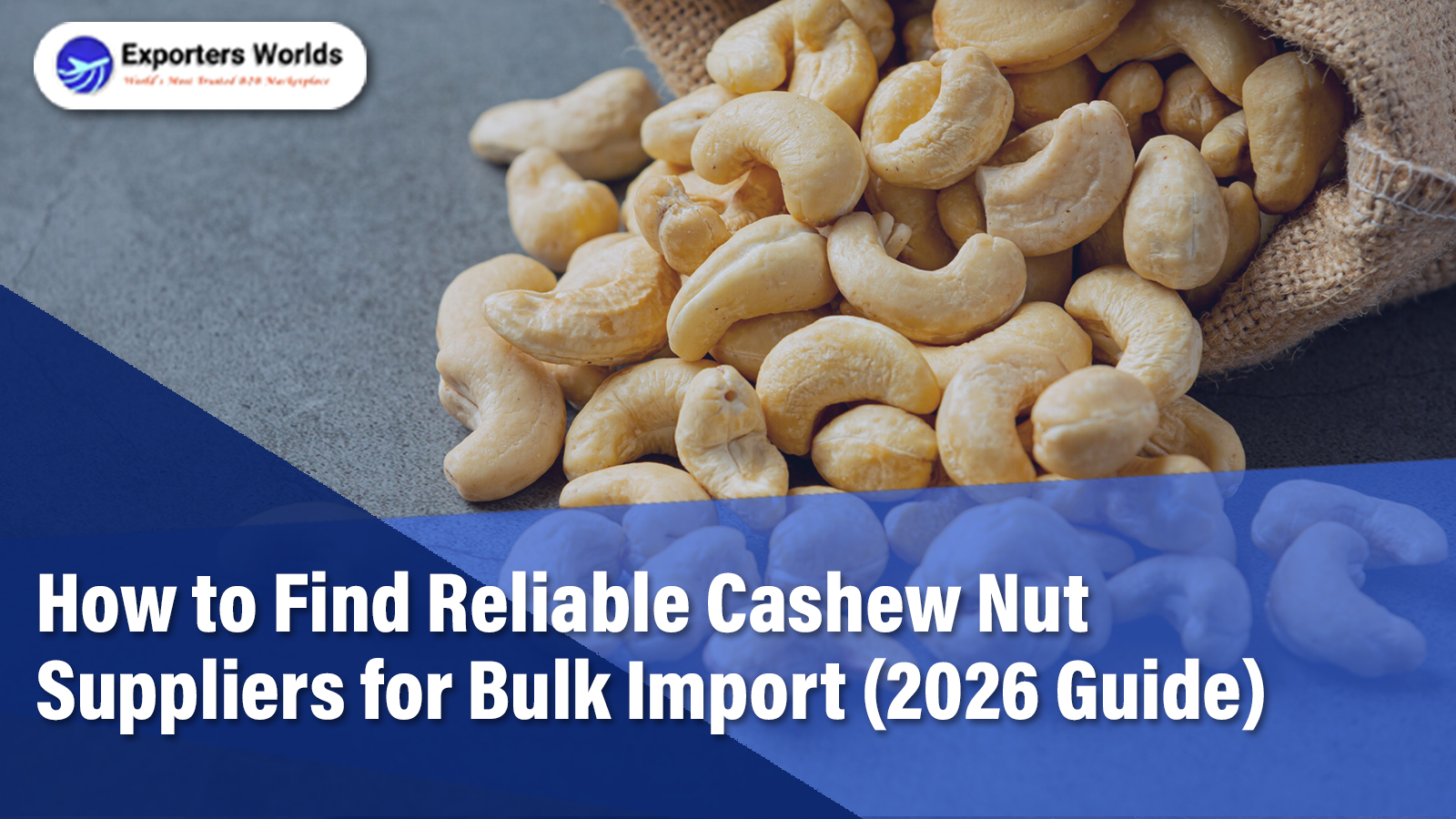
How to Find Reliable Cashew Nut Suppliers for Bulk Import (2026 Guide)
Introduction: The First Time I Tried Sourcing Cashews in Bulk And Why Supplier Selection Is Everything
A few years ago, while researching international nut sourcing trends, one pattern kept surfacing repeatedly. Finding cashew nut suppliers is relatively easy, but finding reliable ones that consistently deliver quality, documentation, and logistics support is the real challenge.
From a distance, the global cashew trade looks simple. Contact a few exporters, compare quotes, place an order, and wait for the shipment. But once businesses step into bulk importing, they quickly realize that the industry operates within a complex global ecosystem.
Behind every container of cashews lies an intricate chain involving farms, processors, export houses, quality graders, freight forwarders, and regulatory documentation.
The scale of this industry reflects its complexity. The global cashew market was valued at approximately $10.32 billion in 2025 and is projected to exceed $15.46 billion by 2034, growing at a steady rate of about 4.6% annually. Some projections estimate growth from $9.9 billion in 2025 to $14.64 billion by 2031.
This growth has attracted thousands of new cashew nut exporters, brokers, and trading companies. While that creates abundant opportunities for buyers, it also introduces risks such as inconsistent quality, fraudulent suppliers, and unreliable shipping practices.
Over time, businesses that succeed in importing cashews at scale tend to follow a structured sourcing approach. They focus on understanding the supply chain, identifying the right supplier types, verifying export credibility, and controlling operational risks.
This guide breaks down the entire process of finding reliable bulk cashew nut suppliers, combining industry insights, real sourcing experiences, and proven evaluation strategies used by seasoned importers.
Understanding the Global Cashew Supply Chain Before Searching for Suppliers
One of the most common mistakes new importers make is skipping a crucial step. They start searching for suppliers without understanding how the global cashew supply chain actually works.
Cashew sourcing rarely happens directly between farms and international buyers. Instead, it moves through multiple layers of production, processing, and export networks.
Understanding this system helps buyers identify the most reliable cashew nut suppliers and avoid costly sourcing mistakes. If you are new to managing the logistics and compliance of these multi-layered supply chains, we highly recommend reading our complete guide to importing agricultural products in bulk before placing an order.
Where Cashews Are Actually Grown
Global cashew production currently ranges between 4.5 and 5.5 million metric tons annually. Industry analysts expect production to approach 6 million metric tons within the next few years.
Most raw cashew nuts originate from three key regions:
West Africa including Ivory Coast, Nigeria, and Benin
South Asia including India
South America including Brazil
Africa alone contributes more than 56 percent of the world’s raw cashew supply. Countries such as Ivory Coast have rapidly expanded production and now dominate raw nut exports.
For buyers sourcing upstream supply, understanding these production hubs is essential.
Where Cashews Are Processed
Interestingly, the countries that grow cashews are not always the ones exporting processed kernels.
Vietnam processes and exports more than 60 percent of the world’s cashew kernels.
India remains both a major processor and one of the largest domestic consumers.
Ivory Coast produces over one million tons of raw cashews annually.
In many cases, the most dependable cashew nut exporters are large processing companies rather than agricultural producers.
Why Supply Chain Awareness Matters
When buyers understand the production to processing structure, they can make smarter sourcing decisions.
They can determine whether to import raw cashew nuts or processed kernels.
They can identify regions offering better reliability or pricing.
They can anticipate potential logistics bottlenecks.
Without this knowledge, choosing among bulk cashew nut suppliers becomes little more than guesswork.
Identifying the Best Types of Cashew Nut Suppliers in Global Trade
Not all suppliers operate with the same level of reliability or infrastructure. In global commodity trade, suppliers generally fall into several distinct categories.
Understanding these categories helps importers choose the right partner for their needs.
Direct Farmers and Agricultural Cooperatives
These suppliers are often located in African production regions such as Ivory Coast and Nigeria.
Their advantages include lower raw material pricing and direct farm traceability.
However, sourcing directly from farms can introduce challenges such as export logistics difficulties, inconsistent grading standards, and limited certification capabilities.
This option usually works best for companies importing raw cashew nuts for further processing.
Processing Factories
Processing factories are among the most dependable bulk cashew nut suppliers for international buyers.
They are mainly concentrated in Vietnam and India.
These suppliers export ready to sell kernels that meet standardized grading and packaging requirements.
Advantages include consistent quality control systems, international certifications, and scalable production volumes.
For example, Vietnamese processing plants achieve peeling efficiency levels approaching 95 percent through mechanized operations.
Export Trading Companies
Agricultural export companies act as aggregators, sourcing raw nuts from farmers and supplying international buyers.
They typically manage logistics, export documentation, and consolidated shipments.
Although prices may be slightly higher, these companies often simplify sourcing for new importers.
Large Global Commodity Firms
Some suppliers operate at multinational scale with integrated sourcing, processing, and distribution networks.
These organizations provide stable shipping schedules, large volume availability, and strong compliance with global food safety standards.
For high volume buyers, these suppliers often represent the lowest operational risk.
B2B Marketplace Suppliers
Online marketplaces host thousands of cashew nut exporters offering products from different regions.
While these platforms simplify supplier discovery, they also introduce verification challenges. Some listings may involve intermediaries, misrepresented certifications, or inconsistent quality standards.
As a result, these platforms work best as discovery channels rather than final verification sources.
Where to Find Verified Cashew Nut Suppliers Beyond Basic Google Searches
Relying solely on search engines rarely produces reliable sourcing results.
Experienced importers combine multiple supplier discovery channels to identify trustworthy cashew nut suppliers.
B2B Sourcing Platforms
Global sourcing platforms remain one of the most common starting points for buyers.
Popular options include Alibaba, Global Sources, TradeIndia, and Made in China.
These platforms allow businesses to compare quotes from multiple bulk cashew nut suppliers, request product samples, and initiate discussions quickly.
However, verification remains essential before finalizing contracts.
International Trade Databases
Trade intelligence tools provide one of the most powerful methods for identifying credible cashew nut exporters.
Platforms such as Volza, ImportGenius, and Panjiva track real international shipments.
Using these tools, buyers can evaluate export frequency, shipment volumes, and the number of international clients served by a supplier.
This data reveals which exporters are consistently supplying global markets.
Global Food and Commodity Trade Shows
Trade exhibitions provide direct access to verified exporters and processors.
Major industry events include:
Vietnam Cashew Conference
Gulfood in Dubai
Anuga in Germany
SIAL in Paris
These events allow buyers to discuss factory capabilities, verify supplier credibility, and negotiate long term contracts.
Industry Associations and Export Councils
Industry organizations often maintain directories of verified exporters.
Examples include the Vietnam Cashew Association, the Cashew Export Promotion Council of India, and the African Cashew Alliance.
These organizations help buyers identify legitimate cashew nut suppliers with established industry credentials.
Evaluating Supplier Reliability: The Framework Serious Importers Use
Identifying suppliers is only half the process. The real challenge is determining which cashew nut exporters are reliable.
Experienced importers typically evaluate suppliers across several key criteria.
Export History and Shipment Consistency
Reliable exporters usually maintain several years of shipment records and serve multiple international clients.
Trade databases provide valuable insights into shipment frequency and buyer networks.
International Food Safety Certifications
Legitimate cashew nut exporters typically hold certifications such as HACCP, ISO 22000, BRC certification, FDA registration, or organic certification.
These certifications are often required for customs clearance in major import markets.
Processing Capacity
When importing at scale, factory capacity becomes critical.
Buyers should evaluate monthly production volumes, automation levels, and factory infrastructure.
Approximately 36 percent of global cashew processors are now adopting automated technologies to improve efficiency.
Quality Control Systems
Quality standards in cashew trading are strict.
Typical benchmarks include moisture levels below five percent, foreign matter below half a percent, and consistent kernel grading.
Inspection reports should always be requested before shipment.
Logistics and Export Capability
Reliable bulk cashew nut suppliers should offer FOB or CIF shipping terms along with complete export documentation including invoices, certificates, and customs paperwork.
Cashew Kernel Grades Every Importer Should Understand
In international trade, cashews are sold based on kernel size and quality grades.
The most common grades include:
W180 which represents premium large kernels
W210 which is considered jumbo grade
W240 which represents large kernels
W320 which is the global benchmark grade
W450 which represents smaller kernels
Cashew pieces are also widely traded in confectionery and food processing industries.
Globally, W320 kernels remain the most commonly traded grade. Prices generally range between $2.5 and $3.5 per pound depending on supply conditions.
Understanding these grades helps buyers negotiate effectively with cashew wholesale suppliers.
Due Diligence Steps Before Placing a Bulk Cashew Import Order
Before committing to large contracts, experienced importers follow a structured verification process.
Factory Verification
Buyers should review factory inspection videos, verify business licenses, and confirm export registrations.
Third party inspection firms such as SGS, Intertek, and Bureau Veritas can conduct on site audits.
Product Sampling
Most importers request samples between one and five kilograms.
These samples allow buyers to test kernel grading, moisture levels, and packaging quality.
Supplier References
Reliable suppliers often provide references from previous buyers along with export documentation and shipment records.
These steps help confirm credibility before large payments are made.
Common Risks in Cashew Importing and How to Avoid Them
Like any agricultural commodity, cashew trading involves operational risks.
Quality Manipulation
Some suppliers may mix grades, increase moisture levels to add weight, or include damaged kernels.
Payment Fraud
Buyers occasionally encounter fraudulent exporters or misleading payment requests.
Supply Instability
Supply fluctuations may occur due to weather conditions, crop yield changes, or export policy shifts.
For example, Ivory Coast once faced nearly 200,000 tons of unsold cashews due to export policy disruptions, which significantly impacted global supply.
Cashew Pricing Dynamics Every Importer Should Monitor
Cashew prices are influenced by several global factors.
Seasonal harvest cycles affect raw supply availability.
Weather conditions impact crop yields.
Freight and shipping costs affect export pricing.
Labor costs influence processing expenses.
Global snack market demand affects consumption patterns.
During supply shortages, raw cashew prices have historically increased from around $1000 to $1500 per metric ton.
Monitoring these dynamics helps buyers time their purchases effectively.
Emerging Trends in the Cashew Market (2026 and Beyond)
Several market trends are shaping the future of cashew sourcing.
Growth of Organic Cashews
Demand for organic cashews is growing at nearly 8.5 percent annually, particularly in premium health food markets.
Rising Demand for Plant Based Foods
Cashews are widely used in vegan cheese, plant based milk products, and dairy alternatives.
The plant based cashew product market is projected to grow at roughly 25 percent annually.
Expansion of African Processing
African governments are investing in local processing facilities. This could reduce raw exports to Asia and transform the global supply chain.
Automation in Processing
With rising labor costs, many factories are introducing automated shelling and grading technologies that improve consistency and scalability.
Strategic Supplier Selection Models Used by Experienced Importers
Many experienced buyers reduce sourcing risk by diversifying suppliers.
For example, some companies source raw nuts from African producers while purchasing processed kernels from Vietnamese factories.
Long term contracts with trusted bulk cashew nut suppliers also help stabilize pricing and ensure consistent product availability.
The Future Outlook of the Global Cashew Market
Cashews remain one of the fastest growing nut categories globally.
Several trends continue to drive demand.
Healthy snacking habits are increasing worldwide.
Plant based food consumption is expanding rapidly.
Rising middle class populations are increasing purchasing power.
Premium nut based food products are gaining popularity.
Studies suggest that nearly 68 percent of health conscious consumers prefer cashew based snacks.
With the global market projected to exceed $15 billion by 2034, businesses that build strong supplier networks today will be better positioned to benefit from long term industry growth.
Conclusion: The Real Secret to Finding Reliable Cashew Nut Suppliers
After examining global supply networks, sourcing strategies, and supplier verification frameworks, one conclusion becomes clear: finding reliable cashew nut suppliers is not about contacting the cheapest exporter or responding to the first quote you receive.
Successful importers take a systematic approach. They combine trade data analysis, rigorous verification, factory inspections, and diversified sourcing.
However, discovering trustworthy cashew nut exporters among thousands of fragmented listings across different platforms is time-consuming and risky. You don't have time to guess which suppliers are legitimate.
That is exactly why B2B ecosystems like Exporters Worlds exist. We streamline international trade by instantly connecting buyers with verified bulk cashew nut suppliers across global markets. Instead of navigating unverified directories, you can rely on a structured marketplace that prioritizes supplier credibility, transparent communication, and long-term trade relationships.
In an industry where reliability dictates profitability, connecting with the right supplier efficiently is your biggest competitive advantage. Stop leaving your sourcing to chance.
Ready to source your next shipment safely?
Post Your Bulk Cashew Requirement on Our RFQ Marketplace to get competitive quotes directly from verified suppliers.
Have specific sourcing requirements? Contact the Exporters Worlds Team and let us help you find the right trade partner.
FAQs
How do I verify reliable cashew nut suppliers for bulk import?
Verification typically involves reviewing export history, checking certifications, requesting product samples, and conducting factory inspections through third party agencies.
Which countries export the most cashew kernels?
Vietnam leads global exports, accounting for more than 60 percent of international shipments, followed by India and Brazil.
What is the most commonly traded cashew grade?
The W320 cashew kernel grade is the most widely traded benchmark in the global cashew industry.
How much does bulk cashew cost internationally?
Prices vary based on grade and supply conditions. W320 kernels typically range between $2.5 and $3.5 per pound.
Where can I find verified cashew nut exporters?
Reliable cashew nut exporters can be found through trade databases, industry associations, international trade shows, and trusted B2B sourcing platforms.
What documents are required for importing cashews?
Typical documentation includes commercial invoices, packing lists, bill of lading, certificate of origin, phytosanitary certificates, and fumigation certificates.